I might see this day before I die, the day when longform writing and longform reading come back into fashion. They are sure not here right now.
I found myself reading, by accident, a translation of “La Dame aux Camélias” – a subject that I was not at all interested in. But it was the beauty of the writing, even in translation, that got me in. Obviously a generational thing. My grandchildren would not be seen dead clutching such a book, or indeed, any book.
Language now is short, colourful, dramatic, often rather meaningless. But who cares? Ya gotta make an impact. Some sort of impact. Exciting, fun, or whatever. This is what the digital age is doing to our minds.
Fortunately, there are quite a lot of rescue systems. I think that here in Australia we are blessed with education systems that might be inadequate in some ways, but do allow for kids to have some time out in nature, sometimes in activities that happen in the absence of mobile phones. On the trains, I see some people reading books. High petrol prices might have encouraged people onto trains. Who knows? But at least, reading is possible on a train.
It is symptomatic of the crisis-ridden nature of our age. It really is not possible to get a sensible grip on current affairs without paying attention to detail. The prevailing very short torm communication does not allow for detail. And it often does not allow for logic either. The meaning of words gets blurred.
I confess to being a linguistic fascist. I see words like “incredible” used to mean excellent, wonderful – although the word really means “cannot be believed.” I see the word “only” being used in strange ways, when it means ‘just this one.” And there’s grammar – punctuation is almost completely removed as an old-fashioned waste of time. I want it back, because fascistic as it might be, punctuation does help us to understand meaning.
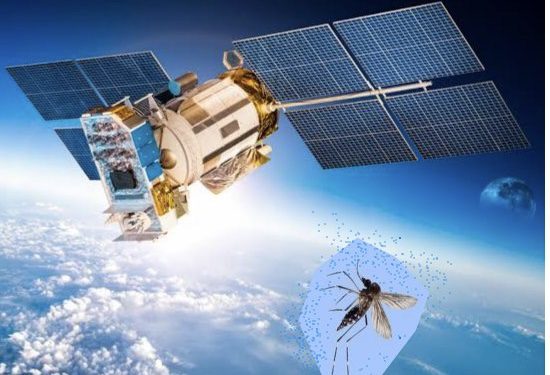
One day, an aberrant mosquito, or targeted AI, is going to hit some satellite and suddenly stop everything digital. After the chaos, people are going to have to relearn arithmetic, and old-fashioned language skills so that real communication happens again. Then we might find that sensible discussion about current affairs can become prevalent, with consideration of the needs and perspectives of the people involved, and acknowledgment of the historical details. My favourite hobby-horse about this is the controversy about the war in Ukraine. But there are plenty of other issues. Those of us who tediously write longform stuff are now whistling in the wind. But, maybe later?
Keep Independent Journalism Alive – Support The AIMN
Dear Reader,
Since 2013, The Australian Independent Media Network has been a fearless independent voice – holding power to account and delivering journalism that matters.
Running this site isn’t cheap. Rising costs mean we need your support now more than ever. Every donation, big or small, keeps our servers running, our writers working, and our stories free for everyone.
Donate here:
PayPal or credit card – just click on the Donate button below
Direct bank transfer: BSB: 062500; A/c no: 10495969

We’ve also set up a GoFundMe as a dedicated reserve fund for hosting and future improvements.

Thank you for standing with us. We couldn’t do this without you.
With gratitude,
The AIMN Team

Lovely to hear your thoughts to soften the fear of the unknown of AI.
Humans are by definition the most unusual creature currently inhabiting this little celestial wonder amid the vastness of the known (& unknown) universe.
We’re creative, imaginative, altruistic, kind & caring and simultaneously brutally cruel & savage and careless and destructive; depending on which way one looks and what one wishes to focus on – we see only horror and reason to despair or we see the breathtaking magic of the human endeavour, our resilience, our commonality across all peoples, our essential goodness.
The use of complex language is a uniquely human characteristic; English, for example, with its 28 letter alphabet, has spawned something in the order of 500,000 to 1,000,000 words, and millions of books have been written in that language, with no doubt millions more in other languages.
I’m of the view that AI will not replace the innate creative capacity of the human mind to construct stories… it may compete, but I don’t think it will surmount the human urge to create, whether fact or fiction, stories that can stand the tests of time.
@ Sue Caldwell: Noel is obviously a great fan of James Joyce, Ulysses (1922) ”stream of consciousness” writing style; why is punctuation necessary?? The book is considered a classic, but reading it every morning before work is a bit of an ask.
@ Canguro: Uhm ….. Actually only 26 letters in the English alphabet, the last time I looked in my Concise Oxford Dictionary.
Thank you Cocky, for your pertinent observation. Dwelling as I do in the realms of the unconscious, perhaps I had the Arabic alphabet in mind, given the attention paid to that part of the world these days.
A beaut read, Noel,
It seems NSW is reforming NAPLAN writing with pencil and paper. Sounds good to me.
I have always abused punctuation, usually from ignorance, but remembered the: “A woman without her man is nothing” fill in the commas problem that divided the sexes????
PS
27 for me, NEC, I add ɳ, as used in the east Arnhem languages, to the alphabet.