By James Moore
“Our crown has already been bought and paid for. All we have to do is wear it.” (James Baldwin, The Fire Next Time).
The welcome was neither intentional nor warm. Our first trip to the grocery store down on the Texas-Mexico border delivered a couple of cultural shocks. In the frozen food aisle, cow heads stared up at us through the glass. No Midwesterner had likely ever contemplated such a scene at the corner Kroger, and we stood there, staring back, trying to determine whether these parts of the animal were being sold as nutrition or as a warning. I later came to love the Sunday morning ritual of barbacoa de cabeza, barbecued meat of the head, slow cooked overnight in a bed of coals set in a hole in the backyard. A fork scraped the spiced flesh from the skull into a warm tortilla, and civilization improved considerably.
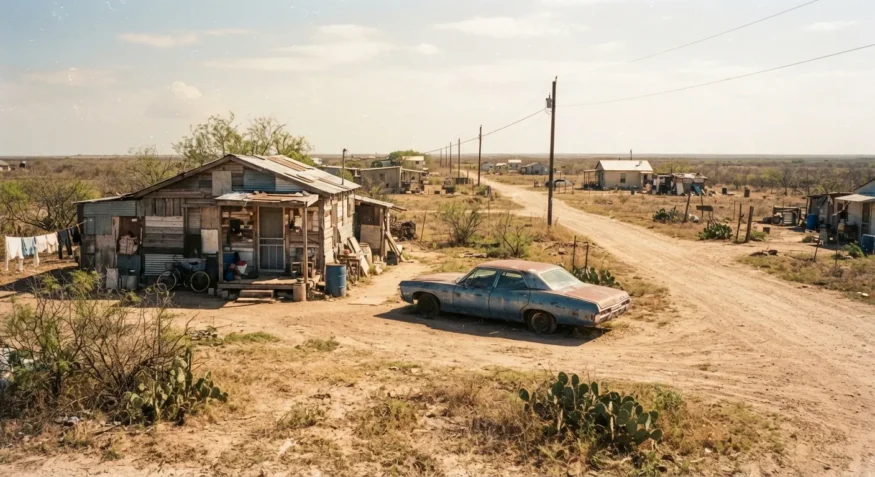
The second surprise was less delicious. We were newly married, and for the sake of my anemic broadcast journalism career, we had moved from Michigan to the Rio Grande Valley of Texas. While waiting in the checkout line, I picked up a national news magazine with a feature story about our new home. According to the article, we were now residents of the region with the lowest per capita income in the nation, the highest infant mortality rate, the lowest literacy rate, and the largest number of outdoor privies for its population. Much of the four-county region lacked running water, electricity, wastewater systems, or paved roads. Hepatitis A was hyper-endemic, and as many as half of all families lived below the federal poverty line. The headline asked, “The Rio Grande Valley of Texas: America’s Third World?”
Yes, apparently. In 1975.
None of that was an accident of geography. The politics and policies of state and federal governments had made South Texas a victim of economic and racial discrimination, and the people who lived there had been taught, generation after generation, that their vote was the least valuable thing they owned.
Our route south had taken us down U.S. Highway 281 through Jim Wells County, a couple of hours north of the Valley. As much as I loved history and politics, I was oblivious to what had happened a few months earlier on a ranch over in neighboring Duval County, a death that was supposed to change life for Mexican Americans in that part of the state. George Parr, the Duke of Duval, who with his father Archer had conducted a reign of corruption over a half dozen South Texas counties for decades, had turned a gun on himself rather than face federal prison.
The Parrs had enriched themselves by controlling and skimming government construction contracts, doling out jobs in exchange for loyalty, and running a political fiefdom unconstrained by law. George’s arrogance gave him the confidence to help Lyndon B. Johnson steal the 1948 U.S. Senate runoff. Down the road in Alice, the infamous and still missing Ballot Box 13 coughed up a couple hundred late votes, conveniently cast in alphabetical order and in the same ink. Johnson won by 187 votes, the press christened him “Landslide Lyndon,” and the rest is presidential history.
Year after year, election after election, Mexican Americans were told how to vote. Those who didn’t comply could lose their jobs or watch their businesses get blackballed by the machine. Their votes changed nothing, except perhaps who got the next county paving contract.
Upriver in Webb County, Laredo Mayor J.C. “Pepe” Martin, a Parr confederate, refined the government scam into something close to folk art. Millions of federal dollars designated for paving and buses disappeared, and into the late 1970s Laredo still had 150 miles of gravel roads inside the city limits. A couple of rattling, outdated buses ran when the mood struck them. Citizens who voted the right way had their families rewarded with jobs in a street department with hundreds of employees and remarkably few paved streets to maintain. Martin held dominion over his border city until he was indicted for mail fraud. Nobody casting a ballot for Pepe expected him to change their troubled lives, and on that point, at least, he never disappointed.
Democracy was fraudulent, and everybody knew it.
The patrón taught a hard lesson, and Austin reinforced it. Mexican American families on the border had been conditioned to expect almost nothing from state government, because almost nothing is what their taxes bought. South Texas sat at the bottom of every allocation list. Property-poor school districts, constantly short of money, started suing in the late 1960s, and the state has been in and out of court for decades trying to deliver the equal education promised by the Texas Constitution.
Democrats dominated the power structure for most of that time, and Hispanics dutifully gave the party in power a majority of their votes. Not much changed. Even after a Democratic governor got a sweeping school finance law passed to share property wealth with poor districts, the haves promptly sued the have-nots. True educational equality remains as elusive as rain in August.
Think about what that does to a person’s relationship with the ballot box. If you voted the way the patrón wanted, you might land a cousin a job. If you voted for the Democrats in Austin, you got a lawsuit. If you didn’t vote at all, you lost nothing, and you got your Tuesday back.
Which is why the conventional wisdom about Texas politics has always been wrong. Texas was never really a red state. It was a no-vote state. For three decades Republicans won every statewide office on the backs of reliable Anglo voters in the suburbs and small towns while huge numbers of eligible Texans, most of them brown, stayed home. The GOP never conquered Texas. It won by forfeit.
God knows people tried to change that. In 1974, a butcher’s son from San Antonio’s West Side named Willie Velásquez founded the Southwest Voter Registration Education Project with a motto as plain as a church sign: Su voto es su voz. Your vote is your voice. His volunteers knocked on doors in barrios and colonias, and his lawyers sued dozens of jurisdictions that drew lines to dilute Mexican American votes. By his own telling, they never lost one. With help from the Voting Rights Act amendments of 1975 and 1982, the project doubled Mexican American voter registration between 1976 and 1985. By 1991, about half the Mexican American elected officials in the country served in Texas. Bill Clinton awarded Velásquez the Presidential Medal of Freedom after his death, and he earned every ounce of it.
And still, turnout never reached a number that frightened anybody in Austin. Registration is a promise. Voting is a habit, and habits require a payoff. Every new wave of Hispanic voters was offset, and usually swamped, by Anglo voters who never doubted their ballots counted, because for them they always had. Democrats spent the better part of twenty years waiting for demographics to deliver a blue Texas, as if destiny were a precinct captain. The census kept its end of the bargain. The ballot box didn’t, because nobody had given people a reason to show up.
So there ought to be little cause for surprise that Hispanics up and down the border and across South Texas responded when Donald Trump came calling with promises. Tax cuts would give them more disposable income. Investment would bring new jobs. The Valley would get wealthy off tariffs and booming international trade. Criminal immigrants would be deported from their communities, and, hell, maybe the subtropical sun would shine even brighter.
Almost for the first time in living memory, somebody running for president looked south of San Antonio and asked for their votes as if those votes were worth something. In 2024, Trump carried all four Valley counties: Hidalgo, Cameron, Starr and Willacy. Ted Cruz stood in a Houston hotel ballroom and spiked the football. Pundits announced a historic realignment. Down in the colonias it looked more like a transaction, and for once somebody was offering one.
And then ICE started knocking on their doors and raiding their workplaces.
The promise to round up criminals became a dragnet for anybody who looked like they might have a cousin in Reynosa, which in the Valley describes pretty much everybody. Masked agents in unmarked cars ran daily traffic stops through Port Isabel, Laguna Vista and the other little towns along the Laguna Madre. On a single day in June, the Harlingen field office arrested 238 people and bragged about the record. Parents stopped registering their kids for school. People quit going to the grocery store. Residents told the Texas Observer they had taken to living like vampires, venturing out only after sundown.
The Supreme Court had already handed out the hall pass. In 2025, Justice Brett Kavanaugh wrote that agents could weigh “apparent ethnicity” when deciding whom to stop, and in South Texas apparent ethnicity is the census. ProPublica documented more than 500 American citizens held by immigration agents since Trump returned to office, more than a hundred of them detained after agents simply questioned whether they were citizens. Nearly all were people of color. In Brownsville, three siblings, one of them 14, were detained for filming an arrest. In Donna, a federal lawsuit says U.S. citizens were held at gunpoint outside their own family home for hours. An Austin man named Brian Morales, an American citizen, got deported. On November 1, a federal judge in Los Angeles ruled that ICE and Border Patrol had engaged in an officially sanctioned practice of detaining people because they looked Latino and working class. Anybody in Hidalgo County could have saved her the trial.
Brown skin became probable cause. Families who were here before Texas was Texas started carrying passports to H-E-B. Valley builders begged for a pause in worksite raids because there was nobody left to frame the houses. The tariffs that were supposed to make the border rich made the groceries cost more. Pew found that, for the first time in more than two decades of polling, most Latinos said their situation had gotten worse over the previous year.
Black Texans got their own version of the same message. In April, the Supreme Court decided Louisiana v. Callais and gutted Section 2 of the Voting Rights Act, the last strong federal shield against maps drawn to dilute minority votes. Justice Elena Kagan, in dissent, called it the finishing blow to the law Lyndon Johnson signed in 1965, which is a hell of an irony given how Johnson got to Washington in the first place. Texas Republicans had already redrawn congressional lines in the middle of the decade to grab five more seats, and Callais told them nobody would stand in the way of the next round.
Then came the war on DEI. Trump signed executive order after executive order purging diversity, equity and inclusion from federal agencies, contractors, accreditors and universities, piling onto a Texas law that had already shut down DEI offices on public campuses and cost the University of Texas some 300 jobs. The policy was bad. The insult was worse. The message from the White House was that every Black doctor, lawyer, engineer, officer and executive might be a diversity hire who had been handed a seat instead of earning one. Black Texans who studied longer and worked harder, because they always knew they would be judged more harshly, were told their diplomas were participation trophies. The grandchildren of people who integrated Texas lunch counters and law schools watched their own government treat their achievements as a clerical error in need of correction.
Black and brown Texans had been sorted into the same box, and it was labeled suspect. People told for a century that their votes didn’t matter were now being told their citizenship and their accomplishments didn’t either. Trump had given them a reason to vote for him. Then he gave them a better reason to vote against him.
On November 3, they voted.
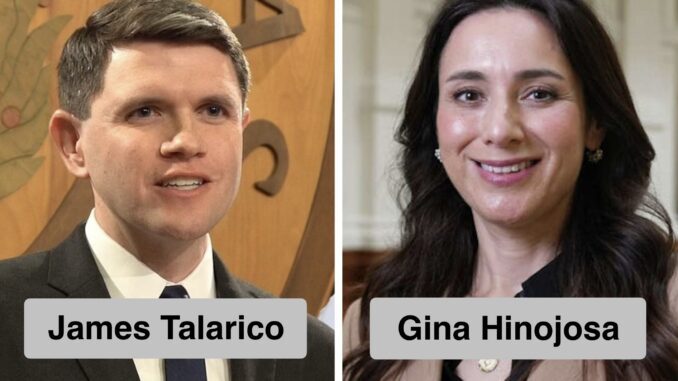
James Talarico beat Ken Paxton to become the first Democrat sent to the U.S. Senate from Texas since Lloyd Bentsen in 1988. Gina Hinojosa sent Greg Abbott back to private life and became the first Democrat elected governor since Ann Richards, and the first Latina ever to run the state. Vikki Goodwin retired Dan Patrick. Democrats swept the statewide executive offices and took the Texas House. Republicans lost four of the five congressional seats they had so carefully drawn for themselves. Bobby Pulido, a Tejano singer, took roughly 62 percent in the 15th Congressional District and sent Trump loyalist Monica De La Cruz home.
The Valley did the heavy lifting. Combined turnout jumped from under 34 percent of registered voters in the last midterm to about 42.5 percent. Talarico carried Hidalgo County by 46 points, two years after Trump won it. Starr County swung something like 72 points. LULAC figures roughly 1.6 million Latinos voted statewide. “We are literally the majority,” a Valley voter told a reporter, and she was right. She always had been. There is not, in fact, any county that touches the Mexican border between San Diego, California and Brownsville, Texas that did not turn blue.
And Texas, I think, was probably blue all along. On Tuesday it finally showed up to prove it.
The patrón is dead. The Parrs are a historical footnote nobody pulls over to read. And the border those magazine writers called America’s Third World in 1975 has become the front porch of the biggest trading relationship on the planet. Mexico is now this country’s largest trading partner, Laredo is the busiest port of entry in America, and the Valley runs on trucks, bridges, factories and families crossing the river in both directions every day. Money moves through the border now, and power has a way of following money. The people who live there have figured out that their votes finally carry the weight of their work.
Willie Velásquez told them half a century ago that su voto es su voz. It took fifty years and one broken promise too many, but South Texas found its voice, and it turns out it was loud all along. The cow heads are still in the freezer case. Pass the tortillas. Texas is open for business, and this time the people of the border have a seat at the table, and they’ve pulled back the chairs to invite the rest of America to join the feast.
This article was originally published on Texas to the world.
 James Moore is the New York Times bestselling author of “Bush’s Brain: How Karl Rove Made George W. Bush Presidential,” three other books on Bush and former Texas Governor Rick Perry, as well as two novels, and a biography entitled, “Give Back the Light,” on a famed eye surgeon and inventor. Mr. Moore has been honored with an Emmy from the National Academy of Television Arts and Sciences for his documentary work and is a former TV news correspondent who has traveled extensively on every presidential campaign since 1976.
He has been a retained on-air political analyst for MSNBC and has appeared on Morning Edition on National Public Radio, NBC Nightly News, Last Word with Lawrence O’Donnell, CBS Evening News, CNN, Real Time with Bill Maher, and Hardball with Chris Matthews, among numerous other programs. Mr. Moore’s written political and media analyses have been published at CNN, Boston Globe, L.A. Times, Guardian of London, Sunday Independent of London, Salon, Financial Times of London, Huffington Post, and numerous other outlets. He also appeared as an expert on presidential politics in the highest-grossing documentary film of all time, Fahrenheit 911, (not related to the film’s producer Michael Moore).
His other honors include the Dartmouth College National Media Award for Economic Understanding, the Edward R. Murrow Award from the Radio Television News Directors’ Association, the Individual Broadcast Achievement Award from the Texas Headliners Foundation, and a Gold Medal for Script Writing from the Houston International Film Festival. He was frequently named best reporter in Texas by the AP, UPI, and the Houston Press Club. The film produced from his book “Bush’s Brain” premiered at The Cannes Film Festival prior to a successful 30-city theater run in the U.S.
Mr. Moore has reported on the major stories and historical events of our time, which have ranged from Iran-Contra to the Waco standoff, the Oklahoma City bombing, the border immigration crisis, and other headlining events. His journalism has put him in Cuba, Central America, Mexico, Australia, Canada, the UK, and most of Europe, interviewing figures as diverse as Fidel Castro and Willie Nelson. He has been writing about Texas politics, culture, and history since 1975, and continues with political opinion pieces for CNN and regularly at his Substack newsletter: “Texas to the World.”
Keep Independent Journalism Alive – Support The AIMN
Dear Reader,
Since 2013, The Australian Independent Media Network has been a fearless independent voice – holding power to account and delivering journalism that matters.
Running this site isn’t cheap. Rising costs mean we need your support now more than ever. Every donation, big or small, keeps our servers running, our writers working, and our stories free for everyone.
Donate here:
PayPal or credit card – just click on the Donate button below
Direct bank transfer: BSB: 062500; A/c no: 10495969

We’ve also set up a GoFundMe as a dedicated reserve fund for hosting and future improvements.

Thank you for standing with us. We couldn’t do this without you.
With gratitude,
The AIMN Team
I love the smell of history lessons in the morning.
This is what the MAGAts crying election fraud don’t understand. When you seriously piss off people who rarely vote, they will vote en masse and, given the aforementioned pissing off, not for you.
Geez ….. ”The American Dream” is a Hollywood pipedream, real life is a 19th century ordeal in Texas. THAT is what makes the Talarico Hinojosa victory so satisfying for an Australian political activist.
Isn’t the “American Dream” a scream? This bullshit stuffed and promoted nightmare is a state stolen, degraded, primitive, defective, abused, corrupted and John Wayned up its own Khyber Pass. It has been an arena for showy shit, distorted despair, evils, crimes, gloating amid general suppression. Hollywood’s Texas loved moneymaking filth and fantasy therein, but reality was so often humiliating, shortened, tragic, uncivilised. Now, it might enter, at least, the twentieth century…