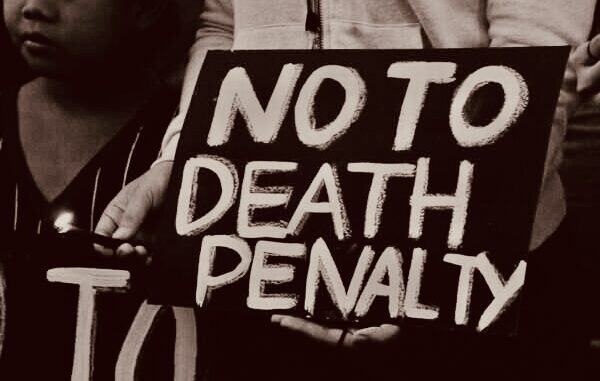
Nidal Hasan killed 13 people and injured another 32 at Fort Hood in Texas on 5 November 2009. He was sentenced to death by a military court-martial in 2013. He is due to be executed by firing squad on 3 December 2026. The US Department of Defence had announced plans to livestream the execution, but President Donald Trump cancelled the livestream on 15 October (US time).
Hasan is no doubt guilty of horrific crimes. The people he killed deserved to live, and their families have suffered losses that can never be remedied. However, we must still ask ourselves whether livestreaming his death would have served any purpose of punishment.
I am against the death penalty. I believe it should be removed from the law books. However, there is a separate argument against broadcasting Hasan’s death that should concern people who support the death penalty as well as those who oppose it. What would the livestream have achieved that carrying out the sentence would not? The cancellation does not make that question any less relevant.
The Australian Law Reform Commission identifies six commonly cited purposes of sentencing. These include retribution, deterrence, rehabilitation, incapacitation, denunciation and restoration. Deterrence splits into two categories – specific deterrence (the offender) and general deterrence (other people who may offend).
These purposes can provide us with seven questions to consider when assessing the proposal to livestream Nidal Hasan’s execution.
1. Retribution
When we punish an offender for retribution, we are saying they deserve punishment for what they did. We hold that the offender is morally responsible for their actions and should receive a punishment that reflects the seriousness of their offence.
Many people who support the death sentence for Hasan will likely believe that he deserves to die for the 13 people he killed. This is a valid argument if you believe in the death penalty.
However, the court-martial panel has already determined that he deserves to be put to death. The panel did not require an audience. The number of people watching his execution would not have affected his sentence.
2. Specific deterrence
Specific deterrence aims to stop the offender from reoffending by ensuring that they are punished sufficiently to deter them from doing so in the future.
This won’t work for Hasan.
If Hasan is executed, he will be dead. He cannot reoffend whether one person watches him die, or one million people watch him die. The livestream would have done nothing further to stop him from reoffending.
3. General deterrence
The main argument used by those who wanted to livestream his execution was that if we show people what happens to those who commit serious crimes, maybe they will not commit them.
The US Secretary of Defence argued that we should livestream the execution because people need to know that if you commit a serious crime, there are serious consequences.
There is a big difference between showing people that Hasan was sentenced to death for murder and showing people his execution.
We already know that he has been sentenced to death. We can let people know that he is scheduled to be executed and what that means. We don’t need to show them it happening.
4. Rehabilitation
We can’t rehabilitate someone dead. Once someone is executed, they have no chance to learn from their mistakes and become a better person in society.
This is a consequence of having the death penalty. It isn’t caused by livestreaming the execution.
There is nothing that livestreaming his execution could have done to rehabilitate Hasan. He would still have been dead.
5. Incapacitation
Incapacitation stops an offender from committing further offences. Usually this is done by locking them up, but other restrictions on their liberty can also serve this purpose.
Execution is the ultimate form of incapacitation.
Those who support the death penalty will say that by executing Hasan we are stopping him from committing further offences.
If we don’t livestream his execution, he will still be unable to commit further offences.
Even if the execution had been livestreamed, he would still have been unable to commit further offences.
A livestream would not make him any less able to commit offences or harm others than the execution itself would.
6. Denunciation
Denunciation allows the state to tell society that what someone did was wrong.
By sentencing someone for a crime, we are telling society that what they did is unacceptable. We are saying the offender did something our society will not tolerate.
Those who supported livestreaming Hasan’s execution might argue that showing the public his death would denounce what he did.
However, if we want to denounce his actions, we should focus on telling the world what he did.
We can show people why he was sentenced to death. We can tell them what happened to the victims and the survivors. All of that will help denounce his actions.
We don’t need to show the world what it looks like to kill a person to achieve that.
7. Restoration
Restoration repairs the harm caused when someone commits a crime. It can be as simple as paying back someone you stole from or as complex as helping repair the harm done to a community after an act of violence.
There is no way to undo what Hasan did. Thirteen people are dead, and no amount of money or punishment can bring them back.
However, we can try to help the victims of his crimes. We can acknowledge that what he did was wrong and help those who were affected recover.
How would livestreaming his execution have helped with that?
It could not have brought anyone back. It could not have undone the injuries survivors suffered.
Keely Vanacker lost her father, Michael Grant Cahill, on that day. She spoke out against the proposed livestream of Hasan’s execution. She believed it would draw more attention to Hasan than to the people affected that day.
Families who have already had their lives turned upside down could have faced even more media coverage.
The public should be able to scrutinise what is done in their name.
There was one more argument for livestreaming his execution.
If the US government is going to execute someone, shouldn’t the public be able to scrutinise what it does?
Yes. We should know what happens when someone is executed. We should know if they are being tortured or if the government is breaking the law while doing it.
Some anti-death-penalty activists may agree with allowing greater public scrutiny. They believe that people should see what happens when someone is executed.
However, there is a difference between allowing people to witness an execution and making footage of it available to the whole world.
Independent observers can witness an execution. The government can release information about what happened to the public. We can allow journalists to cover it.
We don’t have to make footage of someone being killed available to every citizen in the world.
There is also a difference between allowing someone to record an event for scrutiny and broadcasting that event to the world.
Conclusion
We have looked at seven recognised purposes of punishing someone for their crimes. None of those purposes provided a convincing justification for the proposed livestream of Nidal Hasan’s execution.
The US government did not publicly provide a convincing justification for why it wanted to livestream Nidal Hasan’s execution.
We can hate what he did and believe that he should be put to death. But we should also believe that the US government was right to abandon the plan to put on a show around his death.
The purposes of punishment allow us to examine this question without having to agree on whether we believe in the death penalty.
There was no convincing justification to livestream Nidal Hasan’s execution. The fact that it was seriously considered should inform any future proposal to broadcast an execution.
The 13 people Nidal Hasan killed deserve to be remembered for their lives, rather than having the attention focused on the person who took those lives.
 Roger Chao writes on the political, social, cultural, and policy issues shaping Australia today. His work frames current events within a historical and global perspective, tracing the deeper forces behind national debate. A firm believer that ideas have public implications, he examines how societies and communities understand and come to define themselves and imagine futures.
Keep Independent Journalism Alive – Support The AIMN
Dear Reader,
Since 2013, The Australian Independent Media Network has been a fearless independent voice – holding power to account and delivering journalism that matters.
Running this site isn’t cheap. Rising costs mean we need your support now more than ever. Every donation, big or small, keeps our servers running, our writers working, and our stories free for everyone.
Donate here:
PayPal or credit card – just click on the Donate button below
Direct bank transfer: BSB: 062500; A/c no: 10495969

We’ve also set up a GoFundMe as a dedicated reserve fund for hosting and future improvements.

Thank you for standing with us. We couldn’t do this without you.
With gratitude,
The AIMN Team

Be the first to comment