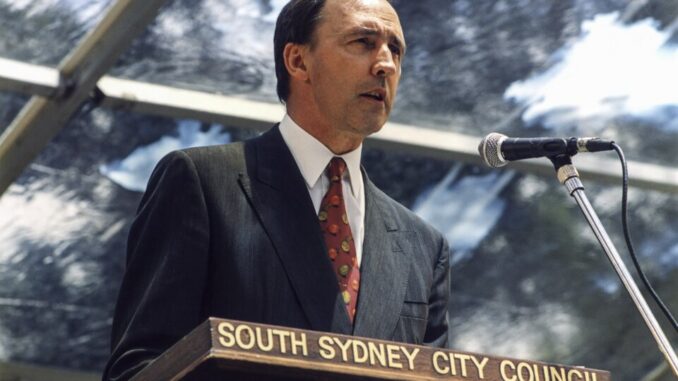
A few years ago I read Don Watson’s biography of Paul Keating, Recollections of a Bleeding Heart: A Portrait of Paul Keating PM. Watson worked as Keating’s senior speechwriter from 1992 to 1996. In this award-winning 2002 political memoir he detailed their working relationship and how they wrote those speeches together.
Two of Keating’s most acclaimed speeches – the Redfern Park Speech (1992) and the Unknown Australian Soldier Eulogy (1993) – are widely regarded as among Australia’s finest. The book itself was an instant bestseller and critical success, yet it famously caused a lasting rift between Keating and Watson over who truly authored specific lines.
What stood out most was how Watson made political history feel alive through creative storytelling and clear, direct writing. The book offered a deep interpretation of Keating’s character and political strategies while conveying the high stakes and drama of his time as prime minister. Watson balanced detailed research with a human touch, making the biography both informative and deeply engaging. When I finished, I thought it was brilliant – one of the best political books I have ever read.
I have often been surprised since then to hear of Keating’s terse remarks about Watson. On 28 August 2026 I came across an essay about the book in The Conversation. It took me back to my reading of Recollections of a Bleeding Heart.
Despite the praise the biography received, Keating criticised how Watson portrayed him. He felt the book focused too much on personal feelings and psychological speculation rather than the wider framework of his public life and achievements. Keating reportedly believed Watson’s approach softened or misunderstood some of his motivations and key decisions. Still, I believe Watson did a wonderful job, and his writing made me want to read more of his work.
Books such as American Journeys, Death Sentence: The Decay of Public Language, and The Bush stand out as fine examples of a talented writer at his best. What I remember most about American Journeys is the way Watson captures the immensity and contradictions of the United States as he travels across the country, meeting people from all walks of life. Death Sentence is a smart, sharp examination of political and public language, showing how words shape the way we think and act. In The Bush, Watson brings the Australian landscape and its people to life, weaving history, personal reflection and vivid description in a way that made me see familiar places differently. He spent much of his childhood in Gippsland, Victoria; the words he uses to describe the taming of the bush have stayed with me for their insight, ruggedness, humour and whimsy.
So what are the responsibilities of a writer of biographies? Should they all write in the more traditional manner of Graham Freudenberg?
Freudenberg’s style is more objective. He usually presents events and facts with little personal interpretation, keeping a clear distance from his subject. In contrast, Don Watson often includes himself in his writing, mixing his own ideas and voice into the story. This makes his biographies more personal and interpretive. While this gives Watson’s work its distinctive style, it is also something Keating disliked.
Keating publicly said he was unhappy with how Watson portrayed him. He felt Watson focused too much on his emotions and psychological motives instead of fully exploring his achievements in office and the broader political picture. Keating especially disliked Watson’s habit of interpreting his actions in personal or speculative ways, which he thought led to misunderstandings about his intentions and legacy. He believed the biography missed or downplayed the main principles and goals that guided his leadership, and he wished his broader vision for Australia had received more attention.
One key part of both Keating’s legacy and Watson’s writing is their focus on public speeches. In the biography, Watson shows Keating’s talent as a speaker and how his speeches moulded public opinion and reflected his vision as a leader. These passages help explain Keating’s political decisions and allow Watson to explore the power of language and rhetoric – an interest that runs through much of Watson’s other work. By looking closely at Keating’s speeches, Watson demonstrates how words can shape a country’s identity and collective memory. This connects the biography to the larger question of how political leaders communicate and create a lasting impact.
As far as I know, Keating has never fully or publicly explained why he disliked Watson’s book.
My Thought for the Day
The way you think and feel about yourself affects every aspect of your life. When you love, accept, respect others and approve of yourself, you validate your existence.
Keep Independent Journalism Alive – Support The AIMN
Dear Reader,
Since 2013, The Australian Independent Media Network has been a fearless independent voice – holding power to account and delivering journalism that matters.
Running this site isn’t cheap. Rising costs mean we need your support now more than ever. Every donation, big or small, keeps our servers running, our writers working, and our stories free for everyone.
Donate here:
PayPal or credit card – just click on the Donate button below
Direct bank transfer: BSB: 062500; A/c no: 10495969

We’ve also set up a GoFundMe as a dedicated reserve fund for hosting and future improvements.

Thank you for standing with us. We couldn’t do this without you.
With gratitude,
The AIMN Team

Whatever. Keating’s comedic performances during Question Time were the most entertaining aspect our parliament during the Hawke / Keating era.
It has often surprised me that Keating either wasn’t offered or declined to accept overseas postings either to the UN or an ambassadorship in London or Washington.
Why do you think that is, John ?
Terry M asks about Keating’s career halt, but, he “knew” he was in for a long opposition agony, had irritated many, friends or foes, was ready to speak up and out, enjoyed baiting, so that even friends did not rely on him, or even trust.., so Keating said, upon losing, that is it. We have missed some possibilities…
@ Phil Pryor: After the significant election loss in 1993, the Murdochcracy Media Manipulation Monopoly undertook a pre-election bad mouthing campaign against Labor and Keating personally, misrepresenting facts as a matter of practice. Little Johnny Howard, the three times loser of LIASRBRAL$ leadership ballots, was sold as ”the saviour of Australia” ….. and the foundations of our present economic and personal discomfort was planted in Australian politics.
Hopefully one day soon a historian will evaluate the COALition policies from 1996 to 2007 and show the links between the Murdoch demands for a third rate slow Internet structure that favoured SkyLie subsidiaries plus the other atrocities committed against Australian voters by a nasty little self-serving politician.
Cocky, what you say is behind my compressed note. I wish I’d offered more. (old, slow) It remains a sourness that Jack Howard was a classmate and I/we didn’t warn everyone.., but who was know this scab would arise and thrive.
I agree with my Lord’s comments…I think Watson is one of our best writers..intelligent, humorous and incisive.I liked Keating too, but no doubt his towering self belief and barbed tongue put some people off, but who wouldn’t swap him for the third rate”managers” that now infest our politics?