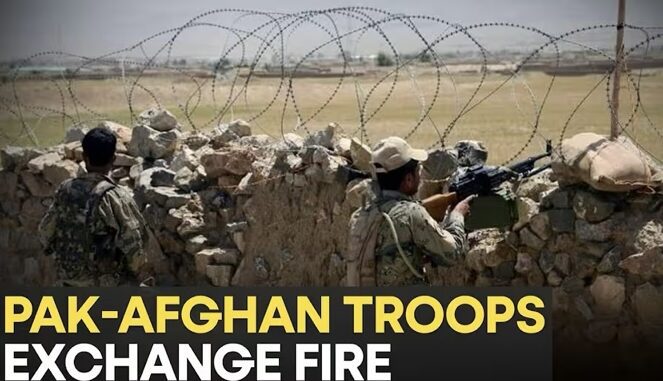
Afghanistan and Pakistan: Beyond the Border
The Durand Legacy, Militant Networks, and the Challenge of Turning Power into Sustainable Order
By Wahidullah Noorzai
Contents
Introduction: When a Border Dispute Becomes a Question of Power Structures
1.The Field, Geography, and the Limits of State Presence
2.From Sindh and Punjab to the Durand Line: A Border Formed Through Colonial Expansion
3.The Afghan Taliban and Tehrik-i-Taliban Pakistan: Shared Roots, Separate Organisational Structures
4.Pakistan: Regional Influence Without Complete Control
5.Tactical Success and the Failure to Turn It into Sustainable Security
6.The Delegation of Armed Power and the Problem of Institutional Control
7.Pakistan, the West, and Strategic Dependence Combined with Bargaining
8.From Field Realities to Strategic Outcomes: Assessing Control, Power, and
Consequences
Conclusion: The Issue Is Not Only the Border; It Is the Ability to Turn Power into Sustainable Order
Selected References
Introduction: When a Border Dispute Becomes a Question of Power Structures
In security operations, one reality cannot be ignored: presence in an area is not the same as control over that area. Deploying forces, establishing bases, reopening routes, and conducting operations may each form part of a security mission. Yet none of these actions, on its own, demonstrates that the environment has come under effective control.
I came to understand this distinction through my responsibilities in road security and public order in Afghanistan. In the field, a route may be open from a military perspective while movement along it remains unsafe and unpredictable. Security forces may be deployed at designated points, yet the surrounding environment, local relationships, and connecting routes may remain beyond effective control. In such circumstances, a security presence exists, but security has not yet been transformed into a sustainable order.
This experience is also relevant to understanding relations between Afghanistan and Pakistan. The problem between the two countries cannot be reduced to the Durand Line dispute, cross-border attacks, accusations of support for armed groups, or political rivalry. Behind these developments lies a historical and social structure in which geography, colonial legacies, cross-border relationships, militant networks, security calculations, and regional power competition are interconnected.
The Durand Line is not simply a line on a map. It emerged in an environment where social, economic, and ethnic relationships already existed before the boundary was established. Militant networks have also developed within these complex environments,where formal state borders have not been able to eliminate all historical and social connections.
Pakistan, meanwhile, has used its geographical and security position over several decades to establish strategic relationships with external powers. These relationships, particularly with the United States, have expanded, contracted, and been reactivated at different points in time. Yet regional influence, military capability, and external support do not necessarily translate into complete control over other actors or the consequences of security policies.
To understand this situation, several concepts must be distinguished: presence, influence, control, operational effect, and strategic outcome. Presence refers to deployment and access. Influence refers to the ability to affect another actor’s behaviour. Control involves the capacity to regulate and constrain that actor’s decisions and conduct. Operational effect concerns the immediate results of an action in the field. A strategic outcome emerges when that action produces a lasting change in the security environment.
These concepts may appear closely related, but in practice, the distance between them can determine the fate of an entire security policy.
1. The Field, Geography, and the Limits of State Presence
In the field, geography is more than terrain and elevation. It is part of the structure of power. Mountains, valleys, passes, commercial routes, and the distances between administrative centres directly affect state access, the movement of security forces, and the relationships between local communities.
Across eastern Afghanistan, from Kunar and Nuristan to Nangarhar and parts of the areas bordering Pakistan, geography is closely connected to social and political structures. Routes are not merely channels through which people and vehicles move. They also carry trade, family visits, social relationships, and information. These connections do not necessarily correspond to the formal boundaries of states.
However, the difficulty of the terrain should not be interpreted as evidence of an inherent inability of the state to administer border regions. The central issue is the nature of state presence and the quality of its relationship with society. A state may have administrative offices, security bases, personnel, and formal institutions in a particular area. Yet if it cannot provide services, justice, public trust, accountability, and predictable order, its administrative and military presence does not necessarily become sustainable control.
Through my responsibilities in road security, I learned that controlling a route cannot be achieved simply by positioning security forces at a number of points. A route must be understood as a connected environment. Its security depends on knowledge of the geography, the relationship between different locations, the behaviour of local communities, continuity of presence, response capacity, and confidence in the responsible security structure. Reopening a road may be the result of a successful operation. Maintaining its security, however, requires work that extends beyond that operation. If connecting routes, the surrounding environment, and the conditions that reproduce insecurity are not understood and managed, the initial achievement may remain vulnerable.
This distinction becomes even more important in border regions. Controlling a crossing point is not the same as controlling its surrounding environment. Securing a town is different from establishing order in the valleys and routes connected to it. The presence of security forces in an area does not, by itself, mean that the social and economic networks around it are being effectively managed.
Armed actors can exploit precisely this gap between the state’s formal presence and its actual control over the environment. They may draw on local relationships, social knowledge, cross-border connections, and weaknesses in institutional coordination. Under these conditions, the question is not simply how many forces are deployed. It is how effectively the state understands and influences the environment in which it operates.
This reality can be examined on both sides of the border, although the political, administrative, and security structures of Afghanistan and Pakistan are not identical.
2. From Sindh and Punjab to the Durand Line: A Border Formed Through Colonial Expansion
Understanding the Durand Line requires returning to a period before the agreement of 1893. Today’s political boundaries did not emerge in a historical vacuum. They were shaped by the expansion of power, imperial competition, and decisions that were not always aligned with the existing social relationships of the territories concerned.
Britain annexed Sindh in 1843 and incorporated Punjab into British India in 1849. As colonial authority expanded across these territories, the north-western frontier became increasingly important. Britain faced a geographical and political space in which directly administered territories, mountainous regions, tribal communities, and Afghan territory were interconnected.
These developments formed a historical sequence: the expansion of British control through Sindh and Punjab, the extension of frontier policy towards the tribal areas, and the subsequent effort to define the limits of influence between British India and Afghanistan.
This historical connection does not mean that the Durand Line geographically extended to Sindh. Sindh and Punjab represented earlier stages of British colonial expansion. The Durand Line emerged later in the north-western frontier and in relation to Afghanistan.
On 12 November 1893, Amir Abdur Rahman Khan and Sir Mortimer Durand, the British representative responsible for foreign affairs in India, signed an agreement that defined their respective spheres of influence along parts of the frontier. The main process of demarcation took place between April 1894 and May 1896. The agreement’s language concerning spheres of influence, the subsequent demarcation process, and later Anglo-Afghan agreements should be distinguished from the modern legal arguments advanced by Afghanistan and Pakistan about the boundary’s status. Historical accounts do not support treating every later legal question as settled by the 1893 text alone.
The Encyclopaedia Iranica study of Afghanistan’s boundaries and Bijan Omrani’s research on the history and problems of the Durand Line examine this process from historical and geographical perspectives.
The significance of the agreement was not limited to drawing a line on a map. The boundary crossed environments in which social, economic, and traditional relationships had already developed. Established routes of movement and the territories in which local communities lived did not necessarily correspond to the new political division.
A fundamental problem emerged: a political boundary could be drawn, but social relationships could not be reorganised simply by drawing the same line across them.
British policy in the frontier regions also extended beyond boundary-making. Indirect administration, local arrangements, relationships with tribal leaders, and special legal structures formed part of the system used to manage these territories. A special frontier regulatory framework developed through the Frontier Crimes Regulation of 1872, subsequent revision in 1887, and the more comprehensive 1901 regulation. The 1901 framework became a particularly important instrument of colonial frontier administration.
Following the creation of Pakistan in 1947, the new state inherited the boundary established during the colonial period. Afghanistan, at different times, challenged its political and legal validity. An inherited colonial arrangement consequently became a persistent element of relations between the two countries.
The strategic issue, however, extends beyond the legal dispute itself. Whenever policymakers treat the border solely as a military or administrative line, they risk overlooking the social and economic realities surrounding it. In this environment, the border is part of the structure of power, and managing it without understanding the communities and relationships that extend across it reduces a complex political problem to a purely military one.
3. The Afghan Taliban and Tehrik-i-Taliban Pakistan: Shared Roots, Separate Organisational Structures
The relationship between the Afghan Taliban and Tehrik-i-Taliban Pakistan (TTP) requires an examination that avoids two misleading interpretations: first, that the two organisations have no meaningful relationship and operate in complete isolation from one another; and second, that they constitute a single organisation with identical command structures and objectives.
The reality lies between these two positions.
The Afghan Taliban and the TTP emerged from related historical, social, and ideological environments. Pashtun ethnic and social connections, religious and educational backgrounds associated with Deobandi currents, the experience of the Afghan war, and relationships among commanders and armed groups have all contributed to their historical proximity.
These connections are more than ideological similarities. The International Crisis Group report of 27 February 2026 discusses the historical and ideological relationships between the two sides. The TTP publicly announced a renewed pledge of allegiance to Afghan Taliban leader Hibatullah Akhundzada on 17 August 2021, two days after the Taliban entered Kabul. This is evidence of an important organisational and ideological relationship; it is not, by itself, proof of a single operational command.
Nevertheless, historical connections and organisational allegiance do not, by themselves, prove that the two organisations operate under a single operational command. The Afghan Taliban and the TTP remain distinct organisational structures with different areas of activity, political priorities, and operational objectives.
The Afghan Taliban fought to take control of Afghanistan’s political system and assumed responsibility for governing the country after 2021. The TTP’s principal objective has been armed opposition to the Pakistani state and the transformation of its political and security order.
Research by the Combating Terrorism Center at West Point has examined the influence of the Afghan Taliban’s organisational model on aspects of the TTP’s structure, including the development of central and provincial arrangements. This organisational influence should not be confused with the merger of the two organisations or proof of a unified command.
For security analysis, this distinction is essential. Historical relationships, allegiance, cooperation, and organisational similarities can influence the behaviour of armed groups. None of these, however, replaces the need to examine command structures, resources, decision-making, and organisational autonomy.
Pakistan’s security policy must also be examined in relation to the way armed groups have been classified according to the type of threat they pose and their perceived relationship with state interests. At different times, some groups have been treated as direct threats to domestic security, while others have occupied different positions within regional calculations.
The discussion of a distinction between so-called ‘useful’ and ‘threatening’ militant groups is part of this history. However, the existence of such a policy pattern does not prove that all groups were directed through one unified plan.
The difficulty is that armed networks do not develop in completely separate social and ideological environments. Family, educational, religious, jihadist, financial, and organisational relationships can extend beyond formal institutional boundaries.
Changing the classification of an armed group does not necessarily change the relationships that sustain it. A state may regard an actor as useful or manageable at one point, but it cannot necessarily regulate every historical and social connection surrounding that actor simply by changing its official designation or security priority.
This does not mean that all groups are identical. Differences in objectives, organisation, command, and operational behaviour must be maintained. But ignoring their shared historical and social connections also produces an incomplete picture of the security environment.
4. Pakistan: Regional Influence Without Complete Control
Since its creation, Pakistan has defined national security in close connection with its geographical position, rivalry with India, the question of Afghanistan, and its relationships with external powers. The Pakistani Army has occupied a position extending beyond that of a conventional military institution, playing an important role in national security, foreign policy, and domestic power relations.
However, military strength should not be confused with complete control over every actor and development in the region.
In field-informed analysis, influence means the capacity to affect another actor’s behaviour. Control means the ability to regulate that behaviour, constrain decisions, and establish accountability. The two may overlap at particular moments, but they do not necessarily remain aligned.
A state may influence a political or armed actor, maintain a relationship with it, or benefit from its capabilities under certain circumstances. Yet such a relationship does not guarantee that the actor will follow the priorities of its sponsor under all conditions.
It may possess its own resources, social relationships, objectives, and calculations.
The relationship between Pakistan and Afghanistan must be examined through the same distinction.
At different times, Islamabad has sought to influence developments in Afghanistan and prevent the emergence of a political structure in Kabul that it considered contrary to its security interests. Yet the Taliban’s return to power in 2021 did not mean that Pakistan’s security expectations had been fully realised.
The TTP has become a serious challenge to Pakistan’s internal security. Islamabad alleges that the group operates from Afghan territory and that the authorities in Kabul have failed to prevent it. Taliban authorities reject the allegation and dispute Pakistan’s account of responsibility. These positions must be attributed to the actors making them. Neither side’s claims should be presented as established fact without independent supporting evidence.
The International Crisis Group report of February 2026 indicates that relations between the two countries deteriorated sharply following the October 2025 clashes, with the TTP issue becoming one of the principal sources of disagreement.
What matters here is the gap between influence and control. A state may influence an actor without being able to determine its decisions in every circumstance. It may benefit from a network’s capabilities at one stage and later find that it cannot constrain its behaviour.
Under these conditions, the issue is no longer confined to foreign policy. The consequences of a security relationship return to the domestic environment and affect public safety, government forces, the economy, and political stability.
Influence that cannot be translated into control may produce consequences that the state itself is unable to regulate fully.
Continued tomorrow… Tactical Success and the Failure to Turn It into Sustainable Security
 Wahidullah Noorzai is a former senior officer of the Afghan National Police, with professional experience in the Afghan National Civil Order Police (ANCOP). His work focuses on security and military affairs, geopolitics, and the political economy of insecurity, particularly in Afghanistan and its wider regional environment. His analytical approach combines firsthand professional experience with independent research to examine how geography, local realities, political decisions, and relationships of power shape security and strategic outcomes. Wahidullah is also the founder of NIDA (Noorzai International Doctrine Academy), an initiative dedicated to field-informed strategic thinking and analysis.
Keep Independent Journalism Alive – Support The AIMN
Dear Reader,
Since 2013, The Australian Independent Media Network has been a fearless independent voice – holding power to account and delivering journalism that matters.
Running this site isn’t cheap. Rising costs mean we need your support now more than ever. Every donation, big or small, keeps our servers running, our writers working, and our stories free for everyone.
Donate here:
PayPal or credit card – just click on the Donate button below
Direct bank transfer: BSB: 062500; A/c no: 10495969

We’ve also set up a GoFundMe as a dedicated reserve fund for hosting and future improvements.

Thank you for standing with us. We couldn’t do this without you.
With gratitude,
The AIMN Team
“Influence that cannot be translated into control may produce consequences that the state itself is unable to regulate fully.”
Which is what we see with the dying global hegemon.
The US instigated wars against Russia and Iran, and has lost control of both.
Steve, I appreciate your observation. I believe this raises a broader strategic question that extends beyond any single country or conflict.The distinction I am making is between the ability to influence events and the ability to control their consequences. A major power may possess overwhelming military, economic, and diplomatic capabilities, yet still find that the behaviour of other actors, the dynamics of the conflict, and the wider regional environment develop beyond its ability to manage them.However, loss of control in a particular conflict should not automatically be equated with the decline of global hegemony. These are related but distinct questions.From my perspective, the deeper lesson is that power should not be measured only by the ability to initiate action or shape events. It must also be assessed by the capacity to regulate consequences, sustain outcomes, and maintain strategic freedom of action.Influence can open the door to power, but without control over consequences, it does not necessarily produce a sustainable strategic outcome.
“…the deeper lesson is that power should not be measured only by the ability to initiate action or shape events. It must also be assessed by the capacity to regulate consequences, sustain outcomes, and maintain strategic freedom of action.“
Yes, indeed.
This is what makes Iran’s efforts at this time, so impressive.
I agree that Iran presents an important case for examining this distinction. However, the strategic assessment should consider not only a state’s ability to resist external pressure or impose costs, but also its capacity to preserve its gains, manage escalation and translate immediate advantages into sustainable political and strategic outcomes.
That distinction is central to my argument: the real measure of power is not simply what a state can achieve in a confrontation, but what it can sustain afterwards.