Part 3: The Path Forward – What Unrigging the System Actually Requires
By Sue Barrett
This is the final part of our investigation. In Part 1, we documented how the Australian fair go was systematically dismantled: wages decoupled from productivity, secure work became casualised, and housing transformed from shelter into a speculative asset.
In Part 2, we followed the money to see who benefited and revealed the lobbying machine that made it happen: the well-connected network of corporate donors, industry associations and political operatives who rewrote the rules in their favour.
That brings us to the crucial final question. If the damage is so clear and the architects so identifiable, why does the resulting frustration so often get directed at the wrong targets? Why do we fight each other over the scraps instead of uniting to challenge who holds the plate?
One of the answers, in this complex web, lies in a powerful psychological trap that converts legitimate economic grievance into political fuel for the very system that caused it. It is called The Wealth Paradox.
SECTION 5: The Wealth Paradox – Why You’re Voting to Stay Poor
Here’s the question everyone should be asking: If the system is rigged against you, why do you support parties that protect the riggers?
Political psychologist Frank Mols (with Jolanda Jetten) documented this in The Wealth Paradox. Their research reveals an uncomfortable truth: The more economically squeezed people feel, the more likely they are to support tax cuts for the rich and oppose wealth redistribution.
It’s not stupidity. It’s psychology.
How the Paradox Works
- Aspirational identity: You define yourself by where you hope to be, not where you are. “I might be wealthy one day, so I don’t want policies that punish success.”
- Status anxiety: When your economic position slips, you protect psychological status by identifying upward (with the wealthy) not laterally (with other workers). Supporting wealthy-friendly policies becomes proof “I’m not one of those people.”
- Just World belief: Accepting the system is rigged means accepting you’ve been played. Psychologically easier to believe “the wealthy earned it.”
- Symbolic grievance: Can’t fight abstract market forces or complex lobbying. But you CAN fight immigration, political correctness, cultural change. Economic pain gets channelled into culture wars.
Something worth noting: The Psychology of Extreme Wealth
Frank Mols’s work reveals this paradox creates a feedback loop that benefits the wealthy. However, the psychology of extreme wealth itself completes this vicious cycle. Research, including that cited by social scientists like Professor Paul Piff, indicates that as wealth accumulates, empathy and social connectedness can diminish. The wealthy increasingly inhabit segregated worlds: gated communities, private schools, exclusive clubs. This physical and social separation fosters a mindset where the rest of society becomes abstract, an ‘other’.
This is not just about being mean; it is a structural outcome. When you no longer share public transport, public hospitals, or public schools with the broader community, your incentive to fund them plummets. Wealth is then diverted from public goods that benefit everyone into further private fortification: luxury assets, tax avoidance structures, and political donations to protect the status quo. The money ceases to circulate for societal improvement and is hoarded to rig the system further. The recent Stage 3 tax cuts, which delivered over half their benefit to the wealthiest 20% of earners, are a textbook example of this rigging in action.
Therefore, idolising wealth is a profound error. We are not admiring benevolent ‘job creators’ but a class whose defining project is often the defence of its own privilege. Their success is frequently measured not by what they build for society, but by how effectively they extract from it and lock their gains away. The Wealth Paradox tricks us into aspiring to join a group whose ultimate goal is to ensure no one else can follow. Breaking the cycle requires us to see this clearly: solidarity with each other offers a path to a better life; aspirational identification with them guarantees only a more divided, meaner and more rigged society.
This Is Exactly What Is Happening Right Now
So let’s get back to those Gen X men shifting their vote. As identified by strategist Kos Samaras, they have real, documented economic grievances. After a historic collapse, real wages fell by 4.2% from March 2020 to December 2023 (ABS Wage Price Index). While there has been a fragile recent catch-up, the damage is done. Housing is now out of reach, costing 8.8 times the average annual income (ANZ CoreLogic Report).
However, these grievances are not random: they are the direct outcomes of an economic model that has prioritised wealth extraction over wealth creation for decades.
This process is called financialisation.
Financialisation describes an economy where profits are increasingly sought through financial channels -speculation, debt, and maximising shareholder returns- rather than through investment in productive capacity, innovation, or wages. The evidence is in our daily lives: while corporate profits and share markets hit records, the share of national income going to workers has been in decline for decades. Your stagnant wages are not an accident; they are the outcome of a system engineered for extraction.
Parties like One Nation do not offer to dismantle this system. They offer:
- Cultural recognition (”people like you matter”)
- Status restoration (”remember when your voice counted?”)
- Simple targets (migrants, elites, feminists)
- Aspirational identity (”we defend real Australians”)
No policies to restore penalty rates. No wealth tax. No corporate accountability. Just cultural grievance that makes you feel heard while the wealth extraction accelerates.
Why the Mates Need the Paradox
The Wealth Paradox is the social glue that holds the ‘Game of Mates’ (from Part 2) together.
- A financialised, rigged system creates deep economic anxiety in workers.
- Economic anxiety produces status anxiety and a search for simple answers.
- Status anxiety makes workers identify upward with the wealthy “aspirational” class.
- Upward identity makes workers support policies (like tax cuts for the rich) that benefit the wealthy.
- The wealthy extract more wealth, inequality grows, and the cycle continues.
It is perfect. The more they rig it, the more you identify with them, the more you support their rigging.
One Nation is not breaking the paradox. They are selling it. They offer cultural identity and status restoration while supporting the very economic policies that benefit the wealthy at the top.
Breaking Free
Mols’s research shows what breaks the cycle:
- Make the rigging visible. When you see the specific mechanisms, like we have documented, the “just world” belief collapses.
- Reframe identity. You are not a ‘temporarily embarrassed millionaire’. You are a worker whose productivity gains were stolen through systematic lobbying.
- See where your interests actually lie. They align with other workers, not with CEOs making 55 times your wage (ACSI CEO Pay Report).
- Recognise the con. You are being sold cultural grievance as a product while the Mates laugh all the way to bonuses.
The choice is stark: keep playing the paradox and voting to stay poor or break it and fight for policies that actually serve your economic interests.
This is the trap. Now let us talk about how women already broke out of it, and what that teaches us.
SECTION 6: Women Did Not Rig The System – We Were Fighting It All Along
When you see women in workplaces, in leadership positions, earning similar (though still not equal) pay, that is not women taking anything. That is women winning back, inch by hard-fought inch, what was systematically stolen from us for generations. We did not take jobs from men. We claimed jobs that should have been available to anyone qualified: a basic right that was denied to us by law and policy.
The system that excluded women was explicit, recent, and deliberately economic.
- Until the early 1970s, major banks routinely required a married woman to have her husband’s permission to open a bank account.
- Married women in the Commonwealth Public Service faced a “marriage bar” and were legally forced to resign: a policy only abolished on 21 December 1966.
- Until the 1984 Sex Discrimination Act, it was perfectly legal for banks to deny a woman a credit card or a mortgage in her own name.
- Legally mandated “equal pay for equal work” was not won until 1969, and “equal pay for work of comparable value” not until 1972.
This was not an accident of history. The “male breadwinner” model was not a natural social arrangement. It was a state-sanctioned economic policy. Its purpose, as argued by economic historians and feminist scholars like Marilyn Lake in Getting Equal: The History of Australian Feminism, was dual: to artificially constrain the labour supply (which propped up wages for a protected class of male workers) and to legally ensure a vast pool of unpaid domestic labour was available to service the workforce and raise the next generation. This model, often enforced through the arbitration system’s concept of a “family wage,” was a deliberate pillar of Australia’s 20th-century industrial architecture. The dismantling of this system is not a loss for men, but a correction of a rigged game.
This is the crucial link. When women fought our way into the paid economy, we did not take jobs from men. We entered an arena whose rules had been actively written to shut us out. Our fight was never against men, but against this rigged structure.
And the evidence is clear: dismantling this rigged system benefits everyone.
Countries with higher gender equality have better economic outcomes for all: higher GDP per capita, stronger social safety nets, and lower overall inequality. When women gain economic equity, it expands the pie. Yet, the legacy of that old system is measured in our economy today, proving nothing can be taken for granted:
- The full-time total remuneration gap still sits at 21.7% (WGEA, 2023-24).
- Women retire with 25% less superannuation than men (ABS, 2021-22).
- Women perform the bulk of unpaid care work – 37.4 hours per week to men’s 21.7 (ABS, 2021).
The Same Rigged Machine Exploits Us All
The machinery that enforced those old rules is the same machinery now driving your economic insecurity. It never disappeared; it just found new targets:
- Paying everyone less than their productivity justifies, with real wages only beginning a fragile recovery after a historic fall (ABS Data).
- Casualising work to strip away entitlements and security.
- Extracting wealth upward to executives and shareholders, with CEO pay ratios ballooning (ACSI).
- Destroying collective bargaining power, with union membership in the private sector at a crisis point of just 8.3% (ABS).
Women have been on the frontline of this fight for decades, if not, centuries. The battles for equal pay, paid parental leave, affordable childcare, and super fairness were never just “women’s issues.” They were, and are, core battles against an extractive economic model.
That is exactly what you are facing now. The difference is you are being told to blame us instead of joining us in fighting the system that exploits us all.
What Women’s Experience Teaches: The Blueprint for Agency
The lesson from this long fight is not about guilt. It is a blueprint for agency. Women learned that a rigged system does not change through goodwill. It changes when the cost of maintaining it becomes unsustainable. Agency is not given; it is built through specific, collective action. Here is the template:
- Redirect the Target: We did not waste energy blaming individual men. We organised to change the laws and policies that created our second-class status. Your fight is not with migrants or women; it is with the lobbyists, tax laws, and corporate structures rigging the economy.
- Build Lateral Solidarity, Not Aspirational Identity: We rejected the aspirational trap (“maybe I’ll marry rich”) and built power with each other. Your power lies in solidarity with other workers, not in identifying with billionaires.
- Play the Long Game: We fought for the Sex Discrimination Act (1984)and paid parental leave over generations. Unrigging the system you face is also a 20-year project. It requires sustained pressure, not just election-cycle outrage.
- Demand the System Serves People: We insisted that workplaces accommodate family life. The fight now is to demand an economy that serves secure work and affordable housing, not just capital accumulation.
Women broke the Wealth Paradox by refusing to internalise the system’s logic. That is the template. The path forward isn’t about finding someone to look down on. It’s about finding common cause to look up at the real architects of insecurity, and using collective power to demand a fair go for everyone.
SECTION 7: What Unrigging Looks Like: Real Solutions
You are right that the system is rigged. The question is: what do we do about it?
Blaming migrants and women gives you the satisfaction of having a target, but changes nothing. The system remains rigged. One Nation offers symbolic victories but will not restructure the economy to benefit workers.
Here is what actually unrigging requires: direct reversals of the policies we traced in Part 1, breaking the power of the Mates we named in Part 2.
1. Tax Wealth, Not Just Work
The Problem:
- Capital gains taxed at a discounted rate compared to wage income.
- Inheritance largely untaxed, entrenching dynastic wealth.
- Super tax concessions overwhelmingly benefit the wealthy.
- The Stage 3 tax cuts, as analysed by the Parliamentary Budget Office, delivered 53% of their benefit to the top 20% of earners, tilting the system further.
The Solution:
- Remove the 50% capital gains tax discount.
- Implement a modest wealth tax on assets over $5 million.
- Introduce inheritance taxes on large estates (with a high threshold, exempting the family home).
- Close trust and corporate structure loopholes used for avoidance.
Why it works: These are levers to directly reduce the inequality where the top 20% hold 78% of all wealth (ABS). They rebalance an economy skewed towards financial accumulation. These measures do more than raise revenue. They challenge the logic of hoarding and ‘othering’ by reclaiming a portion of concentrated wealth for the public good: for the schools, hospitals, and infrastructure that rebuild a shared society. It is a practical step to reverse the dynamic where vast wealth ceases to circulate and instead works to rig the system further.
2. Restore Worker Power
The Problem:
- Casualisation has stripped entitlements and bargaining power.
- Union membership has collapsed to 12.5% of the workforce, destroying collective voice (ABS).
- Wage theft is rampant, with weak enforcement.
The Solution:
- Strict limits on casual employment (automatic conversion to permanent after 6-12 months).
- Multi-employer bargaining so workers in similar industries can bargain together for better pay and conditions.
- Meaningful wage theft penalties with real consequences for directors.
- Restore penalty rates to decent levels and protect the right to strike.
Why it works: Australia’s highest wage growth coincided with high union membership. Countries like Germany and Denmark prove strong worker protections coexist with high productivity and thriving businesses.
3. Housing as Shelter, Not Speculation
The Problem:
- The core equation is broken: housing costs 8.8 times average income (CoreLogic).
- First-home buyers are locked out.
- 70% of renters are in rental stress, paying over 30% of their income.
The Solution:
- Wind back negative gearing (grandfather existing investments, no new claims).
- Remove the CGT discount on investment properties.
- Massive social housing construction program (true public housing, not just “affordable” branding).
- Strong renter protections: limits on increases, longer secure leases.
Why it works: This directly reverses the policy settings that fuelled the crisis. Cities like Vienna (60% social housing) show it is possible to de-financialise housing and treat it as essential infrastructure.
4. Democratic Accountability and Transparency
The Problem:
- Money buys political access and outcomes.
- Corporate lobbying rewrites rules in favour of the Mates.
- A revolving door exists between big accounting/lobbying firms and government departments.
The Solution:
- Public, real-time beneficial ownership registers so we know who truly owns companies.
- Strict caps on political donations and a ban on corporate donations.
- A lifetime ban on the revolving door between Treasury/regulators and the Big Four accounting firms.
- Citizens’ assemblies to deliberate on major policy free from lobbyist influence.
Why it works: This dismantles the “Game of Mates” operating system. Sunlight is the best disinfectant. When lobbying and influence are forced into the open, it becomes harder to rig the game in back rooms.
The Common Thread
Notice what connects all four solutions:
- They shift power from concentrated capital back to labour and citizens.
- They require radical transparency.
- They tax accumulated wealth, not just effort and work.
- They are proven, existing policies from other democracies.
These are not utopian fantasies. They are choices. The current rigged system is also a choice: one designed by people with power to benefit people with power. It can be redesigned.
CLOSING: The Choice
You are right to be angry. You should be furious.
Real wages went backwards when the cost of living soared. Housing became a fantasy for a generation. Secure work evaporated. Wealth concentrated at the very top while CEO pay hit 55 times the average worker’s wage.
However, you have a choice about where to direct that anger.
One Nation offers symbolic victories. They will rant about immigration, talk tough about “Aussie values,” make you feel heard.
However, check their policies: they will not restructure the tax system. Will not restore penalty rates. Will not rebuild union power. Will not make housing affordable by tackling negative gearing. Will not tax wealth. Will not hold corporations accountable.
Because the people who fund and benefit from the current rigged system -the Mates- rely on the Wealth Paradox to keep you distracted.
The people who pulled the rug are not migrants working two jobs or women who fought their way into workplaces that excluded them for generations.
The people who pulled the rug are:
- CEOs paying themselves 55x worker wages.
- Corporations lobbying for tax loopholes.
- Property investors speculating on a human need.
- Industry associations that destroyed penalty rates.
- Employers who casualised your work.
- The politicians they wined, dined, and donated to.
These people have names. Addresses. Lobbying firms. They are not hidden.
You can get angry at people with no power, or you can direct your anger, and your energy,at people with enormous power who used it to restructure the economy in their favour.
The former is easy. The latter is necessary.
Do Not Be a Mark in Their Con
Your anger is legitimate. Your target has been wrong. And the people who profit from that misdirection are counting on you staying distracted.
You have real agency. But only if you get the target right.
Every solution begins with a conversation. This is that conversation.
The questions are: will you keep fighting over scraps with other workers? Or will you look up at who is holding the plate?
What You Can Do Right Now: The Long Game
Changing a rigged system is a long game, but every game is won play by play. Your power builds incrementally.
Start With Conversation:
Use the facts from this series. Ask the questions we have outlined. Share that one-paragraph summary: “Homes cost 9 times an average income. CEOs make 55 times what their average worker earns. The top 20% own 78% of all wealth. Who benefits from you not looking at that data?”
Build Solidarity:
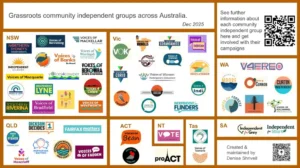
Join or follow your union. If that is a step too far, simply have a coffee with a coworker and talk about work conditions. Break the isolation. Look into the Community Independents Project, a movement focused on electing genuine local representatives to take community priorities, not party directives beholden to vested interests, directly to parliament. This is about building power where you live.
Target Decision-Makers:
Use tools like They Vote For You to see how your MP votes on housing or tax bills, then call their office. Demand answers on lobbying meetings.
Support Counter-Power:
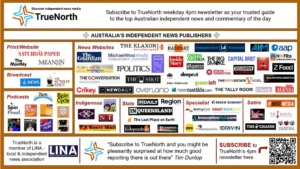
Subscribe to one independent media outlet doing accountability work (e.g. Michael West Media, Crikey, Anthony Klan’s The Klaxon). Use services like TrueNorth, founded by my friend, Denise Shrivell, which aggregates and elevates quality independent journalism in Australia. Support research from organisations like The Australia Institute. This support is crucial. It breaks down the information segregation that allows the wealthy to operate in a separate reality. It forces sunlight onto the systems of hoarding and rigging, making them a public concern rather than a private privilege.
The goal is not to do everything at once. It is to break the isolation the system depends on. Choose one step and take it.
Final Thought: The system is rigged. But it was rigged by people, and it can be unrigged by people. Movements win. The 8-hour day, equal pay, Medicare, universal superannuation: all were won against entrenched power by organised people who refused to accept the world as it was.
The people benefiting from this rigged system are counting on you staying isolated, distracted, and powerless.
Prove them wrong.
A sincere thank you for reading and supporting this work. I know there are experts and scholars far more knowledgeable than me, however, I am someone trying to make sense of a challenging world so I can move past helplessness and into action. My aim is to help others do the same: to find clarity, build common ground, and reclaim the agency we need. A fairer system is possible but only if we build it toget
You know what to do.
Onward we press
This article was originally published on Sue Barrett
See also:
Keep Independent Journalism Alive – Support The AIMN
Dear Reader,
Since 2013, The Australian Independent Media Network has been a fearless voice for truth, giving public interest journalists a platform to hold power to account. From expert analysis on national and global events to uncovering issues that matter to you, we’re here because of your support.
Running an independent site isn’t cheap, and rising costs mean we need you now more than ever. Your donation – big or small – keeps our servers humming, our writers digging, and our stories free for all.
Join our community of truth-seekers. Donate via PayPal or credit card via the button below, or bank transfer [BSB: 062500; A/c no: 10495969] and help us keep shining a light.
With gratitude, The AIMN Team

Be the first to comment