By James Moore
In the annals of broadcasting, there has never been a more misguided juxtaposition than a beer and pizza joint next to a radio station. When I parked my roommate’s Buick Skylark in front of the cinderblock structure that housed the tubes and wires that comprised KCUZ-AM radio, I was only marginally more interested in a job than I was in the quality of the pepperoni at the adjacent enterprise. I had abandoned graduate courses in literature at Arizona State University to pursue a job in broadcast journalism and had no way of knowing I was doomed, at least for a few years, to being a disc jockey, trying to assert a clever personality that was not a reliable part of my character. Harry Chapin’s song W.O.L.D. was blasting away on every radio station in the land and was detailing a future where I would be alone in the dark behind a control board tossing off lines like, “Hey, I’m playin’ the hits while you’re sprayin’ your pits this morning.”
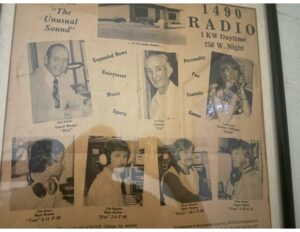
There was work, though, in the White Mountains of Eastern Arizona. The station was a 1000 watt daytime broadcaster with an ID that played at the top of every hour, proudly bragging that it was, “Music for all of Greenlee County, Eastern Arizona and Western New Mexico, provided by K-CUZ, 1490 on your AM dial.” I learned later that Spanish explorer Francisco Vázquez de Coronado had come up through the same mountain passes in 1540 looking for the legendary Seven Cities of Cibola, built of gold. I doubted, when I looked at the facade of KCUZ, I was going to have any more luck finding fortune than the failed explorer, but at least I got to drive a misfiring Skylark instead of sitting a horse.
The receptionist, a local blond beauty, snapping gum, took me back to meet the general manager, who I had mailed a tape and resume’ to express interest in employment. Roy was wearing a blue cardigan sweater with gray slacks and looked like he was going to be departing for the tee box as soon as we had finished our conversation. No golf course existed in those mountains, though. Instead, he overwhelmed me with enthusiasm, asked a bit about my background, and then whether I was ready to join their on-air team. Of course, there was no “team” yet, and I was the first announcer he had interviewed. A student from Morenci High School, just up the mountain from Clifton, the station’s location, did the afternoon broadcast slot and Roy managed the first half of the day. There must have been a tower of long-playing albums stacked somewhere to consume the hours.
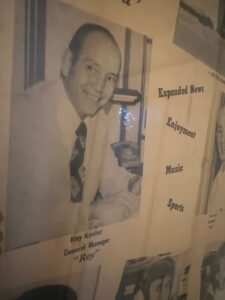
“Well, what do you think?” Roy asked. “You wanna be a part of what we’re doing here?”
“Is that an offer of employment?” I asked.
“Yeah, I liked your tape. You’ve got an education. We could use you.”
“My experience is limited to college radio. The tape I sent you was produced for me by a DJ at the Buck Owens station in Phoenix. He charged me $50 and made me come in after midnight for the production.”
“Doesn’t bother me. Sounded good. You want mornings or afternoons?”
“What’s the pay?”
“Not much. I can only do $100 a week, but if advertising takes off, as we are confident it will, there will be decent raises all around within six months. The Phelps Dodge copper mines are booming right now. See no end in sight.”
My first thoughts when I heard the number for my pay were about the four years of undergraduate education followed by a year of grad school, which I did not finish because I decided it was time to grow up and find a job. I was tired of living off pocket change.
“Well, okay. I guess that’ll do for now,” I said.
“Excellent.” Roy stood and offered his hand. “Can you start next week?”
“Actually, Roy, I could’ve started this afternoon if I’d brought a change of clothes.”
My curse, I realized as I drove back down to Phoenix to tell my roommate I was leaving for a little town nobody had ever heard of, was that I was always worrying about money. My parents did not have much as laborers with six children and they even fought over where they would find the $65 dollars for the monthly mortgage payment. As I was scratching out stories on a Big Chief tablet in elementary school, I knew I wanted to be a writer, something far different from my mother and father, but I also understood at a near-cellular level I needed money. Becoming a starving artist had limited appeal. After high school, though, I began envisioning a cold water flat in New York City, hanging out with other bedraggled authors, waiting tables and writing dark novels in our off hours, talking in coffee shops about the importance of literature and the absurdities of haiku. My degree in journalism meant I might have an ability to earn a decent wage, though, while I wrote in evenings and on weekends, which is the brilliant rationale that led me to the obscure endeavors of KCUZ radio and $100 a week.
I had a burning ambition to have more than two pairs of pants and two shirts to wear to school, which led me to begin my work life in my early teens in a scatalogical pursuit. A veterinarian up on the highway in Michigan near the AC Delco spark plug plant needed his dog and cat cages cleaned out on weekends. His daily helper, understandably, wanted time off to clear his nostrils. My job was to chase the animals out of their cages, remove the soiled newspaper laid across the bottom, dank with urine and feces, hand scrub the cage, and replace with fresh newspaper before returning the animal to its confinement. I counted 36 cages I had to scour. Upon completion, I turned on a hose and chased cat and dog turds across the floor with a stream of water that dumped into what the vet told me was his “honey pot.” I still gag with the memory.
I must have smelled like I was qualified for my next employer because I was hired to jump into a ditch ten to fifteen feet deep and assemble pieces of crock pipe together to link households disconnected from their septic systems and hook them into the city’s new sewer line. There was no OSHA to oversee safety protocols, which meant the backhoe operator, my bossman, dug a deep gash in the earth and ordered me to jump into it as he dropped the crock pipe sections down to me. My job was to soap up the male end, and yes, the jokes proliferated from above, and shove each one into the female flange of the previous crock. These were the years when I learned the physics of the gravitational and administrative fact that “all shit flows downhill.”
Everyone who works in America believes in the mythology of the dream, that if they put in sufficient effort they will be rewarded with success in the form of cash or comfort. Few people in this country have ever entertained the notion that our capitalism is a failed construct. Those lying in the ditch on the side of the road are victims of their own inadequacies. America did not fail; they did. I have never met two people who worked longer or harder hours than my parents; my mother slinging burgers at truckers and factory workers and my father lifting bumpers out of a metal press to be delivered to an automotive assembly line. In the winters, when I was a boy, I sat with my brother and two youngest sisters in Daddy’s old Studebaker as he walked picket lines during union strikes, trying to get more health care and retirement benefits. The breaks he took were to come back to the car, start the engine, and turn on the heater to warm his four children before he switched the ignition off, left us in the cold, and returned to carrying his picket placard along the sidewalk, chanting for fairness, as the snow blew sideways, stinging his face and eyes with icy pellets.
My turn joining the American work force felt no less desperate up in those Arizona mountains. Tom, Tim, Steve, and I were on the air less than a year before the commodity prices of copper began to fall. The mines up on the mountain in Morenci had begun laying off workers, who slowed the buying of their own commodities at the grocery stores and hardwares and restaurants and gas stations. Even though the radio station’s air time was so inexpensive we used to tell potential advertisers they could easily afford our commercials because our rate card was simplified to “a dollar a holler.” I was still managing on my $176.43 take home pay every two weeks and shared an $80 a month apartment with Tom, the afternoon DJ, up on one of the switchbacks across from the radio tower. A rented apartment at $40 per person was still a bargain anywhere in the country.
“Had an interesting exchange with Ira today,” Tom said. His voice always struck me as composed of a strange mixture of gravelly and in a single monotone.
The station had signed off at sundown as required by its license, and we were, as was our custom, splitting pitchers of beer and slices of pizza on the deck next door. The restaurant’s location remained mysterious to me because there were no other businesses on that side road and anyone wanting their pizza had to drive or walk to get to their counter and order.
“What about?” I asked. “I don’t think he’s ever done much more than grunt in my direction since we all started.”
“Well, he suggested the four of us head down the mountain and get jobs at stations in Tucson.”
“Hilarious,” I said. “Does Ira think we’d be up here if we could get gigs in Tucson?”
“I don’t think he thinks anything about us,” Tom said. “But it was a warning. He said more layoffs are coming at Phelps Dodge, and he didn’t know what his cash flow was going to be like from month to month.”
“It’s already pretty desperate around here,” Tim said. “We had a guy on Tradio today who was trying to sell a plastic, hand-cranked ice cream maker. He only wanted $4. Kept calling me back all day to ask if anyone had called in and asked about it.”
Tim was not the sensitive type, and had a personality as sharp-edged as his angular face suggested, but he was visibly saddened by the conversation and how humbling it must have been for the man to make such a call. I thought it had t o have hurt to let his voice be heard on the radio by his friends and neighbors.
“Man,” I said. “I hope he got the money. He obviously needs it.”
“He did get it,” Tim said.
“Somebody came by the station to buy it?”
“No, I bought it. Told him I was an ice cream freak and didn’t have the money to buy an electric one. It’s cracked on the side and doesn’t seem to crank. Anyway, he was pretty depressed looking and beaten down and thanked me over and over and over since I gave him five bucks instead of just four.”
“Oh, man,” I said. “Was he working at the mine?”
“Not any more. Got laid off two months ago when the slow down started. Said he had three kids and his wife cried all day and they had no idea what to do next. No family anywhere around.”
Steve, who was our sports guy, tossed back the rest of his beer and stood. “Well, I know what I’m going to do,” he said. “I’m getting out of here. No point waiting on the inevitable. I’m heading up to Page to see if I can get a job at one of the stations there and spend my life on vacation on the big lake.”
There were no good-byes from our colleague. He went out the screen door into the Arizona sun and never looked back at us, as if we were part of a bad dream he was awakening from. The old man tossing pizza dough by the oven like he was on the Appian Way watched him depart with an expression that he might have been wondering how we had offended our buddy. None of us three ever again saw or heard from Steve. We quickly, however, began to formulate our departures. Tim just left, too, unannounced the next morning, headed home to a place he had never even mentioned.
“Well, you wanna jump in the Gobbler and travel the country looking for radio stations where we might land jobs?”
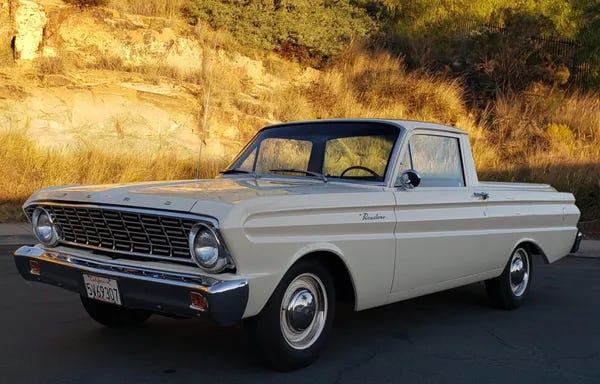
Tom had given his Ford Falcon pickup the nickname because he viewed it as a turkey, a mechanically failed machine, as inept as a living creature that was known to drown itself by looking up into the rain.
“Sure, why not?” I said.
“I’m gonna ask Earl if he wants to tag along. He just lost his job at the station down in Casa Grande.”
“Okay, but aren’t there just two seats in the Gobbler?”
“Yeah, we’ll put a lawn chair in the back and take turns sitting in it.”
“Sounds safe.”
In 48 hours, we were gone, our last checks from Roy and Ira cashed and the station feeling like a house abandoned by a disinterested family. When we went out the door, I turned and saw on Ira’s face the lines that communicated he was wishing he were young again, and Roy’s wincing and wondering what the hell he was doing with his life at a corn popper radio station on the edge of the American Outback. Outside, Earl jumped up into the bed of the Falcon where he had tied the aluminum legs of the nylon lawn chair to cargo loops along the railing. Our duffel bags of clothes would serve as pillows when needed and a styrofoam ice chest was loaded with soda, beer, and water.
In what seemed like minutes, we had crossed into New Mexico and were coming up on Silver City. We turned south to catch the interstate toward El Paso and were consumed by a dust storm with the air so thick with dirt that zero visibility forced Tom to pull over. Earl demanded to be let into the cab and we squeezed together breathing dust and sweating on each other, unable to roll down the window for relief. The Gobbler struggled to start after the storm, probably because the air filter was brown and clogged, but we got it running and puttered into a gas station outside Lordsburg to clean the truck and ourselves. We still had time to make our destination for the day, the Guadalupe Mountains, where we unrolled our sleeping bags beneath the shadow of El Capitan just as the last long light of the West lit the rock face with a shift of orange and yellow.
Three days later the faltering Falcon delivered us unto the Red River Valley in northwest Louisiana. Redbud and magnolia trees were in full bloom along the river and we rode through pecan bottoms in cool spring shade. Earl demanded to have his seat back in the truck bed as we passed through red pastures of Indian Paintbrush, violets, and buttercups in an almost unreal spray of color across the landscape. The scenery did not change as we arrived in Natchitoches, bought a loaf of bread and lunchmeat and sat on benches beside the river eating bad sandwiches. Tom had grabbed a copy of the local newspaper and was so smitten with the little town that he was scouring the want ads for jobs.
“Y’all aren’t going to believe this,” he said. “But there’s an ad in here for a radio station that says they have an opening for three announcers.”
“What? Here in Natchitoches?” I asked.
“Yeah, and if these call letters are correct, I think it’s on the main street up the stairs behind us. Pretty sure I saw them when we parked.”
“Let’s go get our tapes out of the Gobbler and knock on their door.” Earl threw half his sandwich in a trash can and started up the concrete steps, not looking to see if we were following.
The general manager was kind and enthusiastic when the receptionist took us to his office. I had the impression we might have been a vision of answered prayers. After telling us about his three DJs who had quit at the same time, without explaining why, he took our tapes and resume’s and asked us to come back in a couple of hours after he’d had a chance to listen and go over our backgrounds. Back on the river bank, Tom started looking in the paper again for apartments and small houses to rent. There were none even remotely affordable, which, it turned out, did not matter.
“I want to thank you fellas for stopping by,” the general manager said after we had returned. He had never given us his name, nor did he seem to know ours even after the previous introductions by his receptionist and the resume’s he had supposedly read.
“Sure,” I said. “Thanks for meeting with us. Seems like an opportunity and our good luck to come into town when you need people.”
“Yes, yes, your timing is good,” he said. “I was wondering, have y’all heard much about this new computerized broadcasting?”
“I read something about it,” Tom said. “Seems kind of crude and impersonal to a local audience, to me.”
“Maybe a little bit. But I gotta tell ya, I’ve been weighing the pros and cons, and after listening to y’all’s tapes, I think I’m gonna go with the computer programming to play music and do weather.”
I was stunned. Tom was angry. Earl stared at the floor. Our meager broadcast skills had just prompted a small town station manager to chose a machine over humans. Even if we were unsophisticated and rough-hewn as professional DJs, we were still upright on two legs, breathing and talking and could read the news and weather and introduce records.
“You sure that works?” Tom asked.
“Yeah, I saw a demo. The music’s all recorded onto a cartridge and there are electronic cues that prompt the carousel to turn and play the next record. I think that’s the direction I’m gonna go. I think it might be the direction the industry goes, too.”
A diminutive man with thinning hair in a blue button-down collared shirt, he rose and offered his hand from behind his desk. I shook it, but Tom and Earl were already out his office door. Back outside, we sat the Gobbler’s tailgate and pondered what was next.
“We aren’t ever going to find three jobs at one station,” Earl said.
“Not likely,” I said. “So, I guess let’s just stop looking, and try to have fun with what little money we have left.”
“And do what?” Tom asked.
“Let’s go to Florida. Spring break starts down there in a few days. And they let you sleep on the beaches in some of those towns. Also, there are girls in bikinis.”
“I guess that settles it, then,” Earl said. “We’re off to the Sunshine State. Isn’t that what they call it?”
“Yeah, it is,” I said. “Let’s just go and see what happens.”
I drove and the Gobbler ran more smoothly than it had since we’d left Arizona, as if it were equally as excited about our destination. We got our first view of the Gulf of Mexico down along the white sands in Mississippi and grew more hopeful with every mile we moved eastward. Work could wait, a little while. It was always out there somewhere. We just needed to find it.
This article was originally published on Texas to the world.

James Moore is the New York Times bestselling author of “Bush’s Brain: How Karl Rove Made George W. Bush Presidential,” three other books on Bush and former Texas Governor Rick Perry, as well as two novels, and a biography entitled, “Give Back the Light,” on a famed eye surgeon and inventor. His newest book will be released mid- 2023. Mr. Moore has been honored with an Emmy from the National Academy of Television Arts and Sciences for his documentary work and is a former TV news correspondent who has traveled extensively on every presidential campaign since 1976.
He has been a retained on-air political analyst for MSNBC and has appeared on Morning Edition on National Public Radio, NBC Nightly News, Last Word with Lawrence O’Donnell, CBS Evening News, CNN, Real Time with Bill Maher, and Hardball with Chris Matthews, among numerous other programs. Mr. Moore’s written political and media analyses have been published at CNN, Boston Globe, L.A. Times, Guardian of London, Sunday Independent of London, Salon, Financial Times of London, Huffington Post, and numerous other outlets. He also appeared as an expert on presidential politics in the highest-grossing documentary film of all time, Fahrenheit 911, (not related to the film’s producer Michael Moore).
His other honors include the Dartmouth College National Media Award for Economic Understanding, the Edward R. Murrow Award from the Radio Television News Directors’ Association, the Individual Broadcast Achievement Award from the Texas Headliners Foundation, and a Gold Medal for Script Writing from the Houston International Film Festival. He was frequently named best reporter in Texas by the AP, UPI, and the Houston Press Club. The film produced from his book “Bush’s Brain” premiered at The Cannes Film Festival prior to a successful 30-city theater run in the U.S.
Mr. Moore has reported on the major stories and historical events of our time, which have ranged from Iran-Contra to the Waco standoff, the Oklahoma City bombing, the border immigration crisis, and other headlining events. His journalism has put him in Cuba, Central America, Mexico, Australia, Canada, the UK, and most of Europe, interviewing figures as diverse as Fidel Castro and Willie Nelson. He has been writing about Texas politics, culture, and history since 1975, and continues with political opinion pieces for CNN and regularly at his Substack newsletter: “Texas to the World.”
Keep Independent Journalism Alive – Support The AIMN
Dear Reader,
Since 2013, The Australian Independent Media Network has been a fearless voice for truth, giving public interest journalists a platform to hold power to account. From expert analysis on national and global events to uncovering issues that matter to you, we’re here because of your support.
Running an independent site isn’t cheap, and rising costs mean we need you now more than ever. Your donation – big or small – keeps our servers humming, our writers digging, and our stories free for all.
Join our community of truth-seekers. Please consider donating now via:
PayPal or credit card – just click on the Donate button below
Direct bank transfer: BSB: 062500; A/c no: 10495969

We’ve also set up a GoFundMe as a dedicated reserve fund to help secure the future of our site.
Your support will go directly toward covering essential costs like web hosting renewals and helping us bring new features to life. Every contribution, no matter the size, helps us keep improving and growing.

Thank you for standing with us – we truly couldn’t do this without you.
With gratitude, The AIMN Team
Be the first to comment