By Dr Dan Steinbock
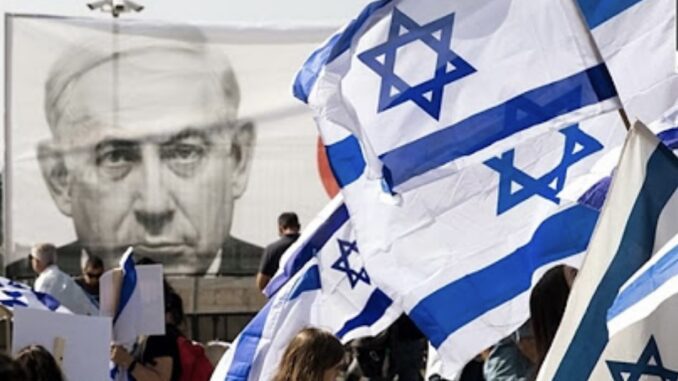
Israel’s political center of gravity has shifted sharply toward security and military power. And with the new segregation of its Arab parties, the fragmented election offers no real change – except a march toward increasing apartheid.
Israel’s 2026 election is occurring in a highly polarized and incendiary political atmosphere that recalls 1995. Then, the Oslo process had split Israeli society between an increasingly radicalized right and a peace-oriented government. As the incendiary political climate was condoned by the right-wing Likud’s Benjamin Netanyahu, Labor’s Prime Minister Yitzhak Rabin was publicly branded a traitor and assassinated by a Messianic Jewish extremist.
The analogy has its limits. In 1995 the central political question was whether Israel should negotiate with the Palestinians. In 2026, the argument is taking place after October 7, three years of war, the obliteration of Gaza, intensified West Bank settlement and displacement, and Israeli military operations involving Lebanon and Iran.
In the past 10-15 years, the country’s political center of gravity has shifted sharply toward security and military power, documented in my The Fall of Israel (2024).
Recent polls have the Netanyahu and opposition blocs tied at about 50 seats. Neither side has a reliable governing coalition, while the Israeli Arab parties held the balance – until their representation was undermined.
International media muses about the “knife-edge Israeli elections” between the incumbent Netanyahu and his rivals, tacitly suggesting that the latter offer “hope” and “change.” In reality, the Israeli vote is not a conventional left-right election, but a referendum on who controls the Israeli state after years of permanent war—and what kind of state emerges from it.
It’s not a pretty picture.
Two major blocs and the unaligned
In the 120-member Israeli parliament, the Knesset, no single party has a majority. Effectively, the rivalry is between two blocs of parties: the Netanyahu-led harsh-right and the rival bloc, led by former IDF chief Gadi Eisenkot, that is portrayed as centrist (though it, too, is slanted toward right).
Current polling suggests that the election may produce no clear outcome. Each major bloc attracts about 50 seats. Garnering up to 20 seats, the smaller unaligned groups are expected to have a critical role in the next government coalition. Or so the conventional wisdom goes.
Benjamin Netanyahu’s Likud remains committed to military primacy, opposition to Palestinian statehood and a security-centered conception of Israeli sovereignty.
Once again, Likud’s campaign presents him as the indispensable protector of Israel in a hostile region, despite the catastrophic October 7 failure occurring under his watch. That depiction is fully misaligned with the war crimes he remains accused of.
In the absence of effective opposition alternatives, Netanyahu’s main rival, the centrist-populist Yashar (“honest”) bloc, has promoted itself as a more moderate option. Yet, its leader Gadi Eisenkot is a security hawk and the architect of the Obliteration Doctrine that was first tested in Dahiya, Beirut in 2006-7 and perfected in the Gaza genocide 2023-26. Eisenkot regards Palestinian statehood as effectively “irrelevant.”
Recent reporting, however, reinforces the limits of the promised alternative: the opposition says it would curb extremist settler violence, dismantle illegal outposts and restore some cooperation with the Palestinian Authority, yet its leading figures still reject Palestinian statehood. A change of government could alter methods and international relations without changing the underlying territorial consensus.
Next come labor, far-right, religious and Arab parties, which each could attract about 7-11 seats.
Led by Yair Golan, the labor Democrats are the clearest major Jewish-Zionist force advocating a negotiated Palestinian settlement, while still maintaining a strongly security-oriented posture. For a year or two, the popular Golan has tried to consolidate and expand Israeli left. His dream is to restore the broad labor front that governed Israel until Likud’s election triumph in 1977. But that’s a tall order.
Since the mid-2010s, Israel has shifted toward the Messianic far-right, thanks to hardened domestic sentiments and billions of U.S. dollars in annual military aid and conservative American-Jewish funding. When the country is consistently rewarded for policies that international law considers crimes, this is hardly surprising.
The far-right, secular and religious not-so-centrists
B’Yachad (“Together”) is an Israeli political alliance led by former Prime Minister Naftali Bennett in partnership with the centrist opposition leader Yair Lapid. Bennett is a veteran far-right religious leader, a technology millionaire. They challenge Netanyahu’s leadership and differ over diplomacy, governance and relations with Washington, but opposition to Palestinian statehood remains widespread. Lapid’s party Yesh Atid (“There Is a Future”) is a centrist, secular-liberal political party founded in 2012, before the far-right tide.
Aligned with religious Zionists and far-right extremists, Bennett explicitly rejects statehood on security grounds. During the Gaza conflict, he championed total blockade. When asked about civilian collateral damage, Bennett responded: “We’re fighting Nazis.” Lapid has historically supported a two-state framework. Yet, in crucial Israeli votes, he has been absent.
Avigdor Lieberman’s Yisrael Beiteinu (“Israel is our home”) is supported by the secular Russian immigrant population. The small party depicts itself as “a national movement with the clear vision to follow in the bold path of Ze’ev Jabotinsky”, the founder of Revisionist Zionism and the hero of the Israeli harsh-right. In the interwar period, Jabotinsky built ties with Fascist Italy.
During the Gaza genocide, Lieberman iterated there are “no innocents in Gaza.”
There are also two religious parties, the mainly Ashkenazi United Torah Judaism (UTJ) and the largely Sephardi Shas. These are the main ultra-Orthodox (Haredi) political parties, representing religiously observant communities. Despite holding a minority of seats, they have served as crucial power-brokers in coalition governments.
The Messianic far-right and Kahanite racists
Spearheading the new far-right is Itamar Ben-Gvir’s racist anti-Arab Otzma Yehudit (“Jewish Power”). As Israel’s minister of national security, Ben-Gvir has advocated intensified killings in Gaza and policies combining siege, military force, Palestinian emigration and settlement. Recently, he said the entire West Bank “belongs to Israel,” while threatening to dismantle Palestinian Authority.
Outside Israel, Ben-Gvir is despised. He is a follower of the late Rabbi Meir Kahane’s violent, Messianic and racist doctrines. In the 1980s, he might have been imprisoned. Today, he is a key player in the far-right.
Bezalel Smotrich’s Religious Zionist Party is annexationist, settlement-oriented and explicitly hostile to Palestinian statehood. Smotrich has advocated Israeli control and settlement of Gaza.
Outside Israel, Smotrich is widely scorned. In Israel, his party remains influential and his support is rising.
Ben-Gvir and Smotrich are popular among the settlers and their powerful political and financial supporters.
The striking fact is that the political spectrum’s mainstream has moved so far toward militarized security that opposition to Netanyahu does not necessarily mean opposition to the underlying territorial and military logic.
Except for the Democrats, Israel’s parties would more or less gladly condone a singular Jewish Israel with Gaza and the West Bank annexed permanently.
Excluding Israeli Arabs from election, democratically
Israel’s 21% Arab/Palestinian population is constitutionally entitled to vote. Yet its political representation is being juridically suppressed.
Israel’s main Arab-majority parties feature:
- Ra’am (United Arab List) stressing civic issues and pragmatism;
- the joint Arab-Jewish left-wing party Hadash;
- secular Ta’al focusing on civil rights and socio-economic issues;
- and the Palestinian nationalist Balad.
In Gaza and the West Bank, Palestinian Arabs live in an apartheid state, but the openly segregationist practices are spilling over within Israel itself. In light of the effective goal of a single Jewish state, that’s logical.
Until recently, Israeli election season had a familiar routine. First, the Central Elections Committee (CEC), a political body, disqualifies Arab candidates and lists. Then, the Supreme Court (SC) restores them to the race. This year the ritual ended. Recently, the CEC voted to bar major Arab-majority lists (Ra’am and the Joint List) from the election. Party leaders and rights groups like Adalah denounced the bans as racist, political, and anti-democratic maneuvers, designed to silence Palestinian citizens of Israel and stop them from influencing the vote.
The SC overturned the committee’s bans on Ra’am and the Joint List, allowing both lists to contest the October 27 election. But it was inclined to disqualify Balad leader Sami Abu Shehadeh, who then withdrew. The episode highlights the increasing politicization of Israel’s judicial checks and the continuing pressure on Palestinian political representation.
Effectively, the SC ruling set different rules for Arabs and Jews – which is consistent with an apartheid state, not with a democracy.
Why this rush to deny Palestinian representation?
Polls have consistently demonstrated that Arab parties could act as kingmakers in a tight election race where neither major Jewish bloc is guaranteed a clear majority. Consequently, the major blocs, particularly the Netanyahu constituencies, have sought to marginalize Arab parties from the election, to ensure another harsh-right victory. Moreover, even Netanyahu’s rivals shun reliance on Arab parties, although that could ensure them a lead.
The exclusion has an obvious political consequence apart from its constitutional implications. It takes Israel a step closer to an exclusively Jewish apartheid state where other ethnic and religious groups are merely second-class citizens – exotic tokens to sustain the semblance of thriving democracy.
Toward apartheid democracy
Israel’s Arab citizens face a peculiar democratic paradox: they may vote, but the principal Jewish blocs increasingly insist that their representatives cannot govern.
In The Fall of Israel, I characterized this trend as “Herrenvolk democracy”; that is, a political system that functions as a democratic state for the dominant ethnic or racial group (the “master race”), but operates as a severe tyranny or apartheid system for disenfranchised minority groups. It used to typify the Antebellum and Jim Crow United States, Zimbabwe (Rhodesia, 1965–1979) and apartheid-era South Africa (1948–1994).
Tragically, as most nations struggle to move forward to the future, Israel is stumbling its way into the past. With the effective support of Washington, it is building a regime of state and local laws, rules and customs reminiscent of racial segregation in the pre-civil rights America.
Indeed, Israeli political discourse increasingly distinguishes between Jewish and Arab political legitimacy. One is prioritized; the other is suppressed.
That is more consequential than inflammatory campaign rhetoric. It concerns the institutional question of who is permitted to participate in determining sovereignty. Whether one calls this racism, ethnonationalism, exclusionary democracy or something else depends partly upon one’s analytical definition. But the underlying facts are difficult to evade.
The world may not be black and white. But the apartheid state always is.
The absent Gaza genocide
In fall 2023, Israel began to engage in genocidal atrocities in Gaza. Yet, it is only today, several years later, that mainstream news organizations are ever so slowly beginning to use the term that they shunned for too long, thus contributing to these atrocities.
The UN Independent International Commission of Inquiry concluded in 2025 that Israel had committed genocide against Palestinians in Gaza and reiterated that conclusion in June 2026. Israel rejects the allegation.
Separately, the International Criminal Court has issued arrest warrants for Netanyahu and his former defense minister Yoav Gallant alleging war crimes and crimes against humanity, including starvation as a method of warfare.
The UN Human Rights Office has also reported concerns over ethnic cleansing in Gaza and the West Bank, citing forcible transfer, destruction and policies apparently aimed at permanent demographic change. In September 2026, the UN reported continuing displacement, settlement expansion and unprecedented settler violence in the West Bank.
In the final days before the vote, this violence became impossible to treat as a distant or abstract concern: on October 16, masked settlers severely beat Washington Post photojournalist Heidi Levine in the West Bank; the next day, a European diplomatic delegation was assaulted near Taybeh while joining the olive harvest. The incidents drew condemnation from Israeli and U.S. officials, while Netanyahu’s office stressed that the facts were still under investigation. Their timing has made settler impunity a direct election issue.
By contrast, the genocide of Gaza is systematically suppressed in Israel’s election campaigns. This creates an uncomfortable political reality: large sections of the political system either support these policies, defend them as necessary security measures, or treat them as politically marginal.
As a result, the electoral debate has largely been conducted within the boundaries established by a militarized conception of security. Gaza and ethnic cleansing are effectively absent in the campaigns.
Jewish supremacy via permanent emergency
In September 2026, the UN Secretary-General again described a Palestinian state along the pre-1967 lines as the credible route to lasting peace, while warning that settlement expansion, evictions, land seizures and displacement are systematically eroding its territorial viability.
The international community still overwhelmingly treats the two-state solution as the principal diplomatic framework. Yet the Israeli electoral mainstream regards Palestinian statehood as unacceptable, premature or irrelevant.
That is strategically consequential. If there is no Palestinian state, the alternative becomes some enduring combination of occupation, annexation, fragmented Palestinian autonomy, unequal sovereignty—or forever conflict.
The election therefore concerns not merely Netanyahu. It concerns whether Israeli politics still regards territorial separation from the Palestinians as a strategic possibility. To ensure the latter response, Netanyahu’s most powerful electoral instrument is not just Likud, but the politics of emergency.
The “October surprise” question has now become explicit. On October 14, Netanyahu said he did not favor a pre-emptive strike on Iran before election day, after rivals accused him of seeking a military confrontation for electoral advantage. That denial is not evidence of a planned attack; nevertheless, the fact that the possibility has entered the campaign underscores how easily regional escalation could reshape the vote.
As long as Israel remains engaged in multiple conflicts, the prime minister can campaign as the man confronting Iran, Hezbollah, Hamas and an increasingly hostile international environment. (The prime minister position is vital for Netanyahu to retain immunity against persistent corruption charges.)
The current election demonstrates how emergency politics can become self-reinforcing. A government fighting wars retains enormous security authority, as security crises elevate the incumbent’s preferred issue. The resulting fear makes effective political alternatives harder to articulate.
Escalation in Iran, Lebanon, Gaza or the West Bank could generate another national-emergency atmosphere during the election period. The conservative prime minister has a dark track-record in manufacturing or exploiting convenient crises – as evidenced by the “inconsistencies” surrounding the Flydubai Flight FZ1073 on September 30, 2026.
Washington – and the world – will feel the result
The election will not simply determine Israel’s next cabinet. For Washington, the central question is whether the alliance remains strategically bipartisan. It is already becoming less so.
A September 2026 Senate vote on reporting requirements concerning West Bank abuses split almost entirely along party lines. Yet, growing Democratic opposition to Israeli policy and increasing concern that Netanyahu’s close alignment with Republicans is turning Israel into a partisan American issue.
For Europe, settlement expansion and Gaza have already produced increasing diplomatic friction. Israel’s international isolation is no longer confined to traditional critics. Several long-standing Western allies have adopted sanctions relating to settlements. Nonetheless, this debate is subject to the far broader friction on European rearmament.
For the Middle East and internationally, the costs have already escalated dramatically. Worse, an Israeli government committed to permanent military presence, settlement expansion or annexation would make Palestinian statehood progressively harder to implement while keeping Lebanon, Syria, Iran and Jordan entangled in Israel’s security architecture.
And for Israel itself, the fundamental choice is deeper than Netanyahu versus his opponents. It is whether the country continues down a model of permanent mobilization, territorial consolidation and military deterrence.
In the absence of international pressure, it is hard to see why the Israeli political system would reopen the key question: How could security ultimately be achieved without a political settlement with the Palestinians?
Unlike 1995, the answer will now be judged not only by the Israelis, but by an international community increasingly prepared to judge Israel’s conduct through the language of international law, as it should.
There can no longer be any lasting political settlement without increasing international pressure – unless Jim Crow is deemed to be the worthy future of the world community in the 21st century.
 Dr Dan Steinbock is the founder of Difference Group and has served at the India, China and America Institute (US), Shanghai Institute for International Studies (China) and the EU Center (Singapore). For more, see https://www.differencegroup.net/ He is also the author of The Fall of Israel (2024), and The Obliteration Doctrine (2025)
This is an updated version of the original published by Informed Comment (US) on October 11, 2026.
Keep Independent Journalism Alive – Support The AIMN
Dear Reader,
Since 2013, The Australian Independent Media Network has been a fearless independent voice – holding power to account and delivering journalism that matters.
Running this site isn’t cheap. Rising costs mean we need your support now more than ever. Every donation, big or small, keeps our servers running, our writers working, and our stories free for everyone.
Donate here:
PayPal or credit card – just click on the Donate button below
Direct bank transfer: BSB: 062500; A/c no: 10495969

We’ve also set up a GoFundMe as a dedicated reserve fund for hosting and future improvements.

Thank you for standing with us. We couldn’t do this without you.
With gratitude,
The AIMN Team
Be the first to comment