By James Moore
“The silence and the heat breed a fierce kind of joy.” (Edward Abbey).
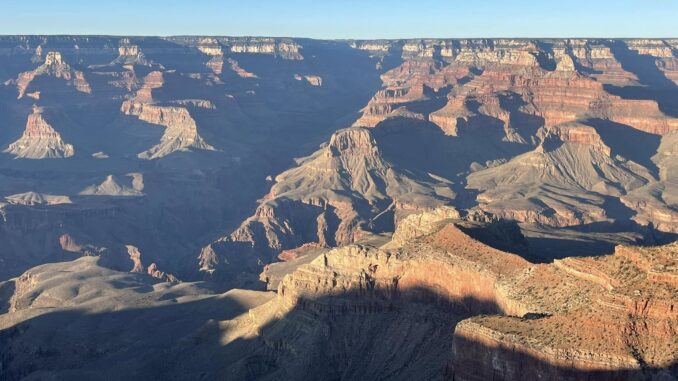
There is a moment I have spent more than fifty years trying to describe and I have never gotten it quite right, though I keep trying. I was nineteen and standing on the South Rim of the Grand Canyon with a postcard in my back pocket that no longer had any purpose. My friend Butch was beside me, home from Vietnam and looking for whatever it was he had left behind when he shipped out. Neither of us said anything for a long time. There was nothing to say that the canyon had not already silently proclaimed. The earth opened up below us in bands of red and buff and green going down through two billion years and I understood more clearly than ever that I was a brief thing, and that being transitory was not a tragedy. I saw it as an invitation, the sheer joy of just living, the impossibility of being alive in the world.
We had hitchhiked across half the country to stand by the rim wall near the El Tovar Hotel with an inscription over its entryway arch, which I will always remember. “Dreams of mountains as in their sleep, they brood on things eternal.” Butch and I were too young to think in terms of eternity but we walked down into the canyon a day later on the Bright Angel Trail with cheap packs and cheaper boots. The temperature climbed as we descended, which seemed to me a violation of some geographic or meteorological rule I had learned in school. The canyon, though, does not care what you learned in school. Every switchback took us further back in time, through stone laid down by seas that dried up before there was anything on the planet with eyes to miss them. We slept by the river that had done all the carving, a bubbly, running ribbon of mighty water that still managed to look too modest for the work attributed to it. I lay awake in my bag on the soft sand of the river bank and listened to it move in the dark and thought that patience must be the most powerful force in the universe. I also thought about another teenaged boy a thousand years after me who might hear the same, endless force and flow of the Colorado, unchanged by the millennia.
The climb out the north side almost broke us. The switchbacks up the North Kaibab seemed designed by somebody with a grudge. Butch, who had humped a rifle and sixty pounds of gear through jungle heat, laughed at me when I stopped to gasp against the red wall of the canyon.
“You wanted to see the West,” he said. “Well, here it is. It’s mostly straight up.”
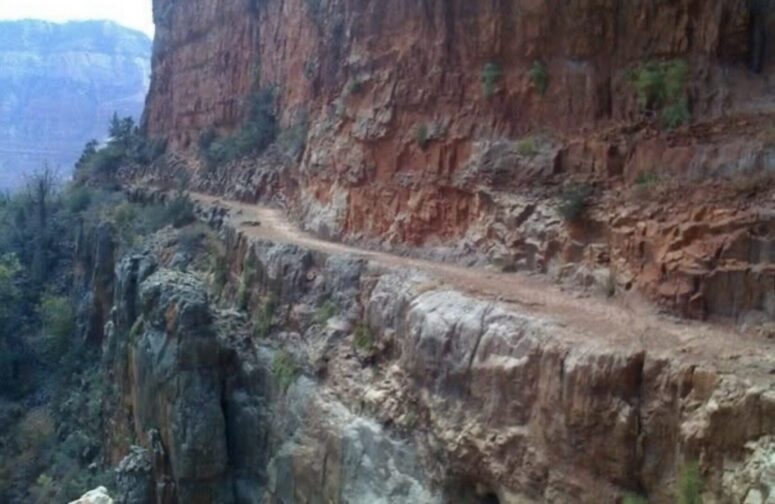
We ate lunch later that day in the lodge on the North Rim like we had conquered something, though the truth was closer to the opposite. The canyon had let us pass. That’s all that happened.
And then came the airplane.
It was a small craft that ferried hikers back to the south side, and it was the first airplane ride of my life. We took off into the front edge of a summer thunderstorm because the pilot said he had flown through worse and did not appear interested in our opinions on the matter. I remember lightning firing off inside the clouds like something alive was trapped in their turbulent movements. I also recall the little single engine Cessna dropping in the stormy air and my stomach arriving a half second behind the rest of me. And I will never forget looking down between the storm cells and seeing the canyon below us lit up in flashes, the whole impossible depth of it strobing in and out of the dark, ten miles wide and going on forever, and thinking that if this was how I died it was at least an honest way to go, killed by wonder in the sky over the most beautiful hole in the world. The trails we had hiked looked like narrow scratchings in the dirt. Butch never gripped his armrest once. He had already learned what fear was for and this did not qualify. When we bounced down on the strip near the South Rim he looked over at me and grinned for the first time since he had come home.
“Beats walking,” he said.
I have been back to that canyon more times than I have kept count of. I have hiked it and run it rim to rim and stood at overlooks with people I loved and people I have since lost. It has never once failed to level me, emotionally and physically. The view has outlasted marriages and presidents and the friend who stood beside me that first day, and it will outlast me too, which is the entire point. Some places exist to remind us of our size. Our brevity is what makes the eternal more beautiful.
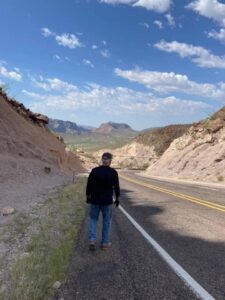
Big Bend came into my life the same way the canyon did, when I was young and hungry to feel distance. You come at it from the north across a hundred miles of creosote and sotol and the Chisos Mountains rise off the desert floor like a story that seemed absurd when you heard it but you’ve finally decided to believe. The light out there does things I have seen nowhere else on this continent. In the late afternoon the Sierra del Carmen across the river turns rose and then violet and then a color that has no name because nobody needed one until they stood there and watched it and struggled for words. The Rio Grande slides through Santa Elena Canyon between walls fifteen hundred feet high, and at Boquillas the water runs green and slow past a Mexican village where a man used to sing across the river to travelers on the American side, his voice carrying over water that never understood itself to be a boundary.
I have gone back to that country my whole life the way other men go back to a home church. I have camped in the Chisos in weather that turned the mountains into islands above a sea of cloud. I have sat on the rocks at Boquillas Canyon at dusk and listened to a canyon wren pour its falling song down the cliff face and felt something in my chest unclench that I had not known was clawing at my heart. The Big Bend taught me the same lesson the canyon did in a different dialect of stone. You are small. The world is old. The universe has beauty and secrets you cannot comprehend. These facts are gifts.
Which is why what is happening out there now hurts my insides like a stone I cannot pass.
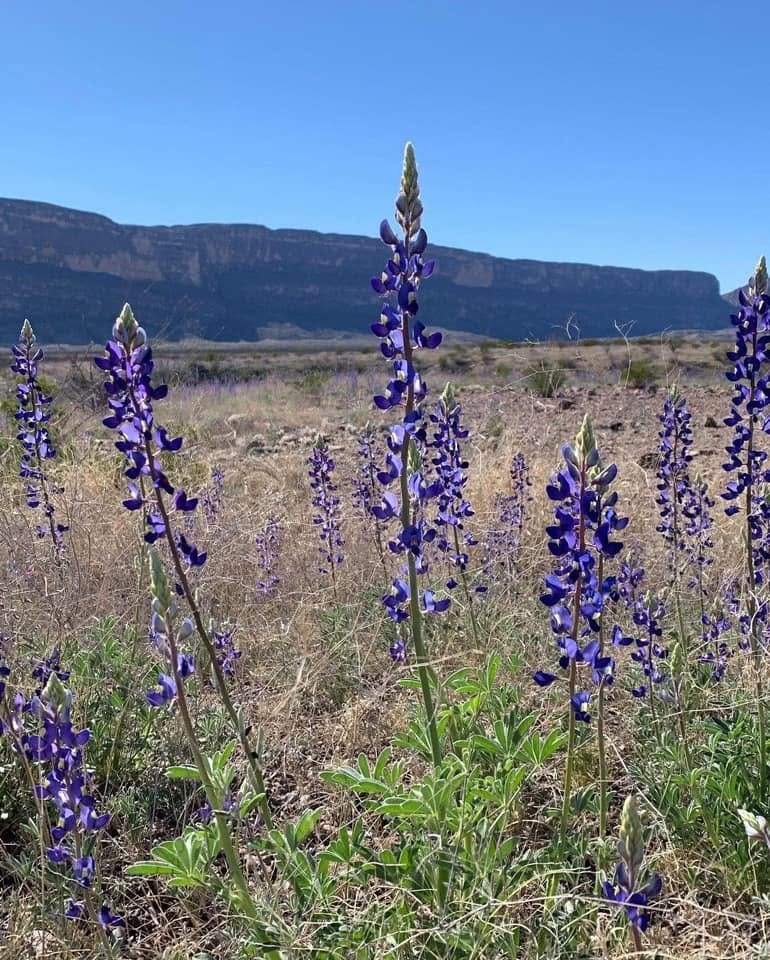
The contractor trucks have started arriving. The graders are blading roads through desert that took centuries to compose itself, because the soil out there is not really soil at all but a living crust that dies under a tire track and does not return in a human lifetime. Man camps are rising on land where the loudest thing for a hundred years has been wind through the ocotillo. A company holding billions of dollars in federal contracts is preparing to run a wall along stretches of a river that Congress once designated wild and scenic, which was our way of promising the future that some things would be left alone. The wall will stand in Boquillas Canyon, where the wren sings. Nobody crosses illegally in that country because the country itself is the wall, and it enforces its terms with heat and thirst and distance more honestly than steel ever will. Every person who loves Big Bend knows this. The people building it know it, too. The wall is not for stopping anyone. Instead, it’s for the cameras, a monument to fear erected in the one American landscape most likely to cure a person of trepidation.
I think about that nineteen year old in the tiny airplane, thrown around the sky by a thunderstorm over the Grand Canyon, too full of awe to be properly afraid. He believed, without ever saying it out loud, that the great places were permanent. That they were the fixed points and we were the weather. He was right about the stone. The canyon will be there and the Chisos will be there and the river will keep cutting long after the steel has rusted into the sand and the contracts have been forgotten by everyone but historians of our foolishness.
But he was wrong about something too, and it has taken me a lifetime to understand what. The land does not need us to survive. What needs protecting is the encounter. The boy at the rim. The traveler on the Big Hill who wants to cry at the world’s beauty. The song coming across the water at Boquillas. That is the fragile thing. And tragically that is what a grader can erase in an afternoon.
The stone will keep the long light. I am no longer certain we deserve to stand in its presence.
This article was originally published on Texas to the world.

James Moore is the New York Times bestselling author of “Bush’s Brain: How Karl Rove Made George W. Bush Presidential,” three other books on Bush and former Texas Governor Rick Perry, as well as two novels, and a biography entitled, “Give Back the Light,” on a famed eye surgeon and inventor. Mr. Moore has been honored with an Emmy from the National Academy of Television Arts and Sciences for his documentary work and is a former TV news correspondent who has traveled extensively on every presidential campaign since 1976.
He has been a retained on-air political analyst for MSNBC and has appeared on Morning Edition on National Public Radio, NBC Nightly News, Last Word with Lawrence O’Donnell, CBS Evening News, CNN, Real Time with Bill Maher, and Hardball with Chris Matthews, among numerous other programs. Mr. Moore’s written political and media analyses have been published at CNN, Boston Globe, L.A. Times, Guardian of London, Sunday Independent of London, Salon, Financial Times of London, Huffington Post, and numerous other outlets. He also appeared as an expert on presidential politics in the highest-grossing documentary film of all time, Fahrenheit 911, (not related to the film’s producer Michael Moore).
His other honors include the Dartmouth College National Media Award for Economic Understanding, the Edward R. Murrow Award from the Radio Television News Directors’ Association, the Individual Broadcast Achievement Award from the Texas Headliners Foundation, and a Gold Medal for Script Writing from the Houston International Film Festival. He was frequently named best reporter in Texas by the AP, UPI, and the Houston Press Club. The film produced from his book “Bush’s Brain” premiered at The Cannes Film Festival prior to a successful 30-city theater run in the U.S.
Mr. Moore has reported on the major stories and historical events of our time, which have ranged from Iran-Contra to the Waco standoff, the Oklahoma City bombing, the border immigration crisis, and other headlining events. His journalism has put him in Cuba, Central America, Mexico, Australia, Canada, the UK, and most of Europe, interviewing figures as diverse as Fidel Castro and Willie Nelson. He has been writing about Texas politics, culture, and history since 1975, and continues with political opinion pieces for CNN and regularly at his Substack newsletter: “Texas to the World.”
Also by James Moore
Keep Independent Journalism Alive – Support The AIMN
Dear Reader,
Since 2013, The Australian Independent Media Network has been a fearless voice for truth, giving public interest journalists a platform to hold power to account. From expert analysis on national and global events to uncovering issues that matter to you, we’re here because of your support.
Running an independent site isn’t cheap, and rising costs mean we need you now more than ever. Your donation – big or small – keeps our servers humming, our writers digging, and our stories free for all.
Join our community of truth-seekers. Please consider donating now via:
PayPal or credit card – just click on the Donate button below
Direct bank transfer: BSB: 062500; A/c no: 10495969

We’ve also set up a GoFundMe as a dedicated reserve fund to help secure the future of our site.
Your support will go directly toward covering essential costs like web hosting renewals and helping us bring new features to life. Every contribution, no matter the size, helps us keep improving and growing.

Thank you for standing with us – we truly couldn’t do this without you.
With gratitude, The AIMN Team
Sweet memories, living pictures from word rhythms, flying high in a mind’s eye, expanding, worrying, hoping, in clarity. Can we go forward? It is a time now of some fearfulness for us, for the planet home we abuse, so, let us recall beauties, times and occasions like this and bravely speak, boldly think, generously act, just to be fair, decent, loving, sensible, in hope. Think clearly, think of others, think ahead.