By Chen Ziqi
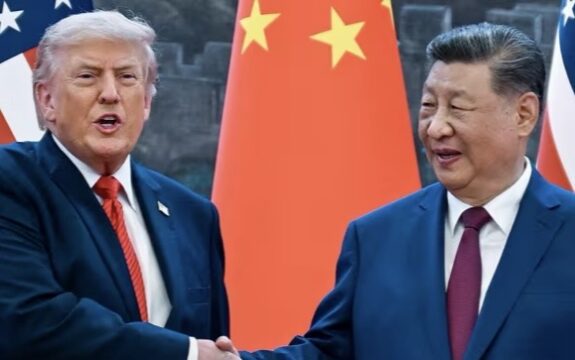
As the leaders of China and the United States prepare to meet in Washington, in the hope of seeking common ground and opportunities for cooperation, the focus inevitably falls on what happens between the two governments.
Yet the relationship between the two countries has also been shaped by countless encounters between ordinary people. They have met in very different circumstances – in communities, in times of hardship and on playing fields.
They may come from different backgrounds, but what brings people together is something deeply human: moments of kindness, a willingness to help when it matters most, or even a shared passion.
Growing together
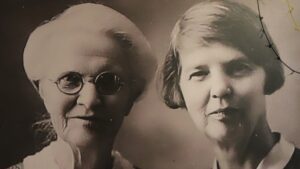
That bond can be traced back more than a century, to a young woman from Iowa, hoping to give Chinese girls and women opportunities that many had never had before.Her name was Lydia Trimble.In 1889, after graduating from what is now the University of Northern Iowa, Lydia arrived in Fuzhou, in southeast China’s Fujian Province, as a missionary.
She soon saw that many girls and women had little access to education, leaving them like lotus flowers without roots, drifting wherever the current carried them.
Having had the opportunity to receive an education herself, Lydia could not stand by. She believed that girls and women deserved the chance to gain knowledge, become independent and have a stronger voice in their own lives.
What began as a mission became her lifetime commitment. She stayed in China for five decades, until her death in 1941. She helped establish schools for girls and women of different ages and backgrounds, opening doors to opportunities that allowed them to discover what they wanted in life.
But opening those doors required determination and perseverance. When one of the schools struggled to secure funding, Lydia turned to her family thousands of miles away in Iowa. Her elder brother James even mortgaged his own farm to help make her vision a reality.
Fortunately, Lydia’s efforts paid off, and education changed the lives of many girls and women. One of her students, He Zhenni, later traveled to Iowa to study at Coe College. She eventually became the first Chinese woman to serve as president of a middle school in Fujian Province.
Lydia’s great-nephew, Gordon Trimble, later came to discover more about her incredible life through her diaries and family documents. Among the stories he found was one that stayed with him: Lydia once stepped in to protect a 10-year-old girl who was at risk of being sold into marriage to an older man.
To Gordon, his great-aunt’s belief in using her abilities to help others became part of his family story, and eventually, part of his own life.
In 2005, more than a century after Lydia first crossed the Pacific, Gordon traveled to Fuzhou and taught at the college his great-aunt had helped establish. He was no longer simply reading about Lydia’s life in old diaries and documents. He was walking through the place where her work had taken root.
“It is about if you can do something better, I should help you. Because once you’re able to do it, the community becomes better,” Gordon said.
Standing Together
That same spirit of helping others can take many forms. In times of war, it can mean risking your own life to protect another.
By 1940, China had been fighting Japan for nearly a decade, and the war had taken a heavy toll on its air force. In September that year, more than 20 experienced Chinese pilots were killed in fighting over Wuhan, leaving China in even greater need of pilots and aircraft to defend its skies.
Help came from across the Pacific. In 1941, the United States and China reached an agreement that paved the way for American military veterans and volunteers to come to China, help defend the country and keep vital supplies moving. That year, about 100 American veterans joined the American Volunteer Group, later known as the Flying Tigers.
Harry Moyer was one of them. After learning about the suffering of Chinese people during the war, he made his choice.
“I chose to go to China because I wanted to fight for China,” Moyer later recalled.
One of the most challenging chapters of the war came when China had to find another lifeline after the Yunnan-Myanmar Road was cut off, a crucial route for supplies reaching southwest China. Another way had to be found.
That was when the Hump airlift became vital. Chinese and American aircrews worked side by side to keep the new lifeline open, flying between India and southwest China over the Himalayas. They carried fuel, ammunition, equipment and other desperately needed supplies.
The journey was perilous. Pilots faced unpredictable weather, towering mountains and Japanese attacks. According to US records, the human cost was heartbreaking: more than 1,300 Chinese and American aircrews lost their lives. Between May in 1942 and September in 1945, some 800,000 tons of supplies had reached China by air, according to Xinhua News Agency.
For those watching the planes come and go, every flight carried a little more hope and a little more fear.
Emma Jane Foster, an American nurse who served with the Flying Tigers, remembered how people at the airfield would count the planes as they left for a mission and again when they returned. If one failed to come back, everyone’s heart sank.
While American pilots risked their lives in the sky, ordinary Chinese people risked theirs on the ground to help them. An unbreakable bond took shape through countless acts of courage and genuine kindness.

Jeffrey Greene, chairman of the Sino-American Aviation Heritage Foundation, has spent decades collecting and preserving stories of the Flying Tigers and the Chinese people who stood beside them.Among the stories he has heard are those of Chinese villagers who shared what little food they had with American airmen.Food was precious during the war. Families often had barely enough for themselves. Yet some would keep what they needed for their children and give the rest to the pilots. Eggs in particular were treasured. Some American airmen still vividly remembered the Chinese word for “egg” even decades later, because it was something they were given so often.
The Chinese people also helped build and repair runways. They had nothing but hammers, but they kept working day after day. Even mothers carrying babies joined the effort voluntarily.
Greene recalled hearing how millions of Chinese people took part in such wartime efforts.
“Two million [Chinese] people did that,” he said. “The American Congress saw this, and there was a respect between them. I’ve never met an American Air Force man who ever said anything bad about Chinese people. Never!”
And there was perhaps no greater expression of that bond than what happened when an American pilot came down behind enemy lines.
When a pilot was shot down or forced to land far from his base, Chinese villagers risked their lives to find him, hide him and help him reach safety. They knew the risks. If Japanese soldiers discovered them, Chinese villagers who sheltered a downed American pilot could face severe punishment, even death.
That was how a bond was forged, not through a treaty or an official agreement, but through compassion, gratitude, and the unwavering assurance that they would always have each other’s backs.
Playing together
Decades later, another kind of connection is bringing young people from China and the United States together through shared passions.
During a recent China–US youth sports exchange, four American baseball teams from Iowa, Virginia, Oklahoma, and Michigan traveled to Fuzhou to play exhibition games against four Chinese teams.
For many of the players, it was their first time in China and their first opportunity to meet their Chinese peers. But once they stepped onto the field, the unfamiliar quickly gave way to something they already have in common: a love of the game.
The players competed with focus and determination, celebrating hits and runs while learning from each other. After the games, they exchanged baseball techniques, gifts and stories about their lives.
For Iowa baseball player Shawn Simmons, the experience was about much more than the final score.
“I really had a great time. I pitched. We ended up winning, but that wasn’t really what mattered,” he said. “We made some really good friendships with some of the people on the team.”
Julian Skosey-LaLonde, the assistant coach of the Iowa Baseball Team, was also impressed by the different playing styles he saw from Chinese and American players.
“No one’s movement is more correct than others,” he said. “It is cool to see how people approach things differently. It’s a great example of how two people can be in competition but creating friendship.”

Robert Dombrowski, coach of the Iowa Baseball Team, said he hoped his players would be inspired by the hard-working spirit of the Chinese players.“I actually said to our players if they can do eight hours a day at school, you guys can find one extra hour of work, you’ll improve so much,” said Dombrowski.The game gave them a common language. The friendships gave that connection beyond the field.
This is just one example of how young people in China and the United States are finding common ground through the passions they share. And baseball is only one of many ways they connect through music, culture, art and the simple joy of discovering something new together.
Sometimes, all it takes is a shared passion to start a conversation. A familiar song, a story from a trip, a moment on the playing field, even a simple memory of those days can bring back the warmth of a first encounter, as if, for a moment, time and distance have disappeared.
There are many more stories like these, and you can find some of these stories on “Ni How Are You.” A video podcast series looks beyond the headlines and geopolitical discussions to explore the personal stories, shared passions and human connections bringing young people in China and the United States closer together.
Chen Ziqi is a reporter for CGTN Radio
Keep Independent Journalism Alive – Support The AIMN
Dear Reader,
Since 2013, The Australian Independent Media Network has been a fearless independent voice – holding power to account and delivering journalism that matters.
Running this site isn’t cheap. Rising costs mean we need your support now more than ever. Every donation, big or small, keeps our servers running, our writers working, and our stories free for everyone.
Donate here:
PayPal or credit card – just click on the Donate button below
Direct bank transfer: BSB: 062500; A/c no: 10495969

We’ve also set up a GoFundMe as a dedicated reserve fund for hosting and future improvements.

Thank you for standing with us. We couldn’t do this without you.
With gratitude,
The AIMN Team
I do enjoy Chen Ziqi‘s articles.