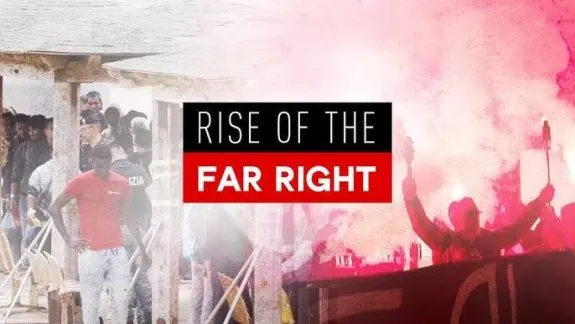
Many feel governments aren’t holding up their end of the deal, corroding support for democracy, writes Mario Peucker…
We hear a lot today about the pile-up of overlapping problems like climate change, war, financial stress, and inequality.
Together they make people feel increasingly uncertain, anxious and pessimistic about the future. Meanwhile, voters’ trust in the government to solve those problems has fallen sharply.
Rising uncertainty and falling trust are connected, and together they’re weakening support for liberal democracy in many countries.
This has led to more people seemingly drawn to authoritarian ideas, “strong leader” politics, and far-right movements – both the political parties that run in elections and the extremist groups that operate outside them.
It is broadly understood that under the democratic system there is an “implicit bargain” that governments deliver security and rising living standards, and in return, citizens support the system. Yet in Australia and elsewhere, many people now feel their governments aren’t holding up to their end of that deal.
That sense of broken promise is corroding support for the current democracy model.
The role of grievance
Feeling wronged or short-changed has long been recognised as a key driver of radicalisation – a point made by terrorism scholar Martha Crenshaw in 1981. Other academic experts coined the term “nostalgic deprivation” to describe a specific mindset common among far-right supporters, namely, a feeling of having lost status they believe they were entitled to.
That feeling of loss can be about money, political voice, social standing, or a sense that one’s culture is being eroded or displaced. That in turn leads to radical-right supporters being preoccupied with a perceived loss of status.
Two kinds of anger
Those grievances produce anger, and that anger isn’t automatically a problem – passionate disagreement is normal in a healthy democracy.
What matters is how that anger gets expressed. Economists Eric Lonergan and Mark Blyth distinguish two types. “Moral outrage” is a legitimate response to being ignored, a demand for change through fair means.
“Tribal anger,” by contrast, is rooted in an exclusionary form of nationalism, and it’s easily hijacked by opportunists who blame a scapegoated group for problems they didn’t cause. Far-right actors – from fringe extremist groups to mainstream populist parties – often exploit this kind of anger rather than offer real solutions.
This is why far-right appeal isn’t confined to the margins of society, it can reach deep into the mainstream. That risk grows in a world where people increasingly struggle to feel genuinely connected, valued, and respected.
This idea sits at the heart of the “Quest for Significance” theory in political extremism research, which holds that the need to matter – to feel like you count – is a central driver of support for violent extremism. When people find meaning and belonging in positive communities, they’re far less vulnerable to far-right recruitment. Studies back this up: loneliness and social isolation are strongly linked to a higher risk of radicalisation and far-right support. This isn’t a niche issue, a 2024 survey found that 15% of Australians experience social isolation, with men (18%) more affected than women (12%), and younger people more affected than older generations.
What can be done?
So what should – or can – we do about rising anger and the growing pull of far-right, anti-democratic politics?
The research clearly points to one clear step to reduce loneliness and build connection, through community sport, local neighbourhood groups, and volunteering – giving people places to find purpose and belonging.
But that alone isn’t enough. Governments and policymakers must tackle the real economic, social, and cultural grievances that drive discontent – rather than blame and further marginalise particular communities.
This is genuinely hard as modern societies contain a deep and unavoidable diversity of values, meaning full consensus on solutions may not always be possible.
That’s precisely why healthy democratic outlets for anger matter. People need real ways to express frustration as “moral outrage” rather than “tribal rage” – through peaceful protest, community engagement, and other democratic channels, especially at the local level. Research consistently shows that when people feel they have a genuine voice, they’re less likely to be drawn toward violence or extremism.
Mario Peucker is an Associate Professor and Principal Research Fellow at the Institute for Sustainable Industries and Liveable Cities at Victoria University in Melbourne. His most recent book is Democracy Strikes Back: Understanding and Countering the Rise of the Far-right (2024, Palgrave Macmillan).
This article was first published in The Klaxon and 360info.org
Keep Independent Journalism Alive – Support The AIMN
Dear Reader,
Since 2013, The Australian Independent Media Network has been a fearless independent voice – holding power to account and delivering journalism that matters.
Running this site isn’t cheap. Rising costs mean we need your support now more than ever. Every donation, big or small, keeps our servers running, our writers working, and our stories free for everyone.
Donate here:
PayPal or credit card – just click on the Donate button below
Direct bank transfer: BSB: 062500; A/c no: 10495969

We’ve also set up a GoFundMe as a dedicated reserve fund for hosting and future improvements.

Thank you for standing with us. We couldn’t do this without you.
With gratitude,
The AIMN Team
Be the first to comment