By Tracie Aylmer
Autistic people are wonderful and caring individuals whose unique ways of interacting with the world never fail to put a smile on my face.
I’ve worked as a phlebotomist for nearly four years, encountering every walk of life in a role that demands a solid grasp of psychology. Every patient enters the room with their own reaction to a blood draw.
I’m no exception – I dislike needles myself and never watch when it’s my turn. There’s a world of difference between performing the procedure and being on the receiving end. Thanks to my autoimmune conditions, I require frequent tests, so I’ve learned to calm myself and let it happen. It’s simply part of my routine.
Autistic patients, however, respond in profoundly different ways – and understandably so. They’re often terrified of the needle and what it represents, unable to simply accept its insertion. This requires me to dial up my empathy far beyond my usual approach.
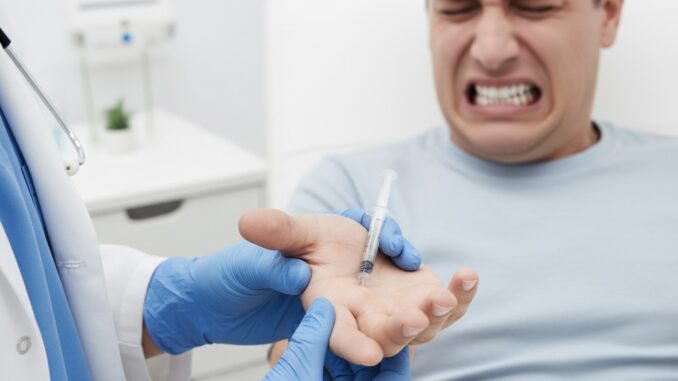
Over time, I’ve noticed that many autistic individuals strongly dislike having their arm touched, especially at the typical draw site. Instead, they often volunteer their hand, and I’m always happy to accommodate. Adaptability is key in this job.
One memorable case involved a man accompanied by his elderly parents, who served as his carers. It was a hectic Saturday at a busy centre; I was working alone with a packed waiting room. The man paced anxiously, unsettling everyone. Reception asked me to prioritise him, and the entire room agreed.
His parents explained that his autism required extra support and that the test was urgent – no time for a home visit. They insisted the draw had to be from his hand.
The procedure was intense: he screamed throughout as his parents gently held his head and body steady. I worked as swiftly as possible, securing only the minimum volume and hoping the lab would accept it. My goal was to minimise trauma.
The moment it ended, he transformed – calm, happy, a completely different person. His parents were visibly relieved; they knew it had been tough but necessary. Before leaving, he hugged me and thanked me for taking care of him.
This is just one of many stories, but it’s taught me a broader truth: autistic patients frequently prefer hand draws because that extremity feels more “disconnected” from their core self. While most people dread the sharper sting in the hand, autistic individuals often see it differently – and that’s perfectly fine.
I’m here to provide a compassionate service, adapting to whatever comes my way.
I have plenty more stories like this. No one is alone in their fear of blood tests. You can find similar experiences shared here: Modern Vampire Stories.
And here, or on Apple.
Keep Independent Journalism Alive – Support The AIMN
Dear Reader,
Since 2013, The Australian Independent Media Network has been a fearless voice for truth, giving public interest journalists a platform to hold power to account. From expert analysis on national and global events to uncovering issues that matter to you, we’re here because of your support.
Running an independent site isn’t cheap, and rising costs mean we need you now more than ever. Your donation – big or small – keeps our servers humming, our writers digging, and our stories free for all.
Join our community of truth-seekers. Donate via PayPal or credit card via the button below, or bank transfer [BSB: 062500; A/c no: 10495969] and help us keep shining a light.
With gratitude, The AIMN Team

Be the first to comment