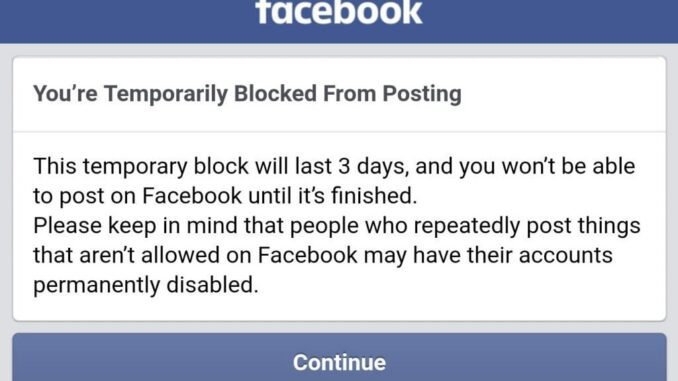
In an age where our public square is owned and operated by private corporations, a new form of censorship has emerged. It is not the dramatic, state-ordered banning of a century past, but a quiet, automated, and systemic suppression. Activists, journalists, and ordinary citizens advocating for human rights, environmental protection, or social justice are finding their voices diminished, their reach throttled, and their communities erased – not by a human hand, but by an algorithm.
The experience is increasingly common: a user, like the poet RC or the environmental advocate Julie, posts consistently only to discover their content has been hidden from their own followers. They receive vague notifications of violations for content that does not exist or find their groups – dedicated to innocuous topics like bird-watching or parenting – suddenly suspended for “terrorism” or “nudity.” These are not mere inconveniences. They are the symptoms of a deeper crisis in digital governance, where a combination of flawed automation, corporate collusion, and political pressure has created a perfect storm for silencing dissent.
The Architecture of Suppression
The silencing of digital voices operates through several key, interconnected mechanisms:
The Flawed Algorithm: At the core of this issue are the automated content moderation systems that platforms rely on to manage billions of posts. These AI-powered tools, while essential for scale, are notoriously poor at understanding context. They struggle with nuance, sarcasm, and cultural references, often misclassifying legitimate political discourse as harmful content. This leads to widespread over-blocking, where harmless content is mistakenly flagged and removed. Furthermore, these systems can inherit and amplify societal biases present in their training data, leading to the disproportionate flagging of content from marginalised communities or those challenging powerful interests .
The Corporate “Block List“: Beyond public-facing algorithms, evidence suggests that major tech companies maintain internal “block lists” or “do not hire” lists. While officially justified as a tool for managing policy violations, workplace experts confirm that “activist behaviour – like speaking out against company policies, decisions, values, etc. – could get someone on a block list”. This practice creates a shadow system of punishment that operates without transparency or appeal, effectively blacklisting individuals for their speech or associations.
The “Technical Error” Smokescreen: When these systems fail on a mass scale – such as the recent incident where Meta confirmed a “technical error” that led to the wrongful suspension of thousands of Facebook groups – platforms often dismiss it as a glitch. This framing minimises a systemic problem as a one-off mistake, avoiding accountability for the profound real-world impact these errors have on communities and advocacy work.
The Chilling Effect on Democracy and Discourse
The consequences of this automated suppression extend far beyond individual frustration. They strike at the foundations of a healthy democracy.
Erosion of Trust: When users can no longer predict whether their lawful speech will be visible to their audience, trust in digital platforms – and by extension, in digital public life – evaporates.
Stifling of Advocacy: The silencing of activist voices, particularly those focused on human rights and environmental justice, protects powerful entities from scrutiny. As documented in congressional investigations, there can be direct coordination between governments and corporate advertising cartels to defund and suppress critical voices through sophisticated pressure campaigns.
The Illusion of Impartiality: Platforms present their moderation as neutral and rules-based. However, their compliance with censorship requests from authoritarian regimes reveals a different reality. For instance, X (formerly Twitter) has complied with hundreds of takedown requests from the Indian government, blocking accounts of U.S.-based human rights organisations critical of the regime, a move that one could describe as abetting the suppression of voices. This demonstrates how corporate interests can override stated commitments to free speech.
A Path Forward: Demanding Transparency and Accountability
We cannot accept a digital world where speech is subject to the unaccountable whims of algorithms and corporate boardrooms. To reclaim our digital public square, we must demand:
- Radical Transparency: Platforms must be forced to disclose their moderation policies in clear language, provide detailed explanations for content removals, and offer a meaningful, human-reviewed appeals process.
- Algorithmic Audits: Independent third parties must be granted access to audit these automated systems for bias, accuracy, and fairness, with the results made public.
- Rejecting the “Glitch” Narrative: We must stop accepting “technical error” as an excuse for systemic failure. These are design flaws with human consequences, and they require fundamental redesign, not public relations apologies.
- User Sovereignty: Ultimately, power must be returned to users. This includes customisable filters and greater user control over their own digital experience and data.
The digital guillotine currently hangs over the neck of free expression. It is operated by automated systems that cannot understand justice, and corporate entities that too often lack the will to defend it. By exposing these practices to the light, we begin the essential work of dismantling this machinery of suppression and building a digital future where every voice can be heard.
Keep Independent Journalism Alive – Support The AIMN
Dear Reader,
Since 2013, The Australian Independent Media Network has been a fearless voice for truth, giving public interest journalists a platform to hold power to account. From expert analysis on national and global events to uncovering issues that matter to you, we’re here because of your support.
Running an independent site isn’t cheap, and rising costs mean we need you now more than ever. Your donation – big or small – keeps our servers humming, our writers digging, and our stories free for all.
Join our community of truth-seekers. Donate via PayPal or credit card via the button below, or bank transfer [BSB: 062500; A/c no: 10495969] and help us keep shining a light.
With gratitude, The AIMN Team


Owners, controllers, coercers, profiteers, manipulators = thousands. Us, punters, voters, citizens, consumers, users = nil. As usual…
“…our public square is owned and operated by private corporations….” The reality we don’t have a public square any more – now there is a space that is controlled by “others” who have acquired total ownership via subtle subversion of our civic freedom.
Corporations have all the power. Unchecked power. Supported power, in fact. Brought to you by governents everywhere.
Great article, Andrew. It’s a subject I’m surprised isn’t discussed more. It affects a huge number of our population – those who care.
When applied to social media, namely X with its filth and disinfo, we have MPs and media warning on the perils of social media, but still post on X while avoiding Blue Sky?
Used to have a Twitter account and had that removed by a 3rd Party who had no right to do so, have not been able to get that back and very suspect as to any further interaction as someone who ” advocated for human rights, environmental protection, and social justice”.
Still do, via Avaaz.
A giant electronic panopticon. How much worse when elements of AI are smoothed out.