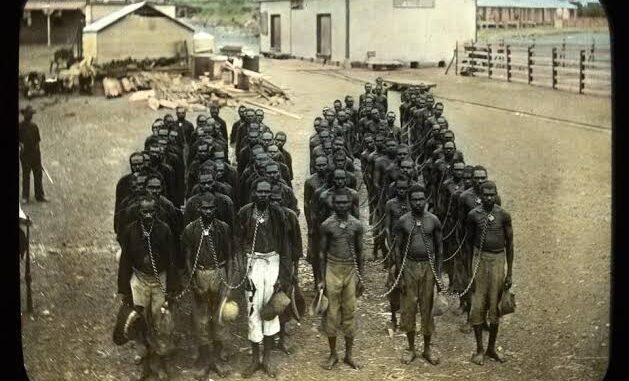
The idea that some people are more predestined to criminality than others because of race is a topic canvassed by Hannah Arendt in her discourse on Antisemitism, the first section of The Origins of Totalitarianism published by Penguin Classics in 2017.
“… racial predestination. It is an attraction to murder and treason which is hidden behind such perverted tolerance, for in a moment it can switch to a decision to liquidate not only all actual criminals but all who are ‘racially’ predestined to commit certain crimes… The seeming broadmindedness that equates crime and vice, if allowed to establish its own code of law, will invariably prove more cruel and inhuman than laws, no matter how severe, which respect and recognise man’s independent responsibility for his behaviour.” (The Origins of Totalitarianism. P104-5).
I read those words and thought ‘WOW!’, we look at people and ‘criminalise’ them because of who they are, or from the other side of that equation allow a disproportionate ‘punishment’ on people just because of who they are.
When we see a collective punishment inflicted on a people, such as the 2.2 million people who called Gaza their home, for the actions of a militant group who committed the inhumane, criminal attack of 7 October, two years ago. The unrelenting war of destruction aimed not just at Hamas, but al all the people of Gaza, a collective punishment on those who have lived in a virtual prison for many years… starting with the Nakba of 1948 and the repeated ‘mowing the grass’ actions of Israel to ensure that there can be no dignity afforded to Palestinian people.
And it all too easy to look at the Gaza situation, the criminality of the IDF as Gaza is totally destroyed. It is easy to be enraged, to march in protest, to call out the blatant crimes against humanity, but we need to look in our back yard too.
The repeated and ongoing treatment of our First Nations People, the cultural erasure of colonialism which has stripped those peoples of their country and cultural heritage, which has continually dehumanised them, criminalised then for being who they are, and the coloniser’s sense of ‘right’ to claim the lands without consideration for the First Nations peoples, seems to have established exactly what Arendt mentions, the establishment of a code of ‘law’ which proved, and continues to prove more cruel and inhuman than laws which respect and recognise the independent responsibility for behaviour.
A reminder of that came about as to whether the diaries of a settler, Major Logue, in the Geraldton region in the 1850s should be published. His entry for 4 April 1852 included:
“Started after breakfast and accompanied by Carsons we pushed in search of natives who had taken cattle… as the ground was very rough and crawled on our hands and knees within 200 yards when the natives saw us and scattered.”
The next bit was written in code but translated they describe the shooting of Aboriginal people, shot for just being there, being aboriginal, being dispossessed of their lands and their food sources, having to resort to killing Major Logue’s cattle for survival.
I recently visited that region and on a walk along the Greenough River came across a sign and exclusion, disease, rapeseries of plaques which referred to “the story of traditional owners, their connection to this place and the conflict between Aboriginal and European people in this area in the early 1850s.”
A reminder of the sensitivity felt by some was highlighted where several of the plaques had been defaced. One in particular read:
“A combination of exclusion, disease, rape, murder, reduced birth rates, forced labour, armed conflicts and tribal killings decimated the indigenous population of the Greenough Flats throughout the latter part of the 19th century.
It’s a very sacred place for me. Our people used to be round here… I respect this placeI can feel the spirits here when I come here. Keith Councillor, Naaguja Elder, 2007.”
The words ‘murder’ and ‘sacred place’ had been scratched out on the plaque, and walking through to other plaques, the same scratchings had tried to remove significant words which gave the Aboriginal story some how implying that these words were not true. Words like ‘to fight for our land’ and in describing the size of the atrocity, ‘about three or four hundred’ and ‘women and children were killed’.
Other plaques, such as that quoting William Burgees, Resident Magistrate in 1854, were left unmarked, no words scratched out.
The resistance to the full publishing of the Logue diaries and the attempts at reading incriminatory words on the plaques indicates that there is denial of the atrocities perpetuated against our First Nations people. Or excusing the atrocities because the of the ‘criminal predestination’, that the Aboriginals will steal ‘our cattle’, and so are to be eliminated.
Another look at our colonial history is Every Mother’s Son is Guilty: Policing the Kimberley Frontier of Western Australia 1882-1905, by Chris Owen, published in 2016. It is a study of the colonisation of the Kimberley region of Western Australia and the development of both the pastoral and pearling industries. The same attitudes are demonstrated, the words scratched out on the plaques at Greenough, murder, rape, fighting for land, are prevalent in that study, blaming Aboriginals for theft, while claiming the right to the stolen lands again endorse the words of Hannah Arendt, that the own laws which are based on the sense of a criminal predestination allow for the inhuman cruelty inflicted on the dispossessed.
That same attitude prevails today when we look at the deaths in custody of Aboriginal people, the high rate of imprisonment of Aboriginal people, the criminalisation of children as the age of criminal responsibility is lowered to allow children to be imprisoned, while ignoring the underlying issues of racism, cultural deprivation, and the consequent issues of drug and alcohol abuse, mental health conditions, and domestic and other violence that flow from those. It is much the same throughout the post colonial world and is most evident in Israel/Palestine.
The rules are different, the view of the ‘other’ is seen as something less than the colonisers… And yes, we the immigrants, no matter when we arrived here, are the colonisers.
What will it take to redress this?
That seems a question too hard to come close to, rather a sanctimonious attitude of paternalism, deploring the ‘other’ for not being like us.
I had an interesting discussion regarding ADHD the other day. Statistics were thrown about during the discussion, that untreated, the effect of ADHD is dramatic. Matters such as the likelihood for substance abuse, for imprisonment, for car accidents, divorce, and reduced life expectancy and other mental health issues are higher for people with untreated ADHD. That is really not all that unexpected, since ADHD sufferers are more impulsive risk takers, but listening to that person I reflected on ‘The Aboriginal Problem’, although we cannot use that term, but essentially we have a situation with the First Nations People which is not dissimilar, the ‘problems’, are categorised from a paternalistic, superior attitude, and when ‘they’ do not conform to ‘our’ standards, ‘they’ are at fault, put away, shoved aside. It’s ‘them’ that are the problem.
We can treat ADHD. The treatment is effective, behaviour changes, educational outcomes improve as disinterest is replaced by engagement. Relationships grow, social engagement and mental health improve. Why can we not treat or deal with ‘The Aboriginal Problem’?
Is that too hard or is it that we really don’t want to.
Perceptions: It is not the racist culture within the police forces (and yes, that plural is deliberate) that is the problem, it is that ‘they’ are less civilised, drunks, druggies, criminals. And since they are so very dysfunctional, it is not worth listening to them… and so the problems are perpetuated from one generation to the next.
Oh, and speaking of generations, the role of parenting and grand parenting is vital in the passing on of cultural drivers, of culturally embedded laws and standards, not by separating children from their parents and grandparents: The links are broken, the ‘love’ of family is replaced by a foster carer who will impose rules without necessarily discussing those rules, will insist on behaviours without listening to the child.
Reading and listening to the issues is a learning experience.
On a recent holiday, we visited Uluru. Part of the visit included an introductory talk from a Pitjantatjara person who explained the reasons we no longer climb the rock. It is a sacred site, and so many locations around the rock and surrounds have been meeting and ceremonial places for thousands of years. One person had a bit of a beef about the restrictions, but could not understand that it would be offensive to them if a cathedral or other place sacred within their culture were abused.
It falls into the same desecration as graffitiing on a Synagog wall, or on a Mosque, or perhaps breaking the cross in a Cathedral or Church.
But as we see in the debate over Antisemitic behaviour, or Islamophobia or other religious discriminations, it is easy to despise difference, far easier than understanding difference.
When we see news coverage of the situation in Gaza, when an ex-Israeli intelligence chief calls for 50 Palestinian deaths for every Israeli killed on 7 October, when we hear time and again the dehumanising, see the devastation that is Gaza, and let’s not forget what is occurring on the West Bank, can we for a moment reflect that our treatment of our First Nations People comes from the same mindset of somehow being better, more deserving, more able to develop this country, and from a religious perspective being aligned with the real god, rather than the animistic worship of nature.
Can we not look at our history, not the sanitised version we learned at school, but history which includes ‘their’ story, accept that the lands we use used to be a source of life for the Aboriginals, but colonialism sees it as a resource to be exploited for the generation of wealth a materialistic world?
By the same token, can we not consider both the Israeli side for a homeland and the Palestinian right to exist? The trouble is that Palestinians, from the get go were not invited to that discussion, but had the colonisation of their lands imposed on them, going back to the Balfour Declaration and then the UN Resolution forming the State of Israel.
Can we somehow co-exist with those opposite views, that somehow we acknowledge and cede back a measure of control? Whether it be with our First Nations people or with Palestinians.
Or do we hold firm that ‘they’ are predestined to criminality unless they become just like us or quietly disappear.
Dear reader, we need your support
Independent sites such as The AIMN provide a platform for public interest journalists. From its humble beginning in January 2013, The AIMN has grown into one of the most trusted and popular independent media organisations.
One of the reasons we have succeeded has been due to the support we receive from our readers through their financial contributions.
With increasing costs to maintain The AIMN, we need this continued support.
Your donation – large or small – to help with the running costs of this site will be greatly appreciated.
You can donate through PayPal or credit card via the button below, or donate via bank transfer: BSB: 062500; A/c no: 10495969


Nice work Bert.
I see that Pawleen is complaining that “Australia is not the country she grew up in.”
That would be because in the Australia she grew up in, issues such as these did not have to be confronted and dealt with.
Thank you Bert, well done.
@Steve. Agreed Steve. Unfortunately for the rest of us, PH is in a permanent state of being pissed-off and happy to let everyone know about it – often referred to as “the politics of grievance”.