Lessons from the Jungle: My Father’s Hard-Earned Wisdom from New Guinea
I never intended to write this.
For most of my life, my father’s stories about the war in New Guinea remained locked away like the old ammunition box he brought home – rusted, heavy, and better left unopened. He spoke of that place only twice. The words came slowly, awkwardly, almost apologetically, as though he were confessing something shameful rather than recalling a war. I nodded along, pretending I understood, while inside I felt that familiar tightening: the instinct to change the subject, to spare us both.
Yet here I am, setting them down at last.
Not because the stories have softened with time, but because the silence around them has grown harder to bear. His few words still echo – plain, unvarnished, and impossible to forget. And I have come to realise that some truths, once spoken, refuse to stay buried.
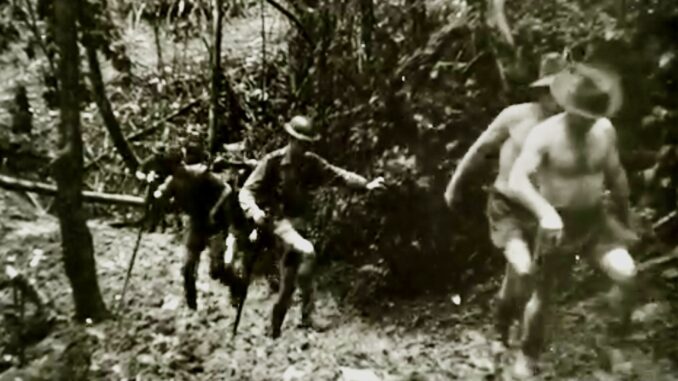
My father spent nearly two years in the steaming, unforgiving jungles of New Guinea during World War II, fighting as a Digger against the Japanese forces pushing south along the Kokoda Trail and beyond. The campaign was one of the Pacific War’s grimmest: endless rain, malaria, dysentery, dwindling rations, and close-quarters combat in terrain that seemed designed to kill as surely as bullets. Like many who survived those green hells, he spoke little of it afterward. The memories were too raw, the losses too personal. But on rare occasions, when the subject arose, he offered a few quiet, piercing observations that have stayed with me ever since.
One came when he read reports of Australian soldiers in Afghanistan making a spectacle of a captured Taliban fighter – humiliating him, perhaps photographing the moment or treating him as a trophy. Dad was disappointed, not out of softness, but from bitter experience. “Such things inspire the enemy,” he said (not in those exact words, but the meaning was clear). They already want to kill you. Don’t give them extra reasons to be more determined, more ruthless. Then came the line that stopped me: “As a fighter in New Guinea I respected the enemy. The moment you stop respecting, is the moment you drop your guard.”
That wasn’t admiration for Japan’s cause or forgiveness in advance. It was battlefield realism, forged in mud and blood. The Japanese soldiers he faced were often as exhausted, as disease-ravaged, and as tenacious as the Australians. Many veterans of Kokoda and the Buna-Gona battles later acknowledged their opponents’ discipline, endurance, and skill in the jungle – even while grieving mates lost to bayonets, snipers, or the silent killer of starvation. Underestimating them, treating them as less than human, could breed the fatal complacency that gets men killed. Respect kept you alert, kept your mates alive. Humiliating a prisoner might feel like victory in the moment, but it could steel the resolve of those still fighting, turning a beaten man into a symbol that rallies others to die harder.
The second thing he said surprised me even more, and it still surprises people today: “The moment the war was over, I forgave the enemy. But not the government that sent him off to war. The ordinary bloke on the other side? He was just like me – sent to die for a lie. But not the government that shipped us off like cannon fodder. And never the belief that drove those governments to war. That’s the real enemy. That’s what we fought.”
He drew a sharp line between the soldier in the opposite foxhole – often young, conscripted, indoctrinated, trapped in the same nightmare – and the leaders who chose the war, set the brutal policies, failed to supply their own troops properly, and sent wave after wave into the slaughter. The individual Japanese infantryman was, in many ways, just as much a victim of those higher powers as the Diggers were of Canberra or the men across the lines were of Tokyo. Forgiving the man didn’t erase the suffering, the mates buried in shallow graves, or the lifelong scars of malaria and trauma. It simply released the poison of unending hatred, allowing a survivor to live afterward. The anger stayed directed where it belonged: at the governments that engineered the carnage.
People sometimes mock me when I repeat these words – call them naive, or overly sentimental, or ignorant of the atrocities committed on both sides (and there were horrors enough in the Pacific). They weren’t there. They didn’t breathe the jungle rot, hear the night cries, watch friends waste away from preventable neglect as much as from enemy fire. My father was. He earned that perspective the hardest way possible, and I trust it because I knew the man who carried it.
In an age when wars still rage and social media turns battlefield moments into viral spectacles, his quiet lessons feel more relevant than ever: Respect your enemy as a fighter – not to approve, but to stay alive. When the shooting stops, let go of hating the individual soldier so you don’t carry the war home forever. Hold the real architects accountable – the governments that send the young to kill each other.
Dad didn’t preach. He just stated facts from a life that few of us can truly imagine. I defend his words not because they’re comfortable, but because they’re true. And because someone who walked the Kokoda Track and came back still human enough to see the humanity in the other side deserves to be heard.
Keep Independent Journalism Alive – Support The AIMN
Dear Reader,
Since 2013, The Australian Independent Media Network has been a fearless voice for truth, giving public interest journalists a platform to hold power to account. From expert analysis on national and global events to uncovering issues that matter to you, we’re here because of your support.
Running an independent site isn’t cheap, and rising costs mean we need you now more than ever. Your donation – big or small – keeps our servers humming, our writers digging, and our stories free for all.
Join our community of truth-seekers. Please consider donating now via:
PayPal or credit card – just click on the Donate button below
Direct bank transfer: BSB: 062500; A/c no: 10495969

We’ve also set up a GoFundMe as a dedicated reserve fund to help secure the future of our site.
Your support will go directly toward covering essential costs like web hosting renewals and helping us bring new features to life. Every contribution, no matter the size, helps us keep improving and growing.

Thank you for standing with us – we truly couldn’t do this without you.
With gratitude, The AIMN Team

I can’t help comparing those words with the recent utterings of Peter Hegseth.
I was telling my father about a war movie where this nice Japanese soldier… he interrupted me: “There was no such thing as a nice Japanese soldier.”
Respect, as it turned out, travelled both ways;
At the funeral in the early nineties of the colonel who led the Aussies in Kokoda the family wondered who an old Japanese gentleman in attendance was. They asked him. “I fought against your father in New Guinea. He was a great man. I came to Australia to pay my respects.”
A lady I worked with took her father on a holiday to Japan many years after the war. He spent most of the war in a Japanese prison camp. His hatred of the Japanese was intense, but he went to Japan out of curiosity. When the locals learned of his story… they saluted him. He was the victor, and they were showing their respect. It floored him. (But I’m told he felt proud about it).
Lest we forget.
Thank you Michael.
My father also fought at Kakoda. He also never talked about it.
But he suffered terrible PTSD (then referred to as “war neurosis”). War is barbaric.
You could say that fighting in PNG was crucial to the safety of Australia as Japan was a real sovereign risk, but many wars are commenced from ideology, and the young pay the cost
The Aussie Diggers who fought on the Kokoda Track, (many were Reservists not trained for jungle warfare), dealt the first land war defeat for the Japanese army since Japan commenced its invasive military campaigns in 1934.
My Dad went to war as a sensitive 32 year old fisherman, with no respect for pig-iron bob.
He returned traumatised, loathing the xstian god, Churchill, Americans and supporting Stalin. The latter disappeared with the truth about stalin but the others stayed with him and with me.
The old man struggled till 1954 when he got wired up every few moths till a TPI in 1960.
He developed throat cancer and, in a terrible family decision, we blackmailed him into an operation which robbed him of his voice, his strength and his dignity.