Chapter 28: Education – The Key to Understanding
Why Education Matters
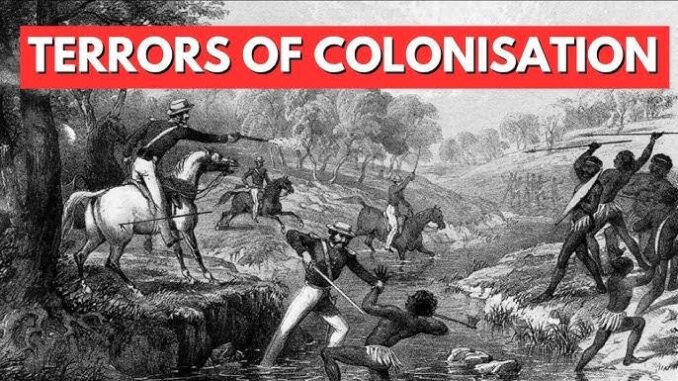
Ignorance is not neutral – it is a tool of colonisation. For generations, Australians were taught a whitewashed version of history: peaceful settlement, brave explorers, pioneering farmers. Aboriginal and Torres Strait Islander peoples were presented as a “dying race,” fading into the background.
When people grow up believing myths, they are less able to see injustice today. Education – both in schools and beyond – is the key to breaking this cycle.
What Schools Taught (and Didn’t Teach)
Until very recently, Australian classrooms:
Celebrated Captain Cook’s “discovery” of Australia, ignoring the 65,000+ years of civilisation already here.
Skipped over massacres, slavery-like labour, and segregation.
Framed Aboriginal people in the past tense – as though they no longer existed.
Rarely included Aboriginal perspectives, voices, or texts.
This silence was deliberate. It allowed colonisation to continue unchallenged by each new generation.
Changing the Curriculum
In the last few decades, reforms have begun:
National Curriculum: Includes Aboriginal and Torres Strait Islander histories and cultures as cross-curriculum priorities.
Local learning: Schools increasingly connect with local Elders to teach about Country.
Languages revival: Some schools now offer Aboriginal language programs.
But progress is uneven. Some schools embrace truth-telling, while others still present sanitised versions. Teacher confidence, resources, and political will all play a role.
Beyond the Classroom
Education does not stop at school. Truth-telling must also reach:
Universities: Embedding Aboriginal knowledges across disciplines, not just in “Indigenous studies” units.
Workplaces: Cultural awareness training that goes beyond tokenism, engaging with history and structural inequality.
Media: Amplifying Aboriginal voices and challenging misinformation.
Public spaces: Memorials, plaques, and museums that tell the truth about colonisation and resistance.
Education is lifelong. Every space can become a classroom.
The Power of Storytelling
Facts and statistics matter, but storytelling changes hearts. When people hear testimonies – of a Stolen Generations survivor, of Elders explaining connection to Country, of families rebuilding language – they see humanity, not abstraction.
This is why oral histories, art, music, and film are as important as textbooks. They reach people in ways numbers cannot.
Obstacles to Honest Education
Political resistance: Attempts to “soften” history lessons to avoid discomfort.
Disinformation campaigns: Fearmongering about “rewriting history” or “brainwashing children.”
Silence in families: Many non-Indigenous Australians were never taught the truth and may feel defensive when confronted with it.
These obstacles show why education must be courageous – not diluted for comfort.
Education as Justice
For Aboriginal and Torres Strait Islander peoples, education is also about empowerment:
Reviving languages once banned.
Teaching culture to children who were denied it.
Training new generations of leaders, lawyers, doctors, and activists.
Education is not only about reducing ignorance among non-Indigenous Australians. It is also about strengthening identity and sovereignty for First Peoples.
Why This Matters Today
Every myth dismantled, every truth taught, every child who grows up knowing the real history – these are acts of repair. They are small, but together they shift the nation.
Education cannot undo colonisation. But it can ensure its lies no longer dominate. And that is the first step toward real change.
Where This Leads
With truth-telling, reparations, treaty, and education, Australia can begin to imagine something new: a nation that does not deny its past but is strengthened by honesty.
The final chapter will draw this together – acknowledging what has been missed, apologising for gaps, and calling for Australia to do better.
Concludes tomorrow…
Link to Part 27:
From Ignorance to Understanding: Facing the Truth of Colonisation (Part 17)
Link to Part 29:
From Ignorance to Understanding: Facing the Truth of Colonisation (Part 29)
Dear reader, we need your support
Independent sites such as The AIMN provide a platform for public interest journalists. From its humble beginning in January 2013, The AIMN has grown into one of the most trusted and popular independent media organisations.
One of the reasons we have succeeded has been due to the support we receive from our readers through their financial contributions.
With increasing costs to maintain The AIMN, we need this continued support.
Your donation – large or small – to help with the running costs of this site will be greatly appreciated.
You can donate through PayPal or credit card via the button below, or donate via bank transfer: BSB: 062500; A/c no: 10495969


My mother, born in NSW in 1911, was very fearful about Aboriginal people, and spoke of the “treacherous blacks” who might attack in the night. She had no reason for this belief except the history that she learned at school.
After Lyndal, I would say, two centuries now of cultural brainwshing t hide the truth and justify the past to a grotesquely distortd view of indigines.
We’ve discovered over the last generation in particular how adept indigenes were at surving in at times harsh, becoming harsher, environments.
They DID “do” fishing nets, fish traps and learn the uses of
plants as to certsin types medications and in the development of weapons and hunting techniques.
How else coulds they have survived, even prospered?
The Europeans responsded by poisoning the waterholes,spreading diseases and massacring groups who posed them no threat.
Lachlan Mckenzie has given us a datailed synopsis related to imperialism, a phenomena we have rampant in the Middle East and lately in OZ, with rejection of the Voice.