Chapter 29: Conclusion – Australia Can and Must Do Better
Facing What Has Been Denied
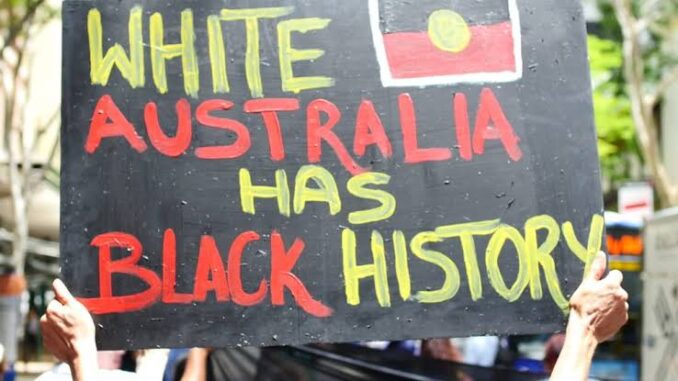
For more than two centuries, Australia has been built on colonisation: stolen land, stolen wages, stolen children, and the attempted destruction of the oldest continuous cultures on earth. Too often, the nation has denied, minimised, or silenced these truths.
This work has sought to bring them into the open – from massacres and slavery without the name, to segregation, stolen generations, and the ongoing gaps in health, housing, and education. It has shown how vested interests – media, mining, political elites – continue to resist change. And it has shown how Aboriginal and Torres Strait Islander peoples have resisted with courage, resilience, and leadership.
What Justice Requires
If truth-telling is the first step, then justice requires more:
- Reparations for the thefts of land, wages, and children.
- Treaty to recognise sovereignty and build a new foundation of coexistence.
- Education that replaces silence with honesty, for all generations.
- Reconciliation that goes beyond symbols and becomes structural.
These are not acts of charity. They are acts of justice – debts owed, not favours given.
Why It Matters for Everyone
Justice for Aboriginal and Torres Strait Islander peoples is not a zero-sum game. It does not mean taking homes or livelihoods from others. It means building a nation that is fairer, stronger, and more truthful.
A country that hides from its past is weaker for it. A country that faces its past with honesty is stronger. Reconciliation is not just for First Peoples. It is for all Australians who want a nation they can be proud of – not because it is flawless, but because it is truthful.
Acknowledging What is Missed
No single work can capture the full truth. There are stories that remain untold because the people who lived them were silenced, or because those voices have been lost with time. Some truths lie in archives still unopened; others lie in Country, waiting to be remembered.
I must respectfully acknowledge and apologise for what has been missed here. Gaps remain, not out of disregard, but because colonisation has left wounds so deep that some stories may never be fully recovered. What is written here is one step in a much larger journey.
The Call to Action
Australia can and must do better. This means:
- Listening when Aboriginal and Torres Strait Islander peoples speak.
- Supporting truth-telling commissions and education reform.
- Demanding reparations and treaty from governments.
- Refusing to be swayed by disinformation and fear campaigns.Walking alongside First Peoples, not as saviours or silent bystanders, but as honest partners.
- The work will be long. It will be painful. But it is necessary.
Closing Words
Aboriginal and Torres Strait Islander peoples have endured the brutality of colonisation and yet remain – cultures alive, languages spoken, ceremonies practiced, communities leading. Their survival is proof of resilience and strength.
The question is no longer whether they will endure. They have, and they will. The question is whether Australia will finally find the courage to face the truth and walk a new path.
The choice is before us: denial and division, or truth and justice.
If we choose the latter, then reconciliation will no longer be a word for ceremonies. It will be a living reality – one where Australia has grown up, and finally honoured the First Peoples of this land.
Appendix: Learning Directly From Aboriginal and Torres Strait Islander Cultural Centres
Why Official ATSI Education Matters
Throughout this work we’ve returned again and again to one truth: the best way to understand Aboriginal and Torres Strait Islander experiences is to listen directly to their voices. While books and reports are vital, cultural centres, institutes, and community-led organisations provide education grounded in lived experience, Country, and culture.
Benefits of engaging with these centres include:
Truth-telling from community voices.
Guided cultural awareness training that goes beyond tokenism.
On-Country learning, where possible, connecting stories to place.
Respectful protocols, ensuring cultural knowledge is shared in the right way.
Opportunities to support community-controlled organisations, not just government programs.
National Sources
AIATSIS (Australian Institute of Aboriginal and Torres Strait Islander Studies)
Canberra-based, with online resources, exhibitions, and education programs.
Reconciliation Australia
Runs the Narragunnawali program for schools and workplaces.
🔗 https://www.reconciliation.org.au
National Indigenous Television (NITV)
Storytelling, documentaries, and cultural programming led by Aboriginal and Torres Strait Islander journalists.
State and Territory Cultural Centres
New South Wales
Barangaroo Reserve Cultural Tours (Sydney) – On-Country Aboriginal cultural education.
🔗 https://www.barangaroo.com/see-and-do/tours
Boomalli Aboriginal Artists Co-operative – Art as education.
Victoria
Koorie Heritage Trust (Melbourne, Federation Square) – Exhibitions, training, and cultural immersion programs.
🔗 https://koorieheritagetrust.com.au
Bunjilaka Aboriginal Cultural Centre (Melbourne Museum).
🔗 https://museumsvictoria.com.au/bunjilaka
Queensland
Queensland Museum’s First Nations Cultures exhibitions.
QATSICPP (Queensland Aboriginal and Torres Strait Islander Child Protection Peak) – training and community resources.
Northern Territory
Charles Darwin University – ACIKE (Australian Centre for Indigenous Knowledges and Education).
🔗 https://www.cdu.edu.au/acike
MAGNT (Museum and Art Gallery of the Northern Territory).
Western Australia
WA Museum Boola Bardip (Perth) – Aboriginal-led exhibitions and education programs.
🔗 https://visit.museum.wa.gov.au/boolabardip
Yirra Yaakin Theatre Company – Aboriginal stories through performance.
South Australia
Tandanya National Aboriginal Cultural Institute (Adelaide).
South Australian Museum – Aboriginal Cultures Gallery.
🔗 https://www.samuseum.sa.gov.au
Tasmania
Tasmanian Aboriginal Centre.
nita Education (Tasmanian Aboriginal cultural training and tours).
🔗 https://www.nitaeducation.com.au
Australian Capital Territory
AIATSIS (as above).
Ngunnawal Centre (University of Canberra).
🔗 https://www.canberra.edu.au/ngunnawal-centre
How to Begin
Start local: Connect with the Aboriginal cultural centre or land council closest to you. Every region has its own voices and protocols.
Listen first: Education means humility – entering as a learner, not an expert.
Support sustainably: Pay fees, donate when possible, and promote Aboriginal-led programs rather than alternatives.
Take it further: Share what you’ve learned respectfully, without speaking over Aboriginal voices.
Link to Part 28:
From Ignorance to Understanding: Facing the Truth of Colonisation (Part 28)
Dear reader, we need your support
Independent sites such as The AIMN provide a platform for public interest journalists. From its humble beginning in January 2013, The AIMN has grown into one of the most trusted and popular independent media organisations.
One of the reasons we have succeeded has been due to the support we receive from our readers through their financial contributions.
With increasing costs to maintain The AIMN, we need this continued support.
Your donation – large or small – to help with the running costs of this site will be greatly appreciated.
You can donate through PayPal or credit card via the button below, or donate via bank transfer: BSB: 062500; A/c no: 10495969


I hope these articles have shared at least a small part of the learning journey I’ve been privileged to experience in writing them. This is not the end but part of an ongoing process, and I’d welcome the experiences and insights of others — especially First Australians — to continue deepening that understanding. From ignorance to truth, the journey is always stronger when walked together.
I have found them enthralling, Lachlan. It has been a brilliant series.
Lachlan I second Michael’s comment and extend my own thanks.
Well said, Lachlan, the NT is going through a common Aboriginal racism situation with the death of two pedestrians.