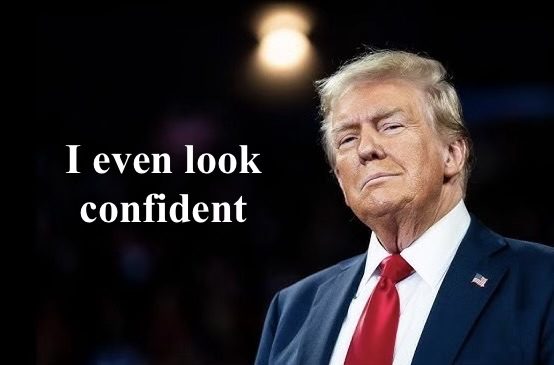
Mr President, you continue to maintain that you won the 2020 election, despite extensive evidence to the contrary. This persistent claim – still widely disputed – raises broader questions about how your public statements align with the established factual record.
This analysis examines whether your assertions about the election are supported by verifiable evidence and explores the reasoning used to sustain those claims in the face of substantial contradiction. It argues that your position lacks credible evidentiary support and instead reflects a broader pattern of political messaging aimed at shaping an alternative narrative.
To develop this argument, the discussion proceeds in three parts. First, it evaluates the available evidence relating to the 2020 election. Second, it identifies recurring rhetorical strategies present in your public statements. Third, it considers the wider implications of this approach for public understanding and policy debate. The goal is to provide a clearer account of both the substance of your claims and their broader significance.
This pattern of communication is not limited to domestic politics. A comparison can be drawn with your current messaging on the conflict with Iran, where similar themes are evident. In both contexts, there is a tendency to emphasise success and certainty, even where reporting points to more complex or adverse developments. Recognising these parallels allows for a more comprehensive assessment of how such rhetoric operates across different policy areas.
Your recent statements regarding the war with Iran, which began on February 28, 2026, illustrate this approach. While official messaging has emphasised progress and strength, other accounts point to rising casualties, mounting economic costs, and increasing public concern.
Supporters argue that consistent positive framing can bolster morale and project resolve during times of crisis. Critics, however, contend that such messaging risks downplaying the human and economic consequences documented by independent sources.
These competing perspectives underscore the importance of evaluating whether your public narrative fully reflects the complexity and realities of the situation.
“Let me say, we’ve won,” you told a rally in Kentucky on March 11.
Reporting from PolitiFact notes that on March 17, President Donald Trump claimed the Iranian military campaign was effectively over within days, stating that naval forces had been quickly eliminated, followed by the air force and air defences. A week later, in the Oval Office, you declared the war won.
The messaging did not stop there. At a fundraising dinner on March 25, you said, “We are winning so big,” and in subsequent remarks to reporters, you claimed that regime change had already occurred – asserting that one leadership group had been destroyed and another was close to collapse. According to reporting from CNN, you also indicated that U.S. negotiators were engaging with a new group of Iranian officials described as “very reasonable,” despite uncertainty over their authority to make binding decisions.
These statements have been widely criticised as misleading and politically motivated. Fact-checking by PolitiFact has documented numerous inconsistencies, reinforcing concerns about the accuracy of official claims.
Broader analysis supports this assessment. Research from the Carnegie Endowment for International Peace highlights the importance of transparency in maintaining trust with allies, noting that clearer and more consistent communication has historically contributed to stronger diplomatic outcomes. In contrast, reporting by The New York Times in March 2026 details multiple instances in which internal messaging within your administration diverged from independently verified information.
This pattern makes it more difficult for the public to distinguish fact from political narrative. Studies published in the International Journal of Press/Politics further show that visible transparency – such as open engagement with allies and consistent public briefings – correlates with higher levels of public trust.
Taken together, these findings support the argument that your administration’s messaging often departs from verifiable evidence and instead follows a consistent rhetorical approach that prioritises perception over accuracy. The result is a communication environment in which contradictions are common, accountability is weakened, and public understanding is diminished.
Multiple independent sources, including PolitiFact and The New York Times, point to a clear gap between public claims and documented realities. This suggests a strategy focused less on factual alignment and more on shaping opinion – both at home and abroad.
Several weeks into the conflict, the financial cost of your decisions is estimated to have reached around $30 billion. While you have consistently framed your actions as necessary for American security and projected resolve in your response, the broader consequences are becoming increasingly visible across multiple independent reports.
According to The New York Times and PolitiFact, thirteen American service members have been killed. At the same time, Bloomberg reports fuel prices have risen by at least a dollar per gallon, while the International Monetary Fund notes continued increases in global food prices.
The economic impact is not confined to the United States. Reporting from the The Sydney Morning Herald highlights losses affecting mortgage rates and retirement savings, including Australian superannuation funds. Meanwhile, further coverage by The New York Times points to ongoing public concern about your perceived focus on personal financial interests.
Supporters, including analysts at the Carnegie Endowment for International Peace, argue that such costs are an unavoidable part of maintaining national security. However, this view does not fully account for the risk of declining domestic support or the potential long-term economic damage.
Economists cited by the Financial Times warn that these burdens fall disproportionately on ordinary citizens. Without clear and measurable progress, they argue, public backing for the policy is likely to weaken. This raises the question of whether the broader consequences of your strategy are being adequately weighed against its stated objectives.
Beyond immediate costs, there are wider implications for global supply chains. Essential materials – such as fertiliser for agriculture and helium used in advanced manufacturing – depend on stable international systems that are vulnerable to prolonged conflict.
Human impacts are also mounting. Reports indicate significant civilian casualties and increasing hardship across the Middle East, contributing to growing concern that the scale and seriousness of the situation are not being fully acknowledged. Many observers argue that greater transparency is needed.
There are also signs that the strategy may be producing unintended outcomes. After a month of sustained bombing by U.S. and Israeli forces, some analysts suggest that Iran may now be more, rather than less, determined to pursue nuclear capabilities.
This stands in contrast to earlier diplomatic efforts. In 2018, President Barack Obama negotiated an agreement with Iran that significantly curtailed its nuclear program – reducing stockpiles by approximately 98 per cent, limiting enrichment to 3.67 per cent, and allowing international inspections – in exchange for relief from sanctions imposed by the UN, EU, and the United States.
By withdrawing from the agreement negotiated under President Barack Obama, your administration set in motion a shift that has arguably left the United States facing greater strategic risk than it did in 2018. In that time, Iran appears to have grown more assertive rather than less.
According to the Center for Arms Control and Non-Proliferation, Iran now possesses roughly 970 pounds of uranium enriched to 60 per cent purity – approaching weapons-grade material. The precise location and status of this stockpile remain unclear, adding to international concern.
There is also a growing sense that key assumptions underpinning your strategy have not held. Expectations that Iran would respond in predictable ways, or that its leadership would weaken under pressure, have not been borne out. Instead, reports suggest a more hard-line and resilient regime has emerged, adapting its tactics rather than collapsing under strain.
Predictions of a swift military outcome have similarly failed to materialise. More than a month into the conflict, there is no clear resolution, and Iran continues to demonstrate an ability to adjust its approach.
You have expressed confidence that the United States can outlast Iran in this confrontation. Yet reports indicate you have told aides you may be willing to accept an end to the war even if Iran continues to disrupt the Strait of Hormuz – a scenario that could allow Tehran to exert ongoing influence over global oil flows, with potentially severe economic consequences.
Against this backdrop, it is reasonable to ask whether claims of victory reflect the situation as it currently stands.
Your public statements continue to emphasise success and positive outcomes, reinforcing a consistent narrative of control and achievement. That narrative has been central to your messaging throughout the conflict, but it also invites scrutiny as to whether it aligns with the available evidence and the broader consequences of your decisions.
It may be that confidence in your strategy leads you to favour optimistic interpretations while giving less weight to negative developments. Such an approach can also shape the views of political allies and supporters, both domestically and internationally.
For some observers, perceptions of reality in this conflict are not formed solely through objective facts, but through the interaction of official messaging, media framing, and selective emphasis. In this environment, public understanding can be guided as much by repetition and presentation as by evidence.
Supporters argue that emphasising success helps maintain morale and unity during times of crisis. Critics counter that it risks narrowing the space for honest debate and limiting the transparency necessary for an informed public.
These competing perspectives highlight the need for balance. While strategic communication can play a role in sustaining confidence, it must be weighed against the responsibility to accurately reflect complex and often difficult realities.
There is a risk that repeated assertions of victory, if not matched by facts on the ground, may gradually shape perception without resolving the underlying issues. Yet the material consequences remain: lives lost, injuries sustained, economic strain, and growing hardship affecting people across multiple regions.
Ultimately, the evidence points to a persistent gap between official claims and independently verifiable outcomes. This gap raises fundamental concerns about transparency, accountability, and public trust. Reporting from organisations such as PolitiFact and The New York Times has consistently documented discrepancies that reinforce this conclusion.
When government messaging diverges from observable reality, it risks weakening democratic accountability, eroding public confidence, and diminishing the quality of public debate. Over time, such patterns can also complicate international relationships, as allies and adversaries alike question the reliability of official statements.
For these reasons, it is essential that public communication reflects the realities on the ground as clearly and honestly as possible. Only through transparency and evidence-based assessment can trust be rebuilt, informed decision-making supported, and democratic institutions strengthened.
My Thought for the Day
Ultimately, the preceding analysis underscores that perception plays a pivotal role in shaping both individual and collective responses to political events; indeed, public understanding and policy outcomes often reflect not only empirical facts but also the narratives constructed by leadership. Recognising this dynamic affirms the importance of critically assessing how perceptions are cultivated and highlights the need for transparency to ensure public discourse remains grounded in evidence rather than illusion.
Keep Independent Journalism Alive – Support The AIMN
Dear Reader,
Since 2013, The Australian Independent Media Network has been a fearless voice for truth, giving public interest journalists a platform to hold power to account. From expert analysis on national and global events to uncovering issues that matter to you, we’re here because of your support.
Running an independent site isn’t cheap, and rising costs mean we need you now more than ever. Your donation – big or small – keeps our servers humming, our writers digging, and our stories free for all.
Join our community of truth-seekers. Please consider donating now via:
PayPal or credit card – just click on the Donate button below
Direct bank transfer: BSB: 062500; A/c no: 10495969

We’ve also set up a GoFundMe as a dedicated reserve fund to help secure the future of our site.
Your support will go directly toward covering essential costs like web hosting renewals and helping us bring new features to life. Every contribution, no matter the size, helps us keep improving and growing.

Thank you for standing with us – we truly couldn’t do this without you.
With gratitude, The AIMN Team

President Macron of France has had it with Trump’s nonsense. He said after Trump’s rambling address to the nation:
Macron: This is not a show. We are talking about war and peace and the lives of men and women. When you want to be serious you don’t say every day the opposite of what you said the day before. And maybe you shouldn’t be speaking every day. You should just let things quiet down.*
But he didn’t stop there.
Macron also tore into Trump’s attacks on NATO, after Trump invaded Iran.
Macron: I remind you that six months ago we were told that everything had been destroyed and all had been sorted out. Then he decides by himself to attack Iran, then he laments that [he] is alone in an operation he decided on alone. It’s not our operation.
Well said President Macron, time now for other world leaders to speak up!
A U.S. F-15E fighter jet was shot down over Iran on Friday, and one crew member from the plane was later rescued by American forces.
The F-15E is flown by a two-member crew, and the search for the second crew member, a weapons system officer, is continuing.
An A-10 Warthog was part of the search and rescue mission when it took fire, the Warthog pilot ejected over the Persian Gulf and was successfully recovered; the aircraft was lost.
Two US helicopters also took part in the search and rescue mission and successfully retrieved the F-15E pilot who had ejected, the helicopter carrying the recovered pilot was hit by small arms fire.
So it seems that all Trump’s bravado about decimating the Iran defence capabilities was a bit premature.
The question that will be exercising politicians in both the US and Israel and at the UN is whether Iran is entitled to self defence initiatives against an overwhelming invading force.
According to Article 51 of the UN Charter Iran has the right to retaliate against the US and Israel who are engaged in unlawful aggression against Iran.
Article 51
“Nothing in the present Charter shall impair the inherent right of individual or collective self-defence if an armed attack occurs against a Member of the United Nations, until the Security Council has taken measures necessary to maintain international peace and security. Measures taken by Members in the exercise of this right of self-defence shall be immediately reported to the Security Council and shall not in any way affect the authority and responsibility of the Security Council under the present Charter to take at any time such action as it deems necessary in order to maintain or restore international peace and security.”
A bit flash, lord!!!
Trump is a genius who can believe his lie is the truth, seconds after announcing the lie. Then seconds after that, he can forget that truth and make up another lie.
During this charade, MAGA twits are still wondering about yesterday’s truths.
On the first point alone, the following should clarify once and for all the level of ballot interferance….
https://www.latimes.com/