
By James Moore
“A father is someone you carry inside yourself forever, whether you want to or not.” – John Updike
My father was getting older and I figured spending too much time alone in his house on the edge of the woods in Central Mississippi. I thought I might convince him to move back to Michigan and be close to his children and grandchildren. One October day in Texas with a dry wind blowing through the Hill Country from across the Edwards Plateau, I decided I needed to take at least one more ride up to my Daddy’s front porch and continue my attempt to understand him. There was probably little he remembered about his household violence through the accumulating years and a couple dozen electroshock treatments, but I wanted to have another conversation.
I already knew he was unable to remember striking his wife or children or how his whirling fists and slinging leather belts had terrorized the people he had said he loved. I suppose time wrinkles a man’s memory as much as it does his skin, but I saw Daddy’s lack of recall as a kind of grace. His reminiscences were hazy but gentle and carried him softly back to his boyhood in the South, and they created for him attentive, loving parents and a bountiful farm he happily shared with his siblings. He was often seen gazing into a blank distance and smiling, and I thought I knew what he saw out beyond the tree line.
I never stopped trying to repair whatever was broken between my father and me, though I had no idea what that was or how it had been damaged. I was never going to be the son who hunted and fished or took joy from the sound of a gun in the woods, but I still hoped there might be a chance he could come to appreciate his eldest son. As he sat the old wooden swing and the late afternoon sun splintered through the loblollies, I tried to begin a conversation that might have meaning. Daddy had his Mason Jar tumbler of whiskey with a few peppermint candies swirling in the glass and looked at me with a puzzled expression.
“You know, when I was comin’ up, buddy boy, horses could still fly.”
He looked at me, hard, and seemed to dare me to challenge his statement, which, of course, I did.
“Daddy, I’m not sure what you mean.”
“Hell, I mean what I said, that’s what I mean. Horses could still fly.” He ground his lower teeth hard against his upper dentures and pursed his lips like he was expecting me to provide evidence to prove he was wrong.
“Daddy, horses could never fly. That’s silly, and you know it.”
“Aw, hell, don’t tell me, buddy boy. Horses could fly when I was a boy.”
“Why would you say such a thing? Can you imagine a horse actually flying?”
“I don’t have to imagine nothin’, damnit.” He had only raised his voice slightly, as if he had at least learned how his angry baritone had frightened his children when they heard it coming down the hallway.
“Okay, then, tell me about the flying horses.”
“Ain’t nothin’ to tell but they flew. I done seen it. So did Poppa. He seen it all the time when he was a boy, too. We saw ‘em flyin’ every mornin’ when we went out to chop cotton. Pretty as could be. Appaloosas and mustangs and every kinda horse there ever was, except with big wings.”
“I’m supposed to believe my father saw horses fly?”
“I done told you that already, damnit.”
“Well, why aren’t they flying now?”
“They was just gettin’ to where they couldn’t do it any more when I was little. They did what ya call evolve away from it, is all. Spent more time on the ground and didn’t need their wings as much.”
He reached down slowly for his drink and turned his head away from me, disgusted, I thought, by my unwillingness to accept such an idea.
“Well, I’m telling you, horses can’t fly,” I said, softly. “They never could, Daddy. There are horses in mythology that have wings and flew, but those are just stories, and there has never been any such animal that lived on earth.”
“Aw, go to the devil; you don’t know what in the hell you’re talkin’ about. What do you think Poppa and I saw then? He seen ‘em before 1900 and I seen ‘em when I was comin’ up in the 20s.”
“I don’t know what he saw, or you. I have no idea.”
“You damn sure don’t have no idea. Cause I know what I know and I know horses used to be able to fly. Cain’t nobody tell me what I seen with my own two damned eyes.”
He threw back his head and swallowed a gulp of whiskey and looked at me.
“I don’t know,” I said. “Maybe you’re right. I guess I need to do some more research. I never heard of horses flying but I suppose that doesn’t mean it’s not true. I’ll check it out.”
“You go ahead and do that, buddy boy, and you’ll find out what I already know.”
The pecans were falling early from the trees that year and we went out behind Daddy’s house and gathered a large bag. He walked me through his garden and explained what he had grown in each crop row that summer and told me about the boy who came to chop the weeds because Daddy was no longer able to swing a hoe. A healthy garden with good tomatoes and corn was always a matter of pride to my father and to be able to grow things well was an important measure of a man.
“You shoulda tasted my tamaters, buddy boy,” he said. “They was as big as my fist and the sweetest you ever did see. I had more corn than I could put back, too. I got a freezer full of it and gave the rest to some colored folks.”
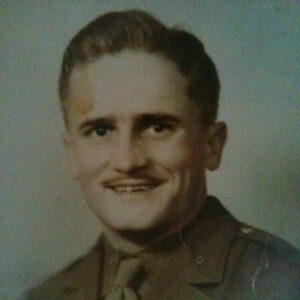
Back inside, we cracked the pecans and spread their fruit across a cookie tin. Daddy got out a stick of butter and sliced thin pats to place on each pecan half and then he used a shaker to sprinkle salt across the top. As they heated in his oven, we shared the whiskey and he told me more stories of being a boy on a poor dirt farm during the Great Depression. The one he had been repeating since I was little was about a headless horseman my grandfather and he had come across one morning while taking a buckboard wagon loaded with hay into town.
“He had his hands up just like this,” Daddy said, holding his arms out. “But they wasn’t no hands and the reins was just floatin’ in the air at the ends of his sleeves. And right where his neck shoulda started and his head oughta been there wasn’t nothin’ but space and a big ole top hat was ridin’ in the air above the empty place where his head was supposed to be and he was ridin’ a big, ol’ painted mare in circles around a oak tree in front of a farmhouse. Poppa said, ‘Son, do you see what I see?’ And I told him, ‘I sure do, Poppa.’ He told me, ‘Don’t you ever talk about this to no one, son, ‘cause all they’ll do is think you’re crazy.’ I never did tell a soul, either, until Poppa died and then I told all y’all kids.”
“What’s that story supposed to be about, Daddy? Can’t be real.”
“I’ll tell ya what it’s about. It’s about we don’t know nothin’ about this ol’ world. They’s things we ain’t ever gonna understand and I reckon it’s ‘cause we ain’t supposed to.”
After eating the pecans, Daddy asked me to draw for him very hot bathwater and pour into it a bottle of vinegar and a half box of Epsom salts. Hot water and vinegar when combined with the salts, he had heard from someone in Starkville, was another reliever for arthritis that supplemented the whiskey and peppermint candy. My father’s bones and all their connective tissue had grown creaky and aching from the uncountable hours he had spent lifting bumpers out of a General Motors metal press and stacking them on wooden pallets. While he soaked, I wandered around Daddy’s cluttered and disorganized house and wondered how he made it alone, what value or purpose did he see in his isolated existence in these far woods, a thousand miles from his children?
My father had hoped he might have frequent visitors, but his children had busy lives and were inclined to spend their family vacation time in locations slightly more appealing than rural Mississippi. I was the closest to him, geographically, in Texas, and was rarely able to make the trip north for a visit. We had talked about his return to Michigan to spend time with his children and grandchildren and I was pleased when I later heard he had made that decision. Daddy found a small bungalow less than a mile from Ma’s old restaurant up by the Chevrolet plant, Joyce’s Coffee Shop, and a few more miles from the assembly lines where he had turned his muscles to the physical labor he had endured to provide for his family.
My last conversation with him on his porch in Sturgis was painful. I waited until he had finished a couple of whiskeys to get an honest opinion of what he thought about his life. There was a chance, I thought, he might speak of his behavior and what had made him angry or crazy, but I do not think he ever understood his own actions. My father was too trapped in the daily struggle of providing.
Was I supposed to offer forgiveness? Did he even know what needed forgiving?
“I just never had me a chaynch, buddy boy,” he answered. “The crops was never good enough down here to be a farmer and I never did make enough money on the line up north. I never got me a chaynch to do what I wanted.”
“I guess that was to be farmer?”
“That’s what I wanted when I come home from the war. But when I was up north, if I’d of had me some money I’d a bought some land around them factories and gotten rich. I wanted to buy that lot on the corner of Hill and Fenton Roads years before they’s anything there and now they’s a big ol’ McDonald’s and grocery store there. I’d a made a million dollars, buddy boy.”
“Did you hate working in the factory and building cars you couldn’t afford to own?”
“I hated a lot of stuff. But in them days we did what we had to do. The Buick job made the house payment and fed you kids. But that’s about all it ever did.”
“Do you regret going up there, Daddy?”
“Naw. I don’t think about it much. Wasn’t no point. I did what I had to do to provide. I had yer mumma and three of y’all kids and it was all the work I could get so I took it. That’s all. When there was six of y’all, I had more kids than I could afford. I never had time to look up and think about anything else. Besides, I didn’t have nothing to sell but my arms and my back.”
“You think things might have been different for you if you would’ve stayed in Mississippi and married a girl from down home?”
“I don’t know. I don’t think I was ever gonna have too much just ‘cuz a the way I come up. We was raised to grow crops and take care a animals and they just wasn’t much use for that after a while. I reckon I was lucky I got one a them factory jobs in Michigan. I know it wudn’t a hell of a lot a money, but I did what I could, that’s all. I don’t know that I’d of had me any better chaynch down home.”
A few years after he had returned to Michigan, my father’s heart began to mark its final beats. I remember him swimming back and forth across the expanse of wide blue glacial lakes in Michigan to maintain his fitness in his sixties. Even when Daddy was working 12-hour days in the car factory, he often went outside in the snow and did curls with an old barbell he had been given and he frequently showed us his ability to do one-armed push-ups. His biceps always looked to me like fat hams and his physical strength was as frightening as it was impressive. His diet, however, was unrestrained, and Daddy consumed anything that might be fried or sugared, and his appetite was only becalmed before leaving for work by multiple eggs, giant rashers of bacon, ham, fried potatoes, buttery toast, and an endless flow of coffee. Eating was one of his great joys.
Heart failure began to affect the flow of blood and oxygen to his extremities and his doctors told us one of his legs needed amputation. I was at his bedside when he returned from surgery and the drugs were massaging a nervous system that had been pulled taut by his endless decades of worries and anger. He was still under the effects of narcotics when the intubation was removed hours later but he raised one of his mighty arms and pulled me close.
“I love you, son,” he whispered.
Those were words I did not recall ever having heard from my father. He had begun to tell his children he loved them as he aged, but usually in a general sense when there were at least a few of us gathered. I had no memory of his referring to me as his son and did not notice this absence until the term issued through his gasping breath. The words seemed so simple to speak. I wish I had heard them frequently as a boy but here they were, and no matter how much wrong he had done, I loved the sound of that sentence from my father. What son would not?
“I love you, buddy boy.” He did not seem to want to release his hold on me.
In his dreams, as he tilted slowly toward his end, Daddy had begun to be visited by his Uncle Horace, who had taken him hunting and fishing as a boy and who he had loved the way he would have liked to have loved his father. Horace was constantly gliding through Daddy’s sleep and telling him he was waiting for him and where they were going to find abundant deer and catfish and bass and the kinds of horses they were going to ride across eternity.
“I don’t know if I’m gonna see Momma and Poppa after I’m gone,” Daddy told me. “I hope I do. But I’m damned sure gonna be with Uncle Horace. Ain’t no doubt in my mind, buddy boy. He’s waitin’ on me right now.”
Before he was transferred to a nursing home for rehabilitation after the removal of his leg, Daddy pleaded with doctors to freeze the excised limb so it could be buried with him when he died. He was insistent that he go to the next place with all of his parts, the whole and robust man he had been when he walked through his troubled world. The doctors convinced him they were not allowed to preserve severed limbs and that God would make him complete again once he crossed over to whatever came next.
After making reasonable progress with rehabilitation in a nursing home, Daddy was transferred to a group housing facility where he lived in a private residence with other people dealing with infirmities. My sister Becky visited him often and he asked her to order him an inflatable raft because he intended to go fishing as soon as he recovered his health. Daddy had focused his contemporary dreams on an area north of Las Vegas, which he had decided was crossed by streams overcrowded with fish and there was rich soil to grow all the crops he needed to feed himself and visitors. No one was able to convince him that this spot on the map was a desert. Becky asked him how he might get himself into the blow-up raft with just one leg and Daddy took predictable offense at the question.
“I can damn sure figure it out by myself,” he said. “I don’t need no-damn-body, no way, no how to tell me how to do nothin’. I been gettin’ by just fine till now and havin’ one leg ain’t gonna change that.”
Only a few weeks passed before Daddy was exasperated by living in a home with what he considered older people in conditions he viewed as near imprisonment. He had not yet mastered the use of his hand-powered wheelchair but when no one was looking he managed to roll down a ramp to a sidewalk and disappear. Caregivers had no idea where he had gone but Daddy had always had strength and independence and he was having difficulty relying on other people. He was discovered many hours later a few miles from the home when someone had called to inquire about his identity after he had rolled up and asked for a drink of water. I expect Daddy was escaping westward toward his Eden in the Nevada desert.
A few days after he was returned to his group living facility, a caregiver found my father lying motionless on his side. His hard and love-starved heart had stopped and all of the fierce blood that had flowed through him had pooled along one side of his body. The muscles of Daddy’s arms had atrophied and shriveled and when he died, he had the same skinny bird-like appendages that he had carried around as a teenager. I still thought he looked like a giant, though, even in his final repose, just as he did when he was standing upright and daring the world to test him with whatever it wanted. He thought nothing but injustices came his way and he was determined to be stronger and larger than the wrongs constantly arrayed against him.
The part of my father’s life that I was proudest of was the time he had spent serving his country during World War II and I arranged for his casket to be draped in a United States flag. Daddy was buried off Hill Road, not far from the factory where he had worked and the house he and Ma had purchased when they were young and hopeful. I have Daddy’s flag in a triangle box above my writing desk down in Austin. He belongs to the soil of Mississippi but even in death he wanted to be near his children in Michigan because I believe he had at last come to know and love them and he wanted whatever there was to have of us even after his permanent departure. Daddy kept an empty space in the graveyard beside him for Ma, just in case the girl he never stopped loving chose, in the end, to come back to him.
One of his last statements to me revealed a perspective I could not have anticipated, which suggested to me my father sought a peace that went beyond his interpersonal experience, and that parting thought made me happy.
“I don’t have no regrets about nothin’,” he said. “I lived in the best times they was to live in. I seen human bein’s go from ridin’ in buckboard wagons to walkin’ on the moon. You cain’t see much more ‘n that, buddy boy.”
Thinking of him that way has given me a measure of peace, as a man who did not waste time second guessing himself, and who did not see the Buick car plant as a the force that killed him but as the fount of his livelihood and the opportunity he exercised to care for his family. Daddy and Ma scraped by on small collections of ten-dollar bills to make their $74 dollar a month mortgage payment, and often had to ask for government assistance, but they never stopped trying and their work was honorable. We were certainly not privileged but the rise of the automotive industry assuredly saved us from dirt farms and living as sharecroppers down in Dixie. There was more to our lives than would have ever been possible if Daddy had stayed in the South busting the soil with his muscled back.
I hope he left this world knowing he had made the right choice.
This article was originally published on Texas to the world.

James Moore is the New York Times bestselling author of “Bush’s Brain: How Karl Rove Made George W. Bush Presidential,” three other books on Bush and former Texas Governor Rick Perry, as well as two novels, and a biography entitled, “Give Back the Light,” on a famed eye surgeon and inventor. Mr. Moore has been honored with an Emmy from the National Academy of Television Arts and Sciences for his documentary work and is a former TV news correspondent who has traveled extensively on every presidential campaign since 1976.
He has been a retained on-air political analyst for MSNBC and has appeared on Morning Edition on National Public Radio, NBC Nightly News, Last Word with Lawrence O’Donnell, CBS Evening News, CNN, Real Time with Bill Maher, and Hardball with Chris Matthews, among numerous other programs. Mr. Moore’s written political and media analyses have been published at CNN, Boston Globe, L.A. Times, Guardian of London, Sunday Independent of London, Salon, Financial Times of London, Huffington Post, and numerous other outlets. He also appeared as an expert on presidential politics in the highest-grossing documentary film of all time, Fahrenheit 911, (not related to the film’s producer Michael Moore).
His other honors include the Dartmouth College National Media Award for Economic Understanding, the Edward R. Murrow Award from the Radio Television News Directors’ Association, the Individual Broadcast Achievement Award from the Texas Headliners Foundation, and a Gold Medal for Script Writing from the Houston International Film Festival. He was frequently named best reporter in Texas by the AP, UPI, and the Houston Press Club. The film produced from his book “Bush’s Brain” premiered at The Cannes Film Festival prior to a successful 30-city theater run in the U.S.
Mr. Moore has reported on the major stories and historical events of our time, which have ranged from Iran-Contra to the Waco standoff, the Oklahoma City bombing, the border immigration crisis, and other headlining events. His journalism has put him in Cuba, Central America, Mexico, Australia, Canada, the UK, and most of Europe, interviewing figures as diverse as Fidel Castro and Willie Nelson. He has been writing about Texas politics, culture, and history since 1975, and continues with political opinion pieces for CNN and regularly at his Substack newsletter: “Texas to the World.”
Also by James Moore
Keep Independent Journalism Alive – Support The AIMN
Dear Reader,
Since 2013, The Australian Independent Media Network has been a fearless voice for truth, giving public interest journalists a platform to hold power to account. From expert analysis on national and global events to uncovering issues that matter to you, we’re here because of your support.
Running an independent site isn’t cheap, and rising costs mean we need you now more than ever. Your donation – big or small – keeps our servers humming, our writers digging, and our stories free for all.
Join our community of truth-seekers. Please consider donating now via:
PayPal or credit card – just click on the Donate button below
Direct bank transfer: BSB: 062500; A/c no: 10495969

We’ve also set up a GoFundMe as a dedicated reserve fund to help secure the future of our site.
Your support will go directly toward covering essential costs like web hosting renewals and helping us bring new features to life. Every contribution, no matter the size, helps us keep improving and growing.

Thank you for standing with us – we truly couldn’t do this without you.
With gratitude, The AIMN Team
A beautiful essay, James. It made me cry. I always wonder at the forgiveness of adult children to the failures of the parents’upbringing.
John Updike’s quote at the head of this essay is apposite. My father died almost thirty years ago. Never a day goes by when he doesn’t float through my thoughts in some form or other, sometimes the shape being of a critical nature, sometimes, less so, more of a ruminating aspect as to the possibility of complete forgiveness, sometimes a long view timewise of his background, the disasters of his early childhood along with his ill-fated decision to move to Malaya in the late 30s and the consequences of that per his subsequent capture by the Japanese which led in turn to his time on the Burma Railroad construction.
My brother once said he should never have been born, that my father should never have had children. A bit too late; after emergence there’s no return. But still, I knew what he meant, given our father’s utter unsuitability for the significant responsibilities of raising children, given the eldest became an alcoholic narcissist, the second a person wracked with misgiving, lacking in confidence, prone to disaster-assessments of much of life’s challenges, oftentimes suicidal, the third and youngest grew into a stunted, withdrawn, passively-aggressive hostile personality; in sum the three of us a psychiatrist’s or psychotherapist’s verdant field for objective examination per the causes and consequences of utterly sub-par parenting practice.
Ah yes, parenting… whether paternal or maternal, the bottom line, as it has always been, is that it is the crucible within which the attitudes and personalities of the children become forged and where they will likely carry the consequences of their interactions and engagement for the rest of their years; through childhood, the teenage years and into adulthood.
It’s not an inaccurate statement to suggest that the greater majority of social ills and dysfunctions are a direct result of poor practice parenting, and in many cases, multigenerational transmission of these psychological ailments.
What’s the answer to all of this? I wish I knew. Philip Larkin’s 1971 poem, This Be The Verse, offered at least one attempt at a solution.
Enjoyed your humorous,thoughtful and sad comments, Cangaru and laughed at Philip Larkins poem, which will tickle our three kids.My own parents were stand out parents,
Which I didn’t live up to.
Thank you, June. As the late brilliant American comedian Bill Hicks was wont to observe, you toss ideas out, maybe some will stick, be noticed. No guarantees.
Parenting is the most responsible activity that humans can undertake, given what’s at stake, yet most parents are woefully underprepared and in many cases utterly ignorant of the consequences of their behaviour vis-à-vis the impact on young and developing minds & emotions.
An example: in 1963 I was sent to a boarding school in Adelaide, to one of the prestigious colleges. There was a boy in the same dormitory who was about six years old. Every night, without fail, he cried himself to sleep. The rest of us in the dorm, around 12-13 boys, did nothing to assuage his sadness, nor did the housemasters or anyone else. I expect his parents thought they were doing the right thing by their young son, but nothing could be further from the truth… this poor child, overwhelmed by sadness, desolation, isolation, abandonment. How, one might ask, did that experience impact him as he grew and matured into an adult? Unloved… could he manifest that intimate emotion? Abandoned… could he trust people? Sadly, one example amongst millions.