Every so often – very often – someone declares that Aborigines “did nothing for 65,000 years.”
Usually it is presented as an indisputable fact, as though it settles the argument. It doesn’t. It merely exposes a very narrow way of looking at history.
The criticism almost always measures Aboriginal society against European standards. Where were the cities? Where were the castles? Where were the roads? Where was the wheel?
Take the wheel, for example. It is one of those arguments that sounds devastating until you spend five seconds thinking about it.
Australia had no horses, oxen or donkeys to pull wheeled vehicles. There were no broad highways linking cities because there were no cities in the European sense. A wheel without draft animals and roads is little more than a curiosity. It solved a problem that simply did not exist here.
But even if Aboriginal Australians had invented the wheel, would that satisfy the critics? Somehow I doubt it.
The real question is this: what were Aboriginal people trying to achieve?
European civilisation largely sought to conquer nature. Forests were cleared, rivers redirected, mountains mined and landscapes reshaped to suit human needs. Progress was often measured by how much of the natural world could be transformed.
Aboriginal Australia took a fundamentally different path.
The land was not regarded as property to be exploited. It was something to which people belonged. Country was not merely soil beneath one’s feet; it was family, identity, law and spirituality. The relationship was reciprocal. If people cared for Country, Country would continue to care for them.
That philosophy produced something remarkable.
For tens of thousands of years, Aboriginal Australians managed one of the world’s harshest and most variable environments without exhausting it. Through sophisticated knowledge of seasons, water, plants, animals and carefully managed cultural burning, they maintained ecosystems that early European explorers often described as park-like landscapes.
This was not neglect. It was management.
It required observation accumulated over countless generations. It required understanding which plants could be harvested without destroying them, when fish should be left to breed, where game should be hunted, and how fire could be used to encourage biodiversity rather than devastation.
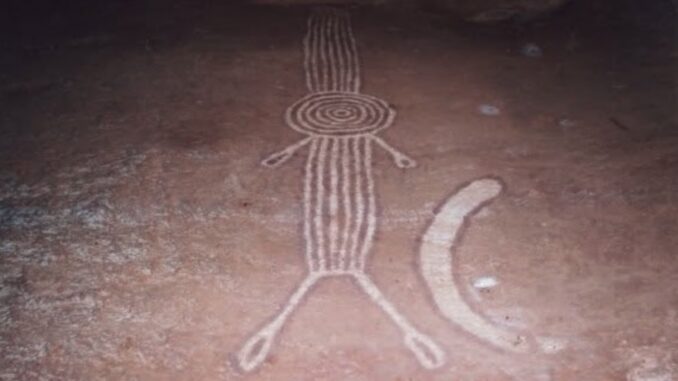
That knowledge was not written in books. It was carried in memory, ceremony, songlines, art, and law.
When people dismiss Aboriginal achievement because they did not build pyramids or cathedrals, they reveal more about their own assumptions than Aboriginal society.
Human achievement is not measured only by what we build.
Sometimes it is measured by what we preserve.
Australia’s First Peoples maintained continuous cultures for around 65,000 years. During that time they adapted to dramatic climatic shifts, survived droughts and changing coastlines, and passed on intricate systems of ecological knowledge from one generation to the next.
That is not evidence of failure.
It is evidence of extraordinary success.
Perhaps the greatest difference between European settlement and Aboriginal Australia can be summed up in a single idea.
Europeans largely believed they owned the land.
Aboriginal Australians believed the land entrusted itself to their care.
There is profound wisdom in that distinction.
Ownership asks, “What can I take?”
Caretaking asks, “What must I leave behind for those who come after me?”
One philosophy has left us degraded rivers, extinct species and a changing climate.
The other sustained this continent for millennia.
So the next time someone says Aboriginal Australians “did nothing for 65,000 years”, perhaps the answer is simple.
They looked after Australia.
And perhaps that was the greatest achievement of all.
Also by Michael Taylor
Our great white God prefers white people
Consent and conquest: the legal foundation of British sovereignty in Australia
Keep Independent Journalism Alive – Support The AIMN
Dear Reader,
Since 2013, The Australian Independent Media Network has been a fearless independent voice – holding power to account and delivering journalism that matters.
Running this site isn’t cheap. Rising costs mean we need your support now more than ever. Every donation, big or small, keeps our servers running, our writers working, and our stories free for everyone.
Donate here:
PayPal or credit card – just click on the Donate button below
Direct bank transfer: BSB: 062500; A/c no: 10495969

We’ve also set up a GoFundMe as a dedicated reserve fund for hosting and future improvements.

Thank you for standing with us. We couldn’t do this without you.
With gratitude,
The AIMN Team

They looked. They listened. They learnt. They made mistakes – that’s inevitable, especially early in the learning curve. But they found a way to survive in often harsh, changing environments without destruction.
What an opportunity was lost when the invaders insisted on imposing their European values and systems on this land, rather than developing something new – a synthesis of the best of the two. Every success story I read about environmental issues involves adding indigenous knowledge to modern science and finding a way to blend them.
65,000 years from now the planet will be slowly recovering, if at all, from the destruction caused by a then unknown and vanished species of parasites.
You are correct Michael, “Aboriginal Australians” looked after the land by doing nothing for 65,000 years.
Perhaps the world would be a far better place, if we all did nothing for the next 65,000, who knows?
Burke and Wells died of starvation in what the local Aborigines considered was a bumper year, according to legend.
There’s a dick devil hereabouts, a loud non-thinker, when thinking is the key concept, not nothing. Had Burke and Wills thought, observed, listened, accepted, they may have survived, prospered, shone as an example.
Legend also has it that they knocked back any offer of help or food, Phil.
Poor decision, that one.
They did partly, for the slow seed gathering and grinding was “beneath them”, and also indigestibly unsuitable eventually. Earlier, natives had provided fish and nardoo, and taught skills, so, it is curiously regrettable that what happened may have been avoidable, as King did survive. (cf. Tim Flannery, “The Explorers.”)
“Poor decision, that one,” notes Roswell. Not the first, nor the last, when it comes to taking account of the myriad decisions made by the colonists post-arrival at the place they called terra nullius, where the indigenous people were merely part of the native fauna and treated as a problem to be dealt with, given that they stood in the way of the continent-wide process of land acquisition and entitlement per ownership by statute or theft.
As Michael well notes, 65,000 years of appropriate stewardship, then the usurpers arrived and in less than 250 years pretty well buggered everything up. As always, everything depends on one’s point of view and many will disagree. I’m reminded of John Pilger, in his doco Utopia, interviewing white Australians on Australia Day in Sydney in the early 2000s. Most of them told him to fuck off for even suggesting that the native Australians had due cause to feel aggrieved at what had become of their country.
Aahh yes, John Pilger.
Had a good innings of 84, but still died far too young for one so treasured.
I loved your article,Michael.The First Nation people must weep as they watch what we have done to their beloved country in such a short amount of time.
Fabulous article Michael.
As was pointed out, in less than 300 years Western civilization has all but destroyed what was preserved for 65 000 years prior by First Nations people.
I’m no expert on our First Nations people, but as far as I know, not only did ‘white settlement’ bring practices devastating to the environment, they also brought slavery and incarceration to the vast land.
Slavery has its roots in the development of agriculture. If it is true that slavery didn’t exist in Australia prior to ‘white settlement’, then Australian First Nations people developed agriculture without relying on slavery (how do you like those apples, Bolt.)
This is interesting…
I like to check the site’s stats on a daily basis and for the first time since we opened the new site in December 2024… more traffic has come from the USA than Australia. They were all heading to this article.
Roswell, I just had a look at the FB page and the predictable racists abound with their hateful rhetoric.
The willful stupidity of ignoring the fact that the most fertile, the most heavily populated, areas of Australia are the cities and farms mostly ‘owned’ by non-Indigenous settlers. Racism is one of the central tenets of Colonisation, and in order to justify past wrongs it seems many continue to embrace racism to protect their sensitive settler consciences.
There are no indigenous Australians, the first migrants came here 65,000 years ago, so we are told.
jonangel, wherever they came from – Africa, India, Mars or the centre of the Earth – is irrelevant. It’s how they looked after the land is the issue.
Strange, jonangel – you don’t look African.
Yer reckon.
Well, sad but true, especially regarding the white element!
https://pearlsandirritations.com/post/2026/06/man-the-desert-maker-woman-the-healer/?
Well said Michael, thanks.
Also, Canguro, thanks for the memory of the great John Pilger.
Beautifully clear.The distinction between ownership and stewardship sets something of a template for how we should be treating this absolute ripper of a continent.