The headlines shout of a new Cold War: NATO versus Russia, the West against China. The narrative presented is often one of unprovoked aggression by authoritarian states. But to understand the present, we must dare to look deeper, to the unseen historical currents that flow beneath the surface of modern diplomacy. The tensions we witness today are not spontaneous; they are the latest eruptions in a long cycle of intervention, grievance, and power projection.
Part 1: The Ghosts of Interventions Past
The deep-seated distrust that defines contemporary relations is a direct product of historical wounds that have never fully healed.
The Russian Crucible
Following the Bolshevik Revolution of 1917, the United States, Britain, and other powers did not merely observe. They intervened militarily in the Russian Civil War, siding with the “White” forces against the “Reds.” This attempt to strangle the communist state in its cradle left an indelible mark on the Russian psyche. It forged a lasting narrative in Moscow that the West is fundamentally hostile to its existence and will seize any opportunity to weaken it – a perception that continues to shape Kremlin policy to this day.
China’s Century of Humiliation
For China, the historical lens is shaped by what it terms the “Century of Humiliation,” beginning with the Opium Wars. To rectify a trade deficit, the British Empire flooded China with Indian opium, leading to military defeat and the imposition of “unequal treaties.” This period, marked by the sacking of Beijing and the ceding of territories, is remembered as a time of national subjugation by Western colonial powers. Consequently, modern U.S. strategic moves are often interpreted in Beijing not as upholding a rules-based order, but as a continuation of Western containment.
Part 2: The Modern Machinery of Perception
These historical grievances are amplified by a modern media landscape that often obscures complex reality in favour simplified narratives.
- The Mainstream Media Filter: The media can be manipulated through sophisticated public relations and government propaganda, which is sometimes disseminated as legitimate news. This includes tactics like paying journalists for favourable coverage and government agencies producing prepackaged news segments that air without disclosure of their source. This environment makes it difficult for the public to access the nuanced historical context essential for understanding these conflicts.
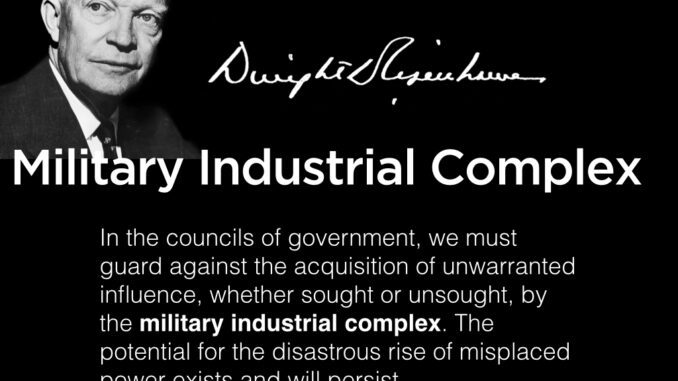
- The Military-Industrial Complex: This powerful nexus of corporate, military, and governmental elites can create a built-in incentive for sustained international tension over peaceful diplomacy, as conflict drives profit for the arms and related sectors.
Part 3: The Cycle of Action and Reaction
The current geopolitical standoff is defined by a dangerous feedback loop, where defensive actions by one power are perceived as existential threats by another, leading to escalation.
This cycle is starkly visible in NATO expansion. While the West frames this as an “open-door” policy for democratic nations seeking security, Moscow perceives it as a deliberate strategy of strategic encirclement and a violation of its sphere of influence. The Russian reaction has been increased aggression, as starkly demonstrated in Ukraine, to create a buffer zone and re-establish its dominance.
A parallel dynamic is at play in the Pacific. The U.S. “pivot to Asia” and the strengthening of alliances like the Quad and AUKUS are justified as upholding a “free and open Indo-Pacific.” From Beijing’s viewpoint, however, this is the construction of an “Asian NATO” for the explicit purpose of containment, a modern echo of the colonial-era humiliation it endured. The Chinese reaction has been heightened assertiveness in the South China Sea and a solidified strategic partnership with Russia.
Underpinning these clashes of strategy is a fundamental clash of narratives. When the West issues public condemnations of Russian and Chinese actions as undermining a “rules-based international order,” it is met with charges of profound hypocrisy. Moscow and Beijing point to the West’s own long history of military intervention and unilateral action as proof that this “order” is merely a tool for hegemonic control. This perception of double standards is then used to justify their own adversarial and revisionist policies on the world stage.
Conclusion: A Path Beyond the Cycle
The great power competition of the 21st century is rooted in a historical cycle of intervention, perceived betrayal, and counter-projection. What the West frames as defending a liberal order is viewed from Moscow and Beijing as a continuation of hegemonic policies designed to suppress their rise.
Breaking this cycle requires a public that can critically engage with history and see beyond the simplified, often sensationalised narratives presented by much of the mainstream media. It demands a foreign policy grounded in the recognition of these deep-seated grievances and a commitment to mutual security. The alternative is a future dictated by the ghosts of the past, replaying the same conflicts with ever-more dangerous tools. Understanding these unseen currents is the first, essential step toward navigating a path to a more stable and peaceful world.
Keep Independent Journalism Alive – Support The AIMN
Dear Reader,
Since 2013, The Australian Independent Media Network has been a fearless voice for truth, giving public interest journalists a platform to hold power to account. From expert analysis on national and global events to uncovering issues that matter to you, we’re here because of your support.
Running an independent site isn’t cheap, and rising costs mean we need you now more than ever. Your donation – big or small – keeps our servers humming, our writers digging, and our stories free for all.
Join our community of truth-seekers. Donate via PayPal or credit card via the button below, or bank transfer [BSB: 062500; A/c no: 10495969] and help us keep shining a light.
With gratitude, The AIMN Team


Andrew; this is a well written summary of how we got to where we are at, however I believe the origins of hegemonic power in the modern era started to appear in Europe during the late 1700’s, or maybe even earlier. Following Spanish and Portuguese explorations into the “new world” the French Revolution with the emergence of Napoleon, the American War of Independence producing a non-colonial militarised community in North America and the formation of Pax Brittanica all accelerated colonial expansion of European nations into of Africa and Asia. This lead to the subversion of ancient cultures and the attempt to implant European values that had not yet benefited from the Industrial Revolution. Fast forward to the “enlightening” revolutions of the mid-1800’s that began the decline of European monarchies and so the seeds for multi-power domination have now been sown. The seedlings of modern dissent will appear in the late 19th century and by then British naval dominance is being challenged by the Prussian inspired German Monarchy. Paradoxically the monarchs of Britain, Germany and Czarist Russia are all directly blood related progeny of Queen Victoria! All of that is ultimately destroyed during the 20th century.
A nuanced and timely analysis. This piece rightly highlights that today’s geopolitical tensions did not emerge in a vacuum but are shaped by accumulated historical grievances that Western narratives often overlook. Russia and China are responding to centuries of intervention, coercion, and exclusion that continue to inform how they perceive the strategic intentions of the West.
The media and military-industrial interests have a powerful role in narrowing public understanding, framing complex historical dynamics as simple morality tales of “good” versus “evil.” Reducing great power conflict to slogans leaves citizens less informed and more easily led toward fear, hostility, and division.
If we are genuinely committed to peace and stability, we need diplomacy that acknowledges historical trauma, respects regional security concerns, and prioritises mutual security over dominance. Understanding these unseen currents is not an act of sympathy, but of realism, and the first step toward breaking the dangerous cycle of action and reaction that has defined global politics for far too long.
This article contributes meaningfully to that wider conversation.
Oh, and I forgot to mention the Monroe Doctrine (adopted 1823) as the principal US foreign policy that enabled overt US military intervention into Latin American sovereign states that were not “allied with US interests”. Latterly the Monroe Doctrine authorises the covert inhumane activities of the CIA such that today USA is confronted with hostile neighbours who understandably oppose the continual interference and overt aggression of opportunistic American trans-national and globalist activities that intend to destroy their sovereignty.
Yeah nah, bypasses the tricky recent bits including Russia’s invasion of Ukraine, with far away Anglo faux anti-imperialist tankies of the left and far right MAGA in furious agreement, sharing talking points?
Trump’s people like Putin are anti-Ukraine, anti-liberal democracy, anti-EU and anti-renewables; like Abbott’s chums in Hungary of PM ‘minimPutin’ Orbán.
Late news, quelle surprise, the third part of the three corrupt amigos, Netanyahu, has just come out in support of Putin; nice…. but what all missed was 2018 election in Israel with both Putin and Trump supporting Netanyahu’s election…..