The modern fact-checking movement launched 25 years ago but is now in retreat – just as it’s needed more than ever. Ned Watt and Michelle Riedlinger report…
For society and democracy to function we used to depend on shared facts and a system of informed discussion and decision making. People are angry because they believe this system is failing them.
Fact checking has been around for some time – most famously by the New Yorker magazine’s unit set up in 1927 – but the modern fact-checking movement got going at the start of this century. 25 years ago.
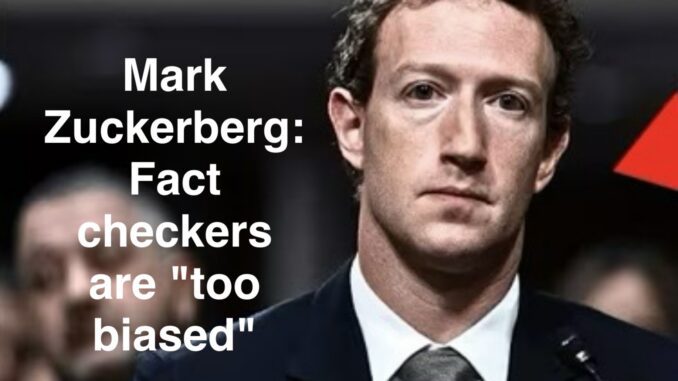
Yet by early 2025, as we reported that expert fact checking as a corrective or sense-making system was in retreat. Meta’s Mark Zuckerberg announced that independent fact checkers were “too politically biased and have destroyed more trust than they’ve created”. Of course, Meta had other political and economic motives for killing its third-party fact-checking program in the US. But this change carried serious consequences: once Meta pulled its support, other platforms followed. Voluntary funding, in kind and in cash, vanished. While the fact-checking community persists, the size of the community shrank.
During this time the media introduced other forms of verification as part of its reporting and social media output. The BBC replaced its fact-checking unit, Reality Check in 2023 and launched BBC Verify, built to authenticate images and video content. Australia’s public broadcaster followed suit replacing its university-partnered fact-checking unit (ABC RMIT Fact Check) with ABC Verify. Both moves respond to the same pressures, primarily a flood of suspected AI-generated content and ceaseless stories and breaking events that outpace old methods of journalistic scrutiny.
To fill the gap, three verification models now compete. Expert verification sits alongside newer AI-powered verification methods, and crowd-sourced contextualisation. Individually, each approach is inadequate on account of trustworthiness, explainability, speed, or context.
Grok is the warning sign
Despite X pushing users toward Grok as an on-platform fact checker, the results are clearly bad. The Digital Forensic Research Lab set up in 2016 has studied over 130,000 X posts during the Israel-Iran conflict and found Grok routinely couldn’t tell real footage from AI-generated media, in one case calling a fabricated video of a damaged airport genuine. Researchers found the same failures during the India-Pakistan conflict and the LA immigration protests. Like all AI’s Large Language Models, Grok sounds confident. It carries no warning label. It is often wrong.
There are also limits to the detection tools built to catch AI-generated text, images, and audio. Some focus on statistical patterns in writing, while others only read embedded metadata. Some only check for watermarks like Google’s SynthID. Every method is narrow and, for now, it seems that every method can be defeated.
AI-powered verification faces problems of explainability and trustworthiness. Because a detector spits out a confidence score with no argument behind it, you can’t interrogate a score the way you can interrogate a fact checker’s sources or a Community Note contributor’s citations. When AI detection tools fail by branding real content as fake we believe that people turn to institutions and people they trust.
The power of crowds
Systems like X’s Community Notes and online community forums like Reddit’s r/isitAI provide an alternative. But studies show Community Notes contributors lean heavily on professional fact-checks, mainstream media reporting and Wikipedia. Attaching a note to a misleading post cuts reposts of content by roughly 46% and likes by 44%. Notes on COVID vaccine claims are nearly always accurate. But the process is slow, and anger moves faster than any correction.
But crowd-sourced verification has one real advantage over other methods because it can be local and sensitive to context. What counts as authentic content in one online community won’t be accepted in another. Verification by fellow community members that are aware of context might be less likely to face accusations of silencing speech.
The real question is: Who gets to decide what’s true? And how are those decisions checked, and what happens once the deciding is done? Those important questions that need to be answered.
Slow and transparent sense-making and fact-checking processes used to be forgivable, when the process was visible. But now that the institutions that built that slow, scrutable process have been outpaced by a handful of companies with platforms built with unobservable functions that seem to reward outrage.
Australia is drafting its first National Media Literacy Strategy, which is a great step forward. It is imperative that any media literacy for AI-generated content goes beyond “spotting the fakes.”
If Community Notes, Grok, and detection tools are doing the fact checkers’ old job, then media literacy has to include platform governance literacy too. People need to understand who decides, by what process, and what incentives shape that decision. We also believe that the key to this is by building AI capabilities that are situated within the diverse contexts of how people experience the technology.
The drift toward Grok and synthetic detection tools suggests that people are looking for speed and simplicity above all else. Fact checkers may be slow and their authority may be questioned but until automated systems can deliver speed, explainability, and trust in combination, then human verification will have to suffice.
Ned Watt is a post-doctoral research fellow at the Queensland University of Technology (QUT) GenAI Lab in Brisbane. Michelle Riedlinger is associate professor in the School of Communication at QUT.
This article was first published in The Klaxon and 360info.org
Also by The Klaxon/360infi: A toxic brew has shaped a world driven by anger, fear and confusion
Keep Independent Journalism Alive – Support The AIMN
Dear Reader,
Since 2013, The Australian Independent Media Network has been a fearless independent voice – holding power to account and delivering journalism that matters.
Running this site isn’t cheap. Rising costs mean we need your support now more than ever. Every donation, big or small, keeps our servers running, our writers working, and our stories free for everyone.
Donate here:
PayPal or credit card – just click on the Donate button below
Direct bank transfer: BSB: 062500; A/c no: 10495969

We’ve also set up a GoFundMe as a dedicated reserve fund for hosting and future improvements.

Thank you for standing with us. We couldn’t do this without you.
With gratitude,
The AIMN Team
I have a deep sympathy for this post..
Every chance I’ll be offline myself after the last week.