By Denis Hay
Description
How US power shapes Australian sovereignty, where politicians failed their duty, and how Australia could act independently using dollar sovereignty.
This page provides a source-based factual reference documenting how US power influences Australian sovereignty across defence, intelligence, trade, and media. It is designed to support multiple articles by offering a stable, evidence-based overview of how US power shapes Australian policy choices in practice.
Introduction: The Problem Australians Rarely See
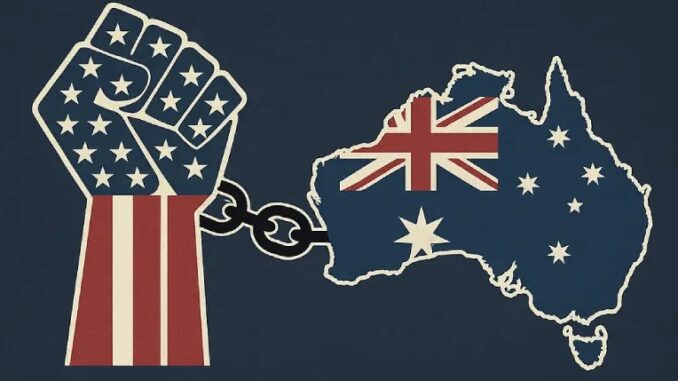
Australia is formally a sovereign nation, yet its foreign policy, defence posture, and intelligence alignment consistently mirror US strategic priorities. This article examines where Australian politicians have failed in their duty to act independently, despite Australia’s clear legal and monetary capacity to do so. These outcomes are not accidental. They are the result of political choices.
The Problem: Where Sovereignty Is Undermined
1. Defence Policy and AUKUS Commitments
Australia’s participation in AUKUS reflects the growing influence of US power over Australia’s defence posture and strategic planning.Decisions were made with limited parliamentary scrutiny and without a public mandate.
Independent analysis shows no demonstrated defensive necessity requiring this level of alignment, while opportunity costs are large.
2. Foreign Bases and Intelligence Dependency
Joint facilities such as Pine Gap run within Australia’s borders, but serve US-led strategic goals. Operational control and targeting functions stay opaque, yet these facilities can implicate Australia in conflicts without democratic consent.
These arrangements illustrate how US power is embedded in Australia’s intelligence infrastructure. This stands for a direct erosion of Australian sovereignty.
The Impact: Consequences for Australia
3. Trade Policy, Sanctions, and US Power
Australia routinely adopts US-led sanctions and trade positions, even where they harm Australian exporters and regional relationships. Independent cost–benefit assessments are rarely made public. This alignment demonstrates how US power shapes Australia’s external economic decisions.
This weakens Australia’s capacity to act as a stabilising regional partner.
4. Media Framing and Public Consent
Australian media coverage of global conflicts largely reflects narratives aligned with US power and strategic interests. This narrows public debate and limits democratic scrutiny of foreign policy decisions.
Without informed consent, sovereignty becomes procedural rather than real.
The Solution: What Australia Could Do Instead
5. Australia’s Dollar Sovereignty and Policy Choice
Australia issues its own currency and faces no financial constraint on funding diplomacy, regional aid, climate security, or public infrastructure. Claims that alternatives are “unaffordable” are incorrect.
Despite this capacity, policy choices continue to prioritise alignment with US power over independent national decision-making.
The barrier is political will, not public money.
6. Practical Alternatives
- Parliamentary approval for foreign military commitments
- Independent intelligence oversight
- Non-aligned regional diplomacy
- Redirecting public money to civilian security priorities
Frequently Asked Questions
Is Australia legally required to follow US foreign policy?
No. Australia keeps full legal sovereignty and decision-making authority.
Does AUKUS make Australia safer?
There is no independent evidence proving reduced risk.
Why is Pine Gap controversial?
Because it embeds Australia in US military operations without transparency.
Can Australia afford a different approach?
Yes. Australia’s dollar sovereignty allows public investment by choice.
How does US power affect Australian sovereignty in practice?
US power affects Australian sovereignty through defence integration, intelligence sharing, trade alignment, and media framing rather than formal legal control.
Final Thoughts: Sovereignty Is a Choice
The evidence shows that US power shapes Australian sovereignty through political decisions, not legal necessity. Australia has alternatives. Whether they are used depends on accountability and public demand.
Understanding how US power operates in practice is essential for informed democratic accountability.
What’s Your Experience?
Do you believe US power has reduced Australian sovereignty, or strengthened it?
Call to Action
We want to hear from you
- Share your thoughts through our Reader Feedback form.
- Visit our Testimonials page to see how others are engaging.
- Leave a comment below; every voice helps shape future content.
Explore more
Find more writing on political reform and Australia’s dollar sovereignty at Social Justice Australia.
Share this article
Articles like this only create change when they are shared. If it stays with one reader, the message stops. Sharing helps this message reach more Australians who want a fairer, more responsible society.
Support independent journalism
Running this site costs around $2000 a year, and reader donations have helped cover $807 so far. Every contribution helps keep this work online, accessible, and independent.
If you find value in these articles, please consider supporting the site. Even a few dollars help.
Donate now, one time or monthly.
Already donated? A quick Google review helps others discover the site.
References
Australian Government: What is AUKUS
SIPRI: Military Expenditure Database
Nautilus: Pine Gap and Strategic Risk
Department of Foreign Affairs: Australia’s Sanctions Framework
Reserve Bank of Australia: How Money Is Created
Australian Journal of International Affairs: Australia’s Intelligence Alliances
World Bank: Economic Effects of Sanctions
ABC: Media and War Reporting
Lowy Institute: Public Opinion and Foreign Policy
Treasury: Fiscal Policy Explained
Governor RBA: Creating Money Out of Thin Air
This article was originally published on Social Justice Australia
Keep Independent Journalism Alive – Support The AIMN
Dear Reader,
Since 2013, The Australian Independent Media Network has been a fearless voice for truth, giving public interest journalists a platform to hold power to account. From expert analysis on national and global events to uncovering issues that matter to you, we’re here because of your support.
Running an independent site isn’t cheap, and rising costs mean we need you now more than ever. Your donation – big or small – keeps our servers humming, our writers digging, and our stories free for all.
Join our community of truth-seekers. Donate via PayPal or credit card via the button below, or bank transfer [BSB: 062500; A/c no: 10495969] and help us keep shining a light.
With gratitude, The AIMN Team



What sovereignty? That was tried once, by Gough and we all know how that ended. No Australian government since tried standing up for Australia.
Australia’s foreign policy is but one segment of a cascade that is influenced by the USA as a government but originates from the overbearing diktats of the International Zionist project. The fawning subservience displayed by Australian politicians of all persuasions towards both American and Israeli interests is a betrayal of Australia’s sovereignty and independence.