Who will be the next terrorist to re-enact the Bondi attack of last December,? Or perhaps walk into a mosque on Friday and kill unsuspecting worshippers? A synagog? A church?
Or just a random attack in a crowded place where ordinary people are going about their ordinary day to day business?
But that probably is the wrong question to be asking, since it looks at the most difficult part of the terrorism conundrum. The real question is the WHY, what is it that motivates a person or a group to inflict such devastating harm targeting innocent people for reasons which remain obscure long after the event.
Terrorism, in Australian Law, section 100.1 of the Criminal Code Act is described as:
”… an action or threat of action designed to influence a government or intimidate the public to advance a political, religious or ideological cause. This action must cause serious harm, such as death, injury, or critical infrastructure damage, with penalties up to life.”
The history of terrorism is a long one, and so many terrorist acts have been motivated by issues of faith. Some standouts, the Bondi shooting, the Christchurch Mosque murders, but they are standouts probably because they are recent, other attacks in Australia include:
- Stabbing attack in Bourke Street, Melbourne in 2018 in which one person was killed and several others injured;
- Siege in Brighton in 2017 where a lone attacker claiming allegiance to ISIL killed a man and held a woman hostage;
- Shooting in Parramatta in 2015 where a 15 year old boy shot and killed a civilian police employee outside Police Headquarters;
- Sydney Hilton bombing 1978, targeting a regional heads of government meeting where a bomb placed in a rubbish bin killed three people;
- Lindt Cafe siege in 2014 where a jihadist inspired lone actor siege resulting in the deaths of two hostages and the perpetrator;
- Port Arthur on April 28-29 where a 28 year old murdered 35 people and injured 23 others.
Each event came unexpectedly. There were no early warning signs that something bad was going to happen, but innocent people going about their business got caught up in the violence for no apparent reason. Wrong place, wrong time.
While we can understand those attacks as ‘Terrorist Attacks’, they not just terrorised the area and the people there, but also took innocent lives. Traumatised people who just happened to be there. Caused unimaginable grief to families who lost loved ones for no apparent reason. But where the reasons are known they often have something to do with faith, with belief, with religion.
Human beings are not hard-wired to kill other human beings, most of us would even be a bit squeamish about killing an animal, yet daily we see killings in our news feeds, we see wars being fought, we read of women being killed by estranged partners. For some, killing is something they can do, the grievances they carry, the hatred which has grown within them drives them to kill. A fundamental belief they hold has been compromised to such an extent that they will kill.
While religious beliefs are included in the motivations, it is not religion as such which is the problem. We all ‘believe’ in something. Take for example a belief in a god or gods or a belief that there is no god. Both are beliefs, see them as opposite ends of a spectrum if you like, theist to atheist. Neither can prove or disprove the existence or non existence of a god or gods. And yet, that belief can be held so strongly that it creates conflict.
Sometimes, the debate over which god, or even the correct way to worship any particular god becomes the motivator. Look at the history of the Reformation, the 16th century to see the price dogmatism can extract. A 100 year-long war over whether the Pope is the voice of god or whether the newly accessible Bible told a different story… And then split after split, interpretation after interpretation, and so it goes, no matter which creed, which religion, whether it be in Christianity or in Islam, the struggle for purity in worship, or the true lineage of leadership as in Shia or Sunni, and the off-shoots within that debate which has raged for 1400 years.
The dogmatism that drives such tensions is not exclusively religious, but can be better understood as being ideological. Alister McGrath explains this well in ‘Why We Believe’ (2025):
“… Whereas ‘good thinking’ leads to confidence that is proportional to the evidence available, dogmatic beliefs are held and asserted with a confidence that masks them being grounded on inadequate or biased thinking. Although some suggest that dogmatism is characteristic of religious people or beliefs, the evidence clearly indicates that it is linked with a wide range of domains, situations, topics and issues – particularly politics.
“While the Enlightenment project of the eighteenth century emphasised the importance of open-mindedness and the destructive nature of dogmatism, the twentieth century witnessed the emergence of a new authoritarianism, made tangible in the emergence of Fascism and the cult of submission to strongmen such as Mussolini, Hitler and Stalin.” (Page 176)
Raging contests which ultimately are a question of whether ‘my god is tougher than your god’ or ‘my god is the true god and my religion is the true religion’, is that simple, because the only way to prove the point is to kill those who disagree. It’s been going on for centuries, each side finding justification in the unprovable thing called ‘belief’. Or in the case of politics, a ‘godlike’ worship of strongmen, which today includes Putin, Trump, Netanyahu among others.
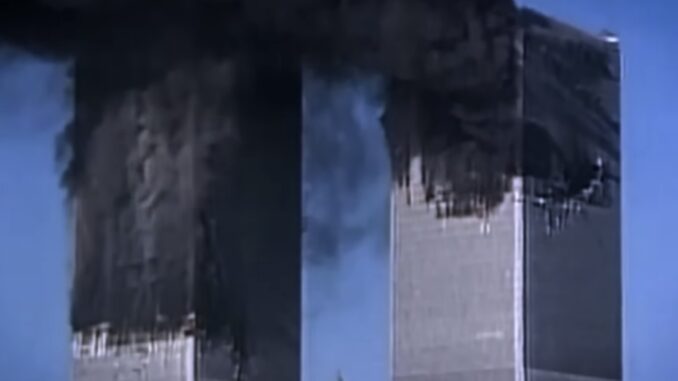
Trying to understand terrorism and the minds which drive such violence has been a question that has taken prominence in criminology, and in understanding the psychology which drives criminal behaviour. The Pearson publication ‘Criminal Behaviour; A Psychological Approach’ (2017) devotes a chapter on the ‘Psychology of Modern Terrorism’ which opens with the effect that 9/11 has had on America and has influenced much of the western world’s attitude to Islam and its connection to terrorism. The details within the chapter dig far deeper, looking at the history of marginalisation with the forming of the Klu Klux Klan, the Jim Crow laws on the southern states of the US, and how these ‘terrorised’ the African American communities, and to some extent still do today.
It examines the types of terrorism, the ways in which beliefs are reinforced to manipulate adherents to performing such acts as those of 9/11. Or the racism of KKK and Jim Crow to lead to violence of African Americans.
An important distinction is made between a criminal mind-set and a terrorist mind-set.
The planning of a terrorist attack is far more detailed, exacting than most planned criminal activities. There is more at stake; it’s not material things like money or art, but the very essence of life, the eternal self-definition, something far greater than mere possessions.
The nineteen men who hi-jacked the aircraft on 11 September 2001 were on a suicide mission. They were prepared, in fact committed to die in the act they saw as righteous, heroic and endorsed by their leaders who promised a blessed eternal life. These men were all educated, professional, pilots with university educations. As with other suicide missions, the suicide was seen as a pathway to martyrdom, as described in ‘Criminal Behaviour’ the pathway to radicalisation is very much embedded in the beliefs candidates are indoctrinated in.
In the context of terrorism, radicalisation is defined as an individual’s indoctrination to fully embrace a terrorist group’s ideology and mission, and to gradually embrace the level of violence necessary to achieve the group’s goals… The training not only instills the moral rightness and importance of the cause for militant action; it also creates a sense of eliteness and provides social rewards o of solidarity and group esteem for excelling in terrorist exploits.
“The person radicalising your son, your brother, your friend may not be a stranger. It may be their best friend right here in town.”
“… leaders of terrorist organisations try to recruit young men who are enthusiastic but who operate at a relatively low level of cognitive complexity. This does not mean they look for individuals with low intelligence, only that they are young, naive and idealistic.” (Page 356-7).
While much of the chapter on Modern Terrorism focusses on Islamic terrorism, the description of the motives and justifications for terrorism, it also examines why such events occur, in this case, targeted at USA, but that can be extended to other places.
Respondents to a survey after the 9/11 events:
“… thought that the United States has been overly involved in the affairs of other countries and that those countries are now retaliating. In addition, participants felt that the United States has developed a false sense of security in believing terrorist groups would not retaliate for the policies the United States has used on other countries and cultural groups… the overwhelming majority of evidence indicates that responding to violence with violence only provokes further violence. Aggressive military action is rarely the solution, unless it is in response to an imminent, documented threat to a country and its inhabitants. International terrorism is unlikely to be reduced until the root causes of the violence are addressed and corrected.
“These causes often include real or imagined injustice in meeting basic human needs for coping with difficult life conditions, insecurity, lack of self-determination, and disrespect for one’s social identity.” (Page 365).
So when we address terrorism, or actions which have been described as terrorist actions, while the motivations may not be clear, a look into the background of the terrorists, along with a consideration of factors in their lives may be helpful in understanding the root causes. The quote above regarding the responses of those surveyed makes interesting reading. The survey was done in the US, but highlights comments from every-day people that perhaps, just maybe, the use of US force in other countries may have been the motivating factor for the 9/11 attacks.
Which then begs the question whether national governments can, if not be terrorist organisations, overtly or covertly support terrorism, so long as it is deemed in the ‘national interest’. And here the history of the CIA in the murder of Che Guevara in 1967, the overthrow of the Chilean government, ironically on 11 September 1973, involvement in the overthrow of the democratically elected Iranian government in 1953, the attack on Iran on 28 February this year, or perhaps the invasion of Southern Lebanon, the levelling of Gaza, home to 2.2 million people made homeless, and the withholding of essential services while continuing attacks even though there is officially a cease-fire in place, or perhaps the dispossession of Palestinians and Bedouin people on the West Bank and Golan Heights by Israel. The continuation of the ethnic cleansing of Palestinians by Israel, effectively a continuation of the Nakba of 1948. Iran’s support of Hezbollah and Houthis in the conflict with Israel.
Are any of these able to be defined as terrorist actions under the legal definition of terrorism, whether under Australian Law, or under US law which uses similar definitions?
Or does the term only apply to those we don’t like for whatever reason? Or could it be a fear of alienating our allies, that we seemingly can condone actions which would otherwise be termed terrorism? Or the fear of being labelled antisemitic when calling out those actions point to a sense of humanity, that Arabs, Muslims, Jews, Christians, people of whatever ethnicity, race or religion, and any other way we can distinguish people, we share the same humanity.
It is not antisemitic to call out the atrocities committed against Palestinians, as it is equally not racist to call out Russia for its attacks on Ukraine today, or Chechnya, Georgia, North Caucasus and other conflicts in Russia’s desire to reclaim its imperial heritage.
It is not antisemitic to remember that at no time were Palestinians asked what they thought of being disposed of their homelands in the quest for a Jewish Israel, a reclaiming of the biblically promised lands, but in typical colonial behaviour, claim the land for their own, based entirely on a sense of entitlement. The Spanish, Portuguese, Dutch, French, British and other colonisers took lands and eliminated indigenous peoples. The Jews state they are entitled to the land God had promised that to their fore-father Abraham, some 2500 years ago.
The same arrogance, the same sense of superiority.
The why question remains, why do terrorist actions happen?
- Why did 9/11 happen?
- What motivated Hamas to carry out the terrorist attack on 7 October 2023?
- Why would a Muslim father and son kill 15 innocent people while they attended a religious celebration on 14 December 2025?
- What motivated an Australian man, Brenton Tarrant to travel to Christchurch and kill 51 people as they worshipped in the Al Noor Mosque and the Linwood Islamic Centre?
- What motivates attacks on abortion clinics, or churches or mosques or synagogs, or the school shootings which are becoming almost commonplace in the US.
Almost daily I receive YouTube videos, links to various blogs and other media from ‘my nemesis’ who recently asked me whether I had turned Muslim because I responded to a particular post, outlining the long and peaceful history of Muslims in Australia. Headlines such as ‘We Must Implement Sharia Law’, ‘The West has No Idea what’s coming according to an Islamic specialist’, and on and on, the fear of an Islamic take-over, the fear that you won’t be able to enjoy a pork roast ever again.
Hate and Fear
How does such content drive would-be terrorists as they are radicalised? The radicalisation occurs no both sides, those who feel threatened by the arrival of ‘different’ people, and those who are marginalised because of that difference.
Language similar to the dehumanisation of Palestinians used by the Israeli Prime Minister and President, dehumanising language used by Trump and his Secretary of War in justifying the attack against Iran, is not dissimilar to that used in Nazi Germany to vilify Jews, to paint them as sub-human, justifying their elimination.
And we have a Royal Commission into Hate Speech, could that possibly address the issues which drive terrorism? Should that style of investigation be conducted by the UN General Assembly?
Could any recommendations get past the UN Security Council?
I woke this morning to the song Anthem, no it was not Leonard Cohen singing, but it was a response to the sound of birds at dawn. Cohen’s works have been described as ‘dark’, but in this song there is a ray of hope:
The birds they sang
At the break of day
Start again
I heard them say
Don’t dwell on what has passed away
Or what is yet to be
Ah, the wars they will be fought again
The holy dove, she will be caught again
Bought sold, and bought again
The dove is never free
Ring the bells that still can ring
Forget you perfect offering
There is a crack, a crack in everything
That’s how the light gets in
That’s how the light gets in
That’s how the light gets in.
(Leonard Cohen)
Keep Independent Journalism Alive – Support The AIMN
Dear Reader,
Since 2013, The Australian Independent Media Network has been a fearless voice for truth, giving public interest journalists a platform to hold power to account. From expert analysis on national and global events to uncovering issues that matter to you, we’re here because of your support.
Running an independent site isn’t cheap, and rising costs mean we need you now more than ever. Your donation – big or small – keeps our servers humming, our writers digging, and our stories free for all.
Join our community of truth-seekers. Please consider donating now via:
PayPal or credit card – just click on the Donate button below
Direct bank transfer: BSB: 062500; A/c no: 10495969

We’ve also set up a GoFundMe as a dedicated reserve fund to help secure the future of our site.
Your support will go directly toward covering essential costs like web hosting renewals and helping us bring new features to life. Every contribution, no matter the size, helps us keep improving and growing.

Thank you for standing with us – we truly couldn’t do this without you.
With gratitude, The AIMN Team

”… an action or threat of action designed to influence a government or intimidate the public to advance a political, religious or ideological cause. This action must cause serious harm, such as death, injury, or critical infrastructure damage, with penalties up to life.” Clearly, by that definition, both Israel and the USA are terrorist organisations.
Technically Port Arthur does not qualify as terrorism. There was no known ideology – political, religious or otherwise – behind it; it was one crazy, twisted person doing crazy, twisted things with no defined purpose.
Yes, Leefe, I agree, however, the effect was the same as a terrorist attack. People were traumatised, innocent lives were taken for what remains a mystery.
Uhm ….. there have been other ”politically motivated” actions in Australia, commencing with the attempted assassination of Price Alfred at Clontarf Beach NSW.
Then in the 1950s there was the first (and until now) only attempted assassination of an Australian politician.
Yes. The definition of ‘terrorist attack’. Hmmmm.
The article makes reference to ‘strongmen’ Mussolini, Hitler and Stalin, and Putin, Trump, Netanyahu among others. A selection from the 20th-21st Century. All of them elected leaders who had made their case for preservation of their elector’s culture by elimination of ‘others’. Of course, they all lied and incited fear, and defense by attack, not via rhetoric, but via a war machine and obliteration.
One might consider that ‘One man’s terrorist is another man’s freedom fighter.’ So it has been throughout history. And in all cases, there can be no other distinction afforded in the ratcheting up of war machines and the imperial conquests both within the realm, and outside of it. The exercise of power by reason and benevolence precluded by corporeal threat and brutality.
Seemingly circumscribed by cultural notions, singling out those named seems stark by its omission of all those others from realms that have and still ratchet up war machines and carry out or align to conquest via corporeal threat and brutality – a suicidal obliteration spiral couched as a necessity for dètente.
By shared experience there is learning, but fearmongers, leaders, parents, exploiters, literalists and commentators that embed the laziness of two-dimensional binaries, eg good/bad, good/evil, god/devil, heaven/hell, with us/agin us, seem to choose to neglect the ability of mind plasticity to operate with nuance in reckoning understanding, cooperation, survival, illness and death.
Surely, such trade in absolutes is about self-aggrandizement, enrichment and corraling, as it seeks to stem knowledge and learning, and supplant it with belief and the abdication of responsibility by the individual and the collective as if they’re incompetent startled ungulates. They rely on, entrap and prey on the suggestibles and their anxieties which they engendered in the first place.
Cocky, a correction: In September 1994, NSW Labor MP John Newman was shot dead outside his house in Cabramatta. Phuong Ngo was jailed for life in November 2001 for ordering the assassination of Newman, his political rival in the Labor Party.