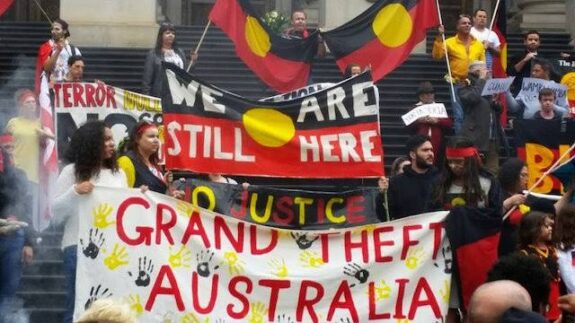
Chapter 24: Reparations – Paying the Debt Owed
More Than Symbolism
Truth-telling is essential, but without action it risks becoming symbolic. Reparations are about action – addressing not just the moral debts of colonisation, but the economic and material ones.
Australia was built on stolen land, stolen wages, and stolen children. Reparations acknowledge that these were not abstract harms, but concrete thefts that enriched the nation. To refuse reparations is to keep benefiting from the theft while pretending it was all in the past.
What Reparations Mean
Reparations do not mean taking away someone’s home or farm. They mean recognising and repaying debts in ways that restore dignity and possibility. Reparations can include:
Financial compensation: Payments to survivors of stolen wages, stolen children, and stolen land.
Return of land: Restoring land to traditional owners where possible, or offering fair compensation and co-management where not.
Investment in communities: Funding for housing, healthcare, education, and cultural revival led by Aboriginal and Torres Strait Islander peoples.
Repatriation of artefacts and remains: Returning sacred items and ancestors held in museums and private collections.
Formal apologies and memorials: Symbolic gestures that sit alongside material justice.
Reparations are not charity. They are repayment.
The Debt of Stolen Wages
As explored earlier, governments withheld billions of dollars in Aboriginal wages through “trust funds” that were never returned. Reparations here would mean:
Full compensation to surviving workers or their descendants.
Independent audits of government and employer records.
Acknowledgment that this theft underpinned state economies and industries.
The refusal to pay back stolen wages continues the injustice every day.
The Debt of Stolen Children
For the Stolen Generations, reparations are equally urgent:
Survivors are still alive, many in poverty due to disrupted education and family life.
Some states have introduced compensation schemes, but payments are often capped and inadequate.
National reparations remain absent, despite recommendations in the Bringing Them Home Report (1997).
Every year of delay denies justice to survivors while governments spend more fighting legal claims than offering redress.
Land as the Foundation
Land is central. All colonisation begins with land theft, and reparations must address this.
Return: Some land can and should be returned to Aboriginal ownership.
Co-management: National parks and heritage sites can be jointly managed with traditional owners.
Resource royalties: Mining and agricultural profits from Aboriginal land should include fair compensation to communities.
Urban recognition: Even in cities, reparations can include land transfers for housing, cultural centres, or community projects.
Without land justice, reparations remain incomplete.
Why Reparations Are Resisted
Opponents of reparations often raise fears:
“It will cost too much.” But the cost of denial – in poverty, incarceration, and inequality – is already immense.
“I didn’t do it, why should I pay?” Reparations are not about individual guilt but collective responsibility. All Australians benefit from systems built on colonisation.
“It’s too complicated.” Complexity is not an excuse. Other countries (Canada, New Zealand, Germany, South Africa) have created reparations frameworks. Australia can too.
The resistance is not really about money. It is about power: admitting debt means admitting that colonisation’s benefits were built on theft.
Reparations as Healing
Reparations are not just about compensation. They are about healing:
They acknowledge survivors’ pain as real and worthy of redress.
They provide resources for communities to rebuild and thrive.
They send a message to future generations that injustice will not be ignored.
Reparations cannot undo the past, but they can help shape a more just future.
Why This Matters Today
Without reparations, apologies and truth-telling risk becoming hollow. They may soothe the conscience of the nation but do nothing to repair the damage. Reparations are the bridge between recognition and justice.
Where This Leads
Reparations address the debts of the past. But what about the future? For that, Australia needs a new relationship with Aboriginal and Torres Strait Islander peoples: one based on treaty.
The next chapter will explore treaty – what it means, why it matters, and why it remains the unfinished business of Australian democracy.
Continued tomorrow…
Link to Part 23:
From Ignorance to Understanding: Facing the Truth of Colonisation (Part 23)
Link to Part 25:
From Ignorance to Understanding: Facing the Truth of Colonisation (Part 25)
Dear reader, we need your support
Independent sites such as The AIMN provide a platform for public interest journalists. From its humble beginning in January 2013, The AIMN has grown into one of the most trusted and popular independent media organisations.
One of the reasons we have succeeded has been due to the support we receive from our readers through their financial contributions.
With increasing costs to maintain The AIMN, we need this continued support.
Your donation – large or small – to help with the running costs of this site will be greatly appreciated.
You can donate through PayPal or credit card via the button below, or donate via bank transfer: BSB: 062500; A/c no: 10495969


Be the first to comment