We like to think that we are a civilised people, don’t we?
I was pondering this question, considering what it means to be ‘civilised’, what ‘civil’ looks like, so I asked a few people on my morning walk and the answers were quite different: some expressing a degree of scepticism, that civility is from a by-gone time, others that civilisation is an ordered, sophisticated social phenomenon, that the opposite is barbarianism, but no further definition was forthcoming.
So I thought it may be an interesting exercise to explore the origins of civil and the various uses of hat word, to see what it meant, what it means today and then to explore whether we are civilised or not it in today’s inter-connected world.
A National Geographic article headed “Civilizations” starts with:
‘Scholars often differ over how to define “civilization” and how to categorise societies on that definition – or whether to categorise them at all. Most historians, anthropologists and archeologists working today feel that the word is problematic because of the way the label has been used to set up harmful oppositions among world societies, with “civilized” societies being seen as superior to “non-civilized” societies.’ (Note: the National Geographic article uses the American spelling for “civilizations” and “civilized”).
Looking back to its etymological roots, the word ‘civilisation’ relates to the Latin word ‘civitas’ or ‘city’, so the literal meaning of ‘civilisation’ would be a society made up of cities, as compared to nomadic or agricultural based societies. Would that imply the civic roles, such as administration, both governmental and civilian functions? Is it separated from militaristic endeavours?
And here in lies a problem in the way we see the world, in the way, say, European explorers saw the world, the new worlds they ‘discovered’, in the way the Middle East is understood, the way in which alliances are achieved and maintained. In the way colonisers used violence and disease while establishing rapacious settlements in the ‘new world’, but essentially carrying on the cycle of conquest and collapse which has been the mark of history since the beginning of time.
The Middle East has been described as the cradle of civilisation.
Iran, the ancient Persia, has a proud culture, dating back over 5,000 years, which in its recent history has suffered external aggressions, yet has been supportive of the ruling regime at times of threat from invasion, even the current authoritarian theocratic regime, due to civilisational pride, a Shia tradition of martyrdom and a strong sense of nationalism, which in the current climate makes them a formidable foe. Yes, there are elements of dissent, such as the uprising in January, protesting hyper-inflation which was admitted later to be a ploy by external forces to sow discontent.
Iraq, formerly home of the ancient Mesopotamian, now a dishevelled remnant of a once proud empire was laid to waste through years of colonial rule, whether it was the Ottoman Empire until 1917, or under the carve-up of the Middle East between the French and the British, a colonial grab for the oil riches as the spoils of war for the victors.
Syria, including Lebanon, home of the ancient Assyrian Empire… and so it goes, the cradle of civilisation now seen as the home of barbarians and religious zealots scrabbling in the desert sands, pretty much an uncivilised bunch of despots and unworthy riffraff. At least by the new colonisers, the new leaders in civilisation, those seeking to reinvent a mythological past.
How did the cradle of civilisation become such a cultural wasteland? What has changed?
In asking various people what they see as ‘civilisation’, or how they would define ‘civility’, a common thread was a rather cynical view that civility has diminished, that people are ruder today than most can remember, blaming the depersonalisation of the social media, where there is no face to face connection, rather a competitive field of put downs and denigration, of a sense of powerlessness which places blame on some sort of ‘other’… Whether that be through the ‘manosphere’ promoting a form of masculinity which is toxic, a re-assertion of male power, of male dominance, or fashion influencers promoting unrealistic images spawning the ever-growing beauty industry.
Civilisations are defined in various ways, but included are aspects such in technology, the arts, culture, innovations, governance, societal structuring, literacy and numeracy, law and order among other ‘markers’ and inevitably comparisons are made, to define one group as more or less civilised than others. This was particularly evident during the European colonial expansion from the sixteenth century and continues today with western dominance, particularly Christian America and European, and in the Middle East Jewish people seen as more European than the indigenous Arabs. At the time of the Roman Empire, there were citizens and barbarians. Today there are civilised and ‘others’, the civilised being white, of Christian European background, or sharing ‘Judeo-Christian values’, a term which emerged in the 19th century referring to Jews who converted to Christianity, morphed into a unified opposition to Communism during the Cold War. Today its usage is as a superior culture to anyone who does not share those ‘values’.
Judeo-Christian values are very much the arsenal of the new right of the Liberal Party in Australia, following the Republican Christian Nationalists of the US: targeting the ‘immorality’ of feminism demanding equality, demanding special ‘women’s rights’, such as equality, respect, and recognition of their right to control their bodies, in demanding consent to engaging in sex, in controlling reproduction through contraception and abortion among the other hard-fought for rights, such as the right to vote, the right to own property and so many other ’rights’ which really allow women to be recognised as ‘people’ rather that chattels or objects. Or the rights of people who self define their sexuality or gender, demanding the right to same sex marriage.
The ‘superiority’ of Judeo-Christian values is now also used in the neo-colonial setting of the Middle East in the support of Israel and the ongoing genocide of Palestinians in Gaza and The West Bank… Along with a continuation of the wars over access to oil, forcing regime change in oil rich nations to support cheap, reliable oil and petroleum products to the hungry, very deserving, civilised ‘west’, starting with the carve-upon the Ottoman Empire after WWI, the overthrow of democratically elected government of Iran in 1953, two wars in Iraq, and on and on it goes. Muslims are not ‘civilised’, and therefore can be eliminated, whether they be Iranians, Lebanese, Syrians or any other group Israel decides is a threat to their existence. To oppose that view is very quickly defined as antisemitic, and not upholding Judeo-Christian values which define civilisation today. In other words, civilisation is defined through a moral code, a Judeo-Christian ethos, a set of moral standards upheld through the teaching of the Bible, both Old and New Testaments, including those teachings which alienate those who are not ’God’s People’, currently being justification for the ongoing expulsion and genocide of Palestinians and other Arabs.
Anti-Islam posts abound, framing Muslims as barbaric, fuelling an increasing crescendo of anti-immigrant political messaging. It is not just that there are too many people trying to get here, in the west, but too many Muslims, bringing with them Sharia Law. “Look what’s happening in England, in The Netherlands, and other places”. A bombardment of messages which ramp up fear and hatred: which divides people but offers no solution except to promote fear and hatred.
After WWI, a ‘new’ form of art emerged, Dada, which subverted the conceptional understanding of what art was, as a part of ‘civilisation’, as a product of a civilised people, a sort of ‘anti-art’, a nihilistic, anti-war response to the horrors of the recent war. In 1969 the artist and teacher Jeff Nuttall wrote ‘Bomb Culture’, in which he reflected on dada and the frustration of not just having gone through another war, but the development of weapons more destructive than what had ever been produced:
‘In the new world the light was harsh, a perpetual noon of decisions, every crucial action being possible final. No man was certain anymore of anything but his own volition, so the only value was pragmatic. Moral values, thought absolute were now seen as comparative, formal social entities around which morality had revolved were now called in doubt and nothing of morality remained. The society for which we has more or less cheerfully fought and (some of us) more or less cheerfully died had dropped its mask and in so doing had robbed all its institutions – church, political party, social class, happy family – of moral authority. No longer could teacher, magistrate, politician, don, or even loving parents guide the young. Their membership of the H-bomb society automatically cancelled anything they might have to say on questions of right or wrong.’
Wherein the aftermath of the world wars there was an expression, “It could all be over tomorrow”, and from that a sense of freedom, to explore the wonders of life, a respect for difference, a lack of constraint imposed by the institutions, which led to the beatnik and hippy ‘revolutions’, new adventures in art, film and literature, while today the response is far different. While that ‘freedom’ opened new avenues in the arts, in creativity, the current experience of individualisation has become far more divisive. The rise of social media and the ubiquity of personal technologies is driving alienations which are expressed in the vitriol of ‘X’, Facebook and other on-line forums.
The hatred which abounds in the on-line, the social media sphere and the right-wing news media echo-chambers amplify the lack of civility, the lack respecting basic human rights, which, by the way were codified after the horrors of the second world war, after the revelation of the holocaust, the result of entrenched hatred, in the United Nations Declaration of Human Rights, a light which the current entrenchment of hatred seems to be dimming more day by day, leading to the conflagration which is the Middle East. And the hatred for Muslims who have sought a safe refuge from the violence and absolute devastation of their homelands, only to find they really are not all that welcome… But where can they go, after the civilised ‘west’ has obliterated their cities, destroyed their homes?
But does it have to be that way?
Is that not a choice we make, a choice to engage in the whirlwind of misinformation and quick grabs to demean this group or that group, to vilify those we disagree with, to spew hatred because ‘they are not like us’, and allow that to influence our day to day reactions to people we see when we venture out? The response we have to the woman wearing a hijab, or the very effeminate young man, looking so ‘gay’, or any other person who is far too different?
A young Indian doctor was at Cottesloe Beach yesterday. He was laying on his back, his baby daughter sitting on his belly. The reason for being at the beach was to see the Sculptures by the Sea exhibition, and the stillness of that little girl sitting contentedly on her father’s tummy made me question whether they were actually part of the exhibition. We enjoyed a laugh, and then he expressed his desire to work here, to immigrate with his family. The point of this diversion is to end in a positive note.
We, the doctor and I, agreed that we cannot solve the world’s problems, we cannot make peace suddenly happen in the Middle East or in Ukraine or anywhere else where religion or ethnicity or any other division causes people to kill each other, however, we can influence the immediate surrounds we occupy, being, dare I say it, CIVIL, polite, respectful, listening to those we meet on life’s journey. And, with his wife’s encouragement, stay off social media where so much of the negativity starts.
Civility is not dead, unless we let it be dead. It is a choice we make. We cannot individually solve the problems of the world. But we can make the space around us a safe place, a civilised place.
The doctor I spoke with saves lives as his day to day job. He does not judge who or what that person believes in, he does not judge the person for their self-definition, their gender, their ethnicity, he is there to save that person’s life, to mend a broken body. To respect the humanity of his patient.
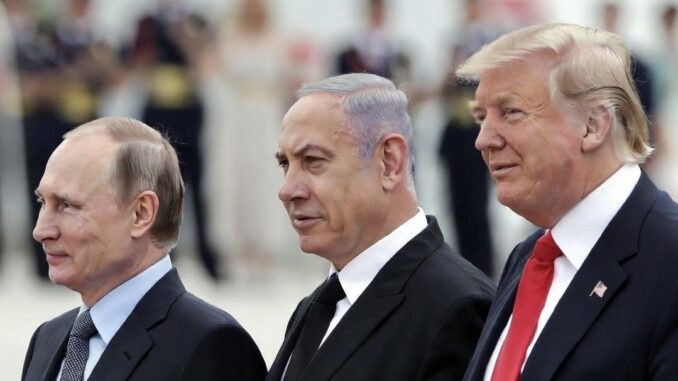
The uncivilised actions which justify the the destruction of cities, of infrastructure, of so many lives is just the never ending quest to prove the superiority of one ‘civilisation’ over another. Ask Putin, ask Netanyahu, ask Trump whether they represent ‘civilisation’. They would claim that they absolutely are protecting ‘civilisation’ from the ‘barbarians’, at least in their definition of civilisation.
As individuals we can not fix that, but we can choose civility in the small spaces we occupy.
Keep Independent Journalism Alive – Support The AIMN
Dear Reader,
Since 2013, The Australian Independent Media Network has been a fearless voice for truth, giving public interest journalists a platform to hold power to account. From expert analysis on national and global events to uncovering issues that matter to you, we’re here because of your support.
Running an independent site isn’t cheap, and rising costs mean we need you now more than ever. Your donation – big or small – keeps our servers humming, our writers digging, and our stories free for all.
Join our community of truth-seekers. Please consider donating now via:
PayPal or credit card – just click on the Donate button below
Direct bank transfer: BSB: 062500; A/c no: 10495969

We’ve also set up a GoFundMe as a dedicated reserve fund to help secure the future of our site.
Your support will go directly toward covering essential costs like web hosting renewals and helping us bring new features to life. Every contribution, no matter the size, helps us keep improving and growing.

Thank you for standing with us – we truly couldn’t do this without you.
With gratitude, The AIMN Team

You are correct, humanity hasn’t changed and I’m glad. The day we expunge love, hate, anger and fear from our lives, we won’t be living.
An interesting chat with Jehovah Witnesses this morning.
There are a series of lectures being conducted at the local Kingdom Hall:
Who should rule the earth?
My immediate thought is that who ever they say, if that is actually a real person will have a bit of a ‘fight’ on their hands. Throughout history some have laid claim to that job, and currently we have the President of the United States trying his best to do it and it could lead to the collapse of the American Empire and the Zionist project in the Middle East.
Getting off Facebook (FB)?? Easy!!
Received a ”Community Concern Notice” for posting a response to an ugly TACO Trumpery pic, “If his lips are moving then he is probably lying”.
FB required a police ID mug shot plus police ID reel to be allowed back on FRB. Naturally I immediately vacated FB.
About six (6) weeks later, an email, asked “”Where have you been?” Just fill in this number boxes and you can come back to FB. No thanks!! I am almost over my FB addiction!
Good article and image too, that says a lot.
Media including other indie don’t inform their audience beyond the now, bomb victims and claims, while ignoring the history and neighbours; Ottomans or Turks had the region for centuries.
The Ottomans had their own form of secularism in ‘Millets’, internal religious groups allowing practise etc. eg. Alevi (& Alawite, different), Greek etc Orthodox, Jewish, Catholic etc. not compelled to convert (to Sunni) Islam, but if you did, lower tax rate.
The image is current, as other indie media outlets seem desperate to ‘frame’ ie. zoom in on the now and focus only on Netanyahu and Trump for Iran, Gaza and Epstein, but ignored is Putin the third amigo or ‘strategic genius’?
A culture is civilised if it builds permanent structures to live in instead of roaming about in pursuit of seasonal foods and prey. That is really all there is to it.
Some cultures can’t form permanent settlements. They have to follow the herds they depend upon or the land they would like to settle upon won’t support them for long and they eventually have to move on or starve.
If they come across conditions such as a fertile river flood plain they may be able to develop agriculture to sustain themselves. As their population grows they either have to leave and find a new place to colonise or they have to increase their crop yields by inventing ploughs to break the soil, and pottery to store seeds, and irrigation to conserve water. They are obliged to invent astronomy so they can measure time and predict the seasons and know when to sow and when to reap. If they don’t they die. It isn’t as if they have a choice.
As their population grows they have to invent laws so that their community doesn’t fall apart. They invent ownership of land and cartography to determine where one person’s land stops and another’s starts. They have to invent records of what belongs to who to prevent property disputes and this leads to the invention of writing. Suddenly they have the means to share knowledge in ways that were never before possible. They read the words of those long dead and leave advice for those yet to be born. They develop a recorded history.
All these innovations are forced upon them by necessity, because they live in permanent settlements called cities. That is what civilisation is. That is why nomads and hunter gathers are not civilised. They are not tied down to where they live. They can move in search of food. Their populations never grow larger than the lands natural capacity to sustain them. They don’t have artificial concepts like land ownership. They don’t have stationary observation points to measure the movement of stars over long periods. Their calendars are based on the seasonal behaviour of plants and animals or visible cycles like the waxing and waning of the moon. Their development of art and artifacts is limited by what they can carry. There is no pressure to innovate, only to survive as they always have. Their ability to store and pass on knowledge is severely limited.
So apart from civilised people being sedentary and obliged to innovate and uncivilised people being obliged to roam and not to innovate, they are essentially the same people.
Apropos of nothing of great note, am watching Steven Spielberg’s 2026 The Dinosaurs. Nice to be reminded that before the current global clusterf*ck wholly and solely an artefact of the dysfunctional mammal incorrectly classified as Homo sapiens, there was a natural world which responded to natural forces, and which, per a ginormous asteroid’s impact, came to a natural conclusion and thus, in its own way, paved the way for all that followed.
Sully, the problem we have is that civilisation has become synonymous with culture, so the uncivilised are regarded as uncultured, which is nonsense.
Nomadic peoples can and do have, extremely well-developed cultures.
Tunnel vision, Steve, contributes greatly to misapprehensions regarding the topic under discussion. You’re correct, wrt the question of civilisations; whether European, North & South American, Asian, African, Oceanic et al.; it’s not a one size fits all phenomenon. One man’s version of what constitutes a civilisation may be wildly at odds with historical examples. One can correctly surmise that the cultures of the Neanderthals, those that preceded them, those that followed, are all correctly called by that designation ‘culture’. To deny that is, as suggested, a function of tunnel vision, a narrow perspective. Man’s civilisations go back thousands of years; Egypt, Mesopotamia, the Fertile Crescent, the Mediterranean, China, southern Asian regions such as Laos, Cambodia, Thailand… civilisation didn’t just pop up in Europe in the 10th century.
Kanga,
I’m reading the autobiography of a white bloke who lived with the Blackfeet native Americans, married a tribal woman who he loved dearly, raised several children.
He describes their cultural standards which were, in quite a few instances, more advanced than those of the whites who dispossessed them.
Daily bathing being just one minor example.
Steve, Sully:
Not just culture. It is ridiculous to assert that Aboriginal Australians did not, prior to the invasion, have laws. Any group of people regularly interacting with others, will develop a range of protocols to make that interaction as predictable as possible. Even interaction within tribal groups requires such protocols. The prohibitions on various forms of inbreeding, for instance.
leefe, exactly so.
And the universal constant in all this is cooperation.