Brotherhood of St. Laurence Media Release
At a time often characterised by division, Australia is united in caring about those doing it tough.
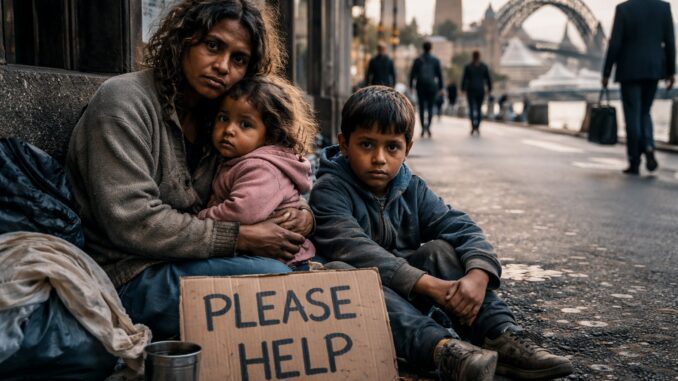
More than 9 in 10 people want more done to reduce poverty; most think the system is to blame – not individuals – and are concerned by the changing face of poverty in Australia, new research shows.
Essential workers, single parents and older Australians are among those trapped by health, housing, education and employment issues, as low-income earners carry the weight of the cost-of-living crisis.
The Brotherhood of St Laurence’s (BSL) new ‘Perceptions of poverty in Australia’ report captures public understanding and experience of poverty in Australia, having surveyed 2,651 people living in Australia with analysis from leading social trend researchers at 89Degrees East and Essential Research.
Importantly, this research confirms a compassionate country. Most want the government and employers to take action to prevent and stop poverty; 70 per cent agree that “struggling to afford basics doesn’t mean someone is lazy, it means our economy isn’t working for all Australians”; 75 per cent see inequality rising; and the majority are concerned poverty weakens our democracy.
BSL Executive Director Dr Travers McLeod said while fairness was the core Australian value – and that shone through in the data – it was poverty that connected pillars of Australian life and daily headlines.
“People in Australia don’t want others to be living in poverty,” Dr McLeod said. “People should be able to eat healthily, have a secure roof over their heads, access to education and job opportunities. Unfortunately, despite Australia’s wealth, that simply isn’t the case.”
“We work with nurses battling their own health issues and housing insecurity; young people who want to help build the houses we need but are struggling to get support to survive; and people who have to choose between medication or food on a weekly basis.”
Dr McLeod said BSL was calling on the federal government to adopt official poverty measures: a Multidimensional Poverty Index (MPI) and a monetary poverty measure. This approach has been recommended by the Economic Inclusion Advisory Committee (EIAC) and is backed by the Australian Council of Social Services (ACOSS) as the relevant peak body.
While poverty is most often associated with insufficient finances, it can be any factor that restricts someone’s ability to make choices and participate fully in society, living a life they want and aspire to. It runs through Australia’s headline issues, trapping people in a cycle that should never exist.
An MPI would track right down to suburban levels, across health, housing, education, employment and social participation. This would support government priorities and responses to be shaped and targeted, efficiently and effectively. Almost 160 countries have official poverty measures.
“Australia doesn’t measure poverty. We should,” Dr McLeod said. “Official measures are the critical first step in supporting governments and decision-makers to best address poverty in Australia.”
“Improving the lives of those who call Australia home begins with tracking and reporting on key metrics. By measuring poverty properly, we can begin improving outcomes and seeing positive change.”
Key findings from Perceptions of poverty in Australia include:
- Almost all people surveyed (94%) in our two polls agreed that it’s important to support people experiencing poverty.
- For those who participated in the research, 76% had been impacted by cost-of-living pressures. With more than half (60%) supporting poverty reduction measures to ease cost of living pressure.
- Three quarters (75%) of people surveyed thought that inequality was rising with a growing wealth gap, and more than half (55%) believed that this inequality affected the strength of our democracy.
- Majority (55%) of people surveyed suggested that government was most responsible for reducing poverty.
- Ranked in order as suggested priorities for government action were: affordable housing (80%), employment (61%), financial assistance (56%) and education (53%).
Quotes from survey respondents:
“They say we live in the ‘Lucky Countryʼ. That has become increasingly not true in the last few years.ˮ
“Addressing poverty is not just about providing financial support; it’s also about creating for education, employment and social inclusion to ensure that everyone can participate fully in society.ˮ
“When there are enough resources in our country to share for everybody, NOBODY should be left behind. If we don’t take care of one another, we are not a community.ˮ
To find out more about ‘Perceptions of poverty in Australia’ visit bsl.org.au/povertyperceptions
Keep Independent Journalism Alive – Support The AIMN
Dear Reader,
Since 2013, The Australian Independent Media Network has been a fearless voice for truth, giving public interest journalists a platform to hold power to account. From expert analysis on national and global events to uncovering issues that matter to you, we’re here because of your support.
Running an independent site isn’t cheap, and rising costs mean we need you now more than ever. Your donation – big or small – keeps our servers humming, our writers digging, and our stories free for all.
Join our community of truth-seekers. Please consider donating now via:
PayPal or credit card – just click on the Donate button below
Direct bank transfer: BSB: 062500; A/c no: 10495969

We’ve also set up a GoFundMe as a dedicated reserve fund to help secure the future of our site.
Your support will go directly toward covering essential costs like web hosting renewals and helping us bring new features to life. Every contribution, no matter the size, helps us keep improving and growing.

Thank you for standing with us – we truly couldn’t do this without you.
With gratitude, The AIMN Team
Even in Social Housing, many people are struggling with high rents. In NSW, this is due to the “full rent” being tied to the local market rent, combined with the total household income of everyone over 16 being counted towards the rebated rent charged.
How does one really define poverty? Australia has a great national health system, a good education system, though sadly declining in recent years. Add to this we have a social security system that many countries would be proud of.
Australians lose between $25 billion and $31 billion annually by gambling and there are only around 25 million of us!!!
So I ask again, how do we define poverty?
Simple:
1. Shut down the endless drain of AUD into the AUKUS fiasco and redirect the funds to promoting and re-establishing Australian manufacturing industries focussed on trade with Asia.
2. Promote TAFE and trade education.
3. Review corporate tax regulations and re-direct revenues to social welfare and housing.
Simplistic – I know, but are the politicians really thinking about this existential crisis?
2. Rinse and repeat.
Words of “sympathy” and “understanding” and “we care” are free so those and other words and catchphrases can be thrown about with gay abandon. Results…meaningless, except when an election is looming on the horizon.
@ jonangel: Poverty is defined rents being unaffordable because the tax advantages of investment in residential housing is too generous while government social housing programmes are inadequate under successive governments for decades;
2) as parents skipping meals so that kids can eat;
3) as kids being educated when government policy mandates that private schools receive more funds per kid than state schools, so that the headmaster’s dog may have a private swimming pool;
4) as ”hand me downs” becoming the ”new fashion style”;
5) as parents working two or three jobs simultaneously to hopefully make financial ends meet.
The solution has been trialled and found successful in Canada. The ”Universal Basic Income”(UBI) provides a family with an adequate income so that all these financial stresses are defeated, but then that is against the Robodebt mentality of politicians living the life of Riley under the Canberra Bubble where every expense is compensated by the Parliamentary Allowances Scheme.
@ Mediocrates: Agreed. Why did the NO-GO-ALBO LABOR government endorse the Scummo USUKA sub debacle that benefited him to get a post-politics non-executive position from a US military supplier entity.