By Maria Millers
Thanks mostly to modern medicine we are living longer and enjoying the kind of old age past generations never dreamt of, allowing many to follow their passions: enjoying their grandchildren, joining classes, meeting friends over coffee or simply taking a leisured drive. Part of living longer and well is social connectedness.
But the way we live and the way our suburbs have evolved means a car is needed, not just for outings but for essentials like food shopping and medical appointments. Public transport is at best limited and in outer suburbs there are often no taxis. So a car becomes a necessity.
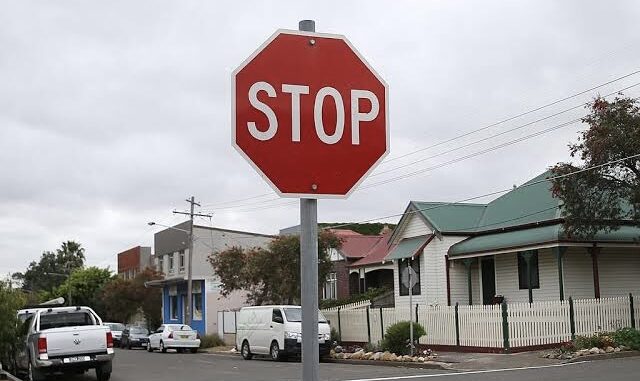
Longevity however comes with certain changes and problems that can affect a person’s driving ability: chronic health conditions like arthritis, diabetes, dementia, heart issues, or Parkinson’s disease. And medications for blood pressure, anxiety, or sleep can affect alertness, coordination, or cause unexpected episodes of fainting or confusion leading to mistakes like hitting the wrong pedal or missing the Stop sign
Growing old is not a matter of fading away;
It is a long, slow journey, each day
Marked by the loss of what once was bright,
The strength we had, the power to fight.
We were once strong, a storm untamed,
But now our bodies fail, our minds are framed
By the slow encroachment of time and age,
(Mathew Arnold Ageing excerpt).
It’s time to face the inconvenient truth that over the past year alone too many young people have lost their lives at the hands of older drivers. And looking at the last five years older motorists have been responsible for at least 145 road deaths and more than 7000 injuries,
The most recent tragic accidents speak for themselves.
Last Thursday a 91-year-old woman lost control of her vehicle on a downhill stretch on a quiet suburban street in Vermont. The car mounted the footpath, striking a family of three near a children’s playground. A 59-year-old woman died at the scene, her 60-year-old partner sustained life-threatening injuries, and their two-year-old grandson was hospitalised with serious injuries.
Last year 66-year-old William Swale driving in a hypoglycaemic state, mounted a kerb and crashed into the outdoor beer garden of the Royal Daylesford Hotel killing five people and injuring several others. Among the dead a nine and an eleven year old.
On a morning in March this year six-year-old Caleb Wesley was walking with his two older siblings to catch a school bus in Teesdale, He was struck by a car driven by an 84-year-old local woman. Caleb died at the scene.
Last month an 83-year-old woman was involved in a collision on the Western Highway near Armstrong. The crash resulted in the death of three people including a 24-year-old female passenger.
These events underscore the importance of regular assessments of driving capabilities, especially for older motorist. Acting Premier Ben Carroll acknowledged the need to review current policies regarding elderly drivers despite the fact that it will be seen as an invasion of rights.
However, there have been accounts where elderly drivers, after experiencing near-miss incidents, have chosen to relinquish their driving privileges. These personal decisions often stem from a deep sense of responsibility and concern for public safety and should be applauded.
Sometimes it takes one exceptional person to set an example and make people reflect on their own attitudes towards the welfare of others. No one wants to live with the regret of causing harm. Stepping back from driving before an incident occurs is an act of care for family, neighbours, and the community.
In an opinion piece in the Age last year Jane Maloney about to turn 90 and having driven for 70 years made such an ethical decision, which she described as a heart breaking decision, to sell her car and give up her licence:
“I too well understand the responsibilities that go with controlling your own weapon of mass destruction,” she wrote.
What prompted this ethical decision was an incident and in her own words:
“I was returning home from shopping and about to turn right at an intersection when something, I’m not sure what, stopped me. I looked around and saw through my side mirror a young boy crossing the road. I immediately realised that I had completely failed to see him and if I hadn’t stopped, I would have hit him.”
Her peripheral vision had failed her and left her reflecting on how she could have destroyed the life of an innocent young boy.
Declining vision or reduced ability to scan surroundings. Slower reflexes, delayed decision-making. Confusion at intersections, highway merging or navigating unfamiliar routes are all challenges often facing older drivers.
The community and policymakers are now grappling with balancing road safety and the independence and agency of elderly drivers. As discussions continue, there is a growing call for measures that ensure the safety of all road users.
There are of course many older Australians who are perfectly capable of driving safely but should be aware of how easily the situation can change.. Some avoid regularly seeing their GP in fear of being judged as unfit to drive.
And in view of the statistics there are increasing calls for mandatory testing of elderly drivers.
Once a driver turns 75 licence renewal periods switch to 3-year-terms but no health checks are enforced. Much can change in three years. Annual assessment should be the first step taken even though many will view this as discriminatory pointing out that many younger drivers are also responsible for road deaths.
Fitness to drive reports can only be triggered if concerns are raised by a family member, medical professional, police or Vic Roads.
But those deemed unfit to drive cannot be just left with no means to get around and any move to introduce mandatory testing must be balanced with strategies to ensure those people have support to remain mobile, connected and as independent as possible.
This might involve providing free public transport for seniors, as is the case in South Australia, supporting a local taxi service or a community bus.
For those wanting and able to drive independently another way in the future maybe through embracing new technology.
Autonomous vehicles can significantly help in preventing accidents, especially for elderly drivers, by addressing many of the challenges older adults face behind the wheel.
Autonomous systems respond in milliseconds to hazards like sudden stops, pedestrians, or obstacles, often faster than human drivers.
And autonomous systems don’t get distracted, tired, or confused, preventing common errors.
Maybe this is one way forward in the future where such vehicles are subsidised for the elderly. This may be a cost efficient solution for a growing problem in an aging society where longevity allows people to safely pursue passions and dreams without putting others in danger.
I’m old enough to think I can
Still grasp the world with steady hand,
To chase the dreams that once were mine,
And in their pursuit, to shine.
Though time has etched its gentle mark,
My spirit still ignites a spark,
For in the heart of every age,
Resides the wisdom of the sage.
(I’m Old Enough to Think I Can” by John Updike).
Dear reader, we need your support
Independent sites such as The AIMN provide a platform for public interest journalists. From its humble beginning in January 2013, The AIMN has grown into one of the most trusted and popular independent media organisations.
One of the reasons we have succeeded has been due to the support we receive from our readers through their financial contributions.
With increasing costs to maintain The AIMN, we need this continued support.
Your donation – large or small – to help with the running costs of this site will be greatly appreciated.
You can donate through PayPal or credit card via the button below, or donate via bank transfer: BSB: 062500; A/c no: 10495969

As someone in my 80s and living in NSW, I will either take a test or limit my licence to the local area. I certainly don’t intend driving longer than necessary, as much for my safety as everyone else’s!
Good article highlighting our suboptimal US low density urban design for cars and needs of an ageing population, avoided by MSM.
Needs to be more local community transport and amenity, with an ageing population via silent gens and boomer ‘bomb’ who become less mobile; too many deny any issues and continue drivng….
However, our media never mentions our ageing population, let alone that it drives long term population growth (for couple of decades), why?
US MAGA Tanton Network (spun off from fossil fuel ZPG) that informs FoxNews & NewsCorp, MSM, SusPopAus and far right MacroBusiness, for their daily obsession with dog whistling of ‘immigrant’ border movements or churn via the NOM, to wedge the ALP.
The latter via students spikes short term population growth, but negligible long term effect; long term we middle aged and older are driving population growth by compounding in the data.
Egregiously ignored and/or avoided by media and the public, but The Senior has best analysis in ‘
ABS data shows Australia is ageing, prompting a workforce, retirement and health wakeup call’
https://www.thesenior.com.au/story/8271715/an-ageing-australia-can-we-handle-it/
I rarely say much in praise of my mother in her later years. She became a very difficult and bitter person to deal with as she grew older. But the one thing l do praise her for was giving up driving in her early 80’s. Though this meant l became her sole method of transport l was happier to support her decision than what l have seen so many elderly folk do in not admitting their loss of control and refusing to relinquish their independence. As l grow older l am sure to follow her lead and will happily stop driving when l see issues with my control.
PS. She later admitted to having hit 3 vehicles in the car park at her local shopping centre which was the catalyst for her decision. So l guess she learned a cheap lesson. For her but not for the owners of the cars whom she had not contacted to admit her fault. 🤷🏼♀️
I found this a very confronting article as it very directly talks to me. I am approaching 80 and have been driving for 62 years. I am one of those who sees my car as an extension of myself, the thought of having to give up driving terrifies me. I live in an area where public transport, while regular, is minimal and involves a 700 metre walk to access. I notice that I am having the odd ‘close shave’, a result of misjudging distances or missing something in the periphery yet I still perceive myself to be a good driver. Losing the ability to drive would have a radical deleterious effect on my lifestyle.
Removing a drivers’ licence from older people (aged over 60+ years) not only isolates them from the community (especially if they live in remote areas of the country) but takes away their basic rights to freedom, independence and convenience in getting out and about shopping, socialising and meeting new people! In effect, it causes many older people to become withdrawn; to become prisoners in their OWN home and if they do not have a family to check-in on them regularly, completely alone. This type of isolation, so often, is the cause of serious depression and early on-set dementia – and what for? Most people I know aged 60+ have NEVER had an at-fault accident in their lives! The TRUTH is that older female drivers are the safest on the road!
Let me remind readers that STATISTICS have revealed the cause of the most overwhelming MAJORITY of accidents in Australia are, indeed, young male drivers so often due to testosterone-induced bravado/recklessness, speeding and/or driving under the influence of alcohol or drugs. It is, indeed, young men who are disproportionately involved in road accidents and fatalities! Incidentally, far more men in general are more likely to be involved in accidents and fatalities than women.
As such, this article is somewhat AGEIST and does NOT represent the demography of drivers who REALLY ARE the cause of the majority of road accidents in this country and THAT is, in fact = young male drivers aged between 17-25 !