Media Release
Independent Member for Murray, Helen Dalton MP, has raised urgent concerns about Australia’s near-total dependence on imported urea, warning that Murray farmers are paying the price for a decade of federal government inaction on agricultural supply chain security.
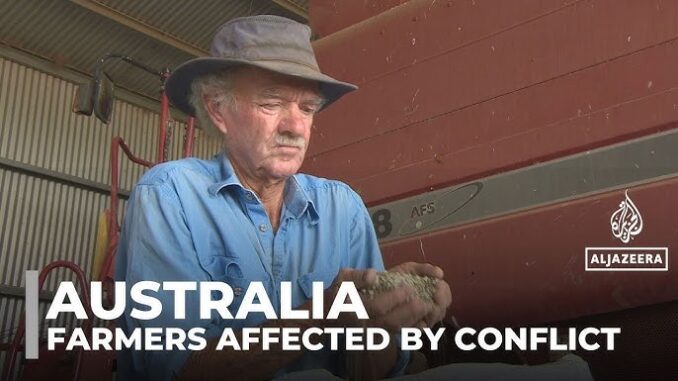
Australia imports more than 90 per cent of the urea its farmers depend on. Last year, more than half came from the Middle East. When the Strait of Hormuz was disrupted during the June 2025 Middle East conflict, urea prices surged by over $118 per tonne in just seven days – hitting Murray farmers directly during peak winter crop preparation.
Australia lost its last significant domestic urea production when Dyno Nobel closed the Gibson Island facility in Brisbane at the end of 2022. No government intervention was made to prevent the closure. No replacement was announced.
“Australia exports energy to the world, yet we cannot manufacture the fertiliser our own farmers need to grow food. Canberra let this happen and did nothing to stop it,” Mrs Dalton said.
“We have the natural gas reserves, the phosphate deposits, and the industrial capacity to produce urea right here in Australia. The inputs exist. What does not exist is a federal government willing to treat food production inputs as a national security matter,” Helen said.
“When the Strait of Hormuz is under pressure and urea prices spike overnight, it is Murray farmers who absorb the hit. They cannot wait for Canberra to wake up. But Canberra has had every warning, every data point, and every opportunity to act. Both sides chose not to,” Helen said.
“Our farmers are the backbone of our nation. If we can’t even grow our own food, that is a national security risk,” she said.
Ms Dalton is calling on the federal government to immediately commission a national food input security review, establish strategic urea reserves, and create policy incentives to rebuild domestic production capacity before the next global disruption removes that choice entirely.
Keep Independent Journalism Alive – Support The AIMN
Dear Reader,
Since 2013, The Australian Independent Media Network has been a fearless voice for truth, giving public interest journalists a platform to hold power to account. From expert analysis on national and global events to uncovering issues that matter to you, we’re here because of your support.
Running an independent site isn’t cheap, and rising costs mean we need you now more than ever. Your donation – big or small – keeps our servers humming, our writers digging, and our stories free for all.
Join our community of truth-seekers. Please consider donating now via:
PayPal or credit card – just click on the Donate button below
Direct bank transfer: BSB: 062500; A/c no: 10495969

We’ve also set up a GoFundMe as a dedicated reserve fund to help secure the future of our site.
Your support will go directly toward covering essential costs like web hosting renewals and helping us bring new features to life. Every contribution, no matter the size, helps us keep improving and growing.

Thank you for standing with us – we truly couldn’t do this without you.
With gratitude, The AIMN Team
Yet again we find ourselves referencing Donald Horne’s Lucky Country, a country burdened by, or saddled with, mediocre governance. What is it about those who choose to enter the rarified profession of politics that they are not gripped by the urgency of covering all bases when it comes to the urgent questions of securing this country’s future in the fields of social, technological, agrarian, along with other critical areas such as energy supplies at best-practice costings, defence budgets that reflect realities and not fantasies, health care within reach for all, the same for education and housing and appropriate retraining in order to maximise employment opportunities in the face of global information technology transitions, and at the same time acknowledging that we are caretakers of an ancient land and thus carry the deep responsibility to nurture it to the maximum extent possible as opposed to utilising it as a resource to be exploited for maximum dollar gain?
Why is it that we have a world-class farming system across the breadth of the continent yet cannot locally provide the inputs necessary to allow continuity, instead relying on imports that are now threatened by events out of our control? Surely this qualifies for the accusation of being asleep on the job? From the PM down, the current crop of politicians, with few exceptions, stand accused of failing their core responsibilities. Will there be consequences for this? Unlikely. Sad.
Asinine thinking by asinine men over decades and the foolishness of National Party.
So, why aren’t farmers doing what farmers always did, breeding cattle organically, fertilising soil organically with natural cattle manure, building up soil and water catchments with caring for the environment and trees which also helps regulate weather?
Nope dud policies for cash, land clearing for short term profit as well as phosphate bounty’s https://www.aph.gov.au/About_Parliament/Parliamentary_departments/Parliamentary_Library/Browse_by_Topic/law/explanmem/1970 and other short cuts regarding water catchments have dominated thinking.
Murray Darling fiasco anyone? Angus Taylor’s $80 million bounty for a glass of water?
Nothing intelligent amongst that lot at all.
lots of industries will be affected. not just farmers.
Always a crisis for the farmers. What about every other industry that relies on imports via Hormuz? And there are many. Whilst they surrender political advocacy for mining interests and beating down on “woke” farming they miss the whole historical position of farming. It is caring for land and helping regenerate land for cropping. As Heather said; go back to natural farming. Make your own compost. American farming relies so heavily on singular companies for supporting both fertilser and sales of produce. So much so they have forgotten how to farm and throw their hands in the air whenever one of those companies stops their service. We’ll all be roooned!” said Hanrahan.
Amish communities in the States continue to farm as they did two or three hundred years ago, and successfully so. Australia will likely never manage to move in that direction, given our city-centric coastal-bound majority of citizens and their incapacity to produce food & fibre for themselves, and, as things stand, all more or less totally reliant on the paddock to plate system currently extant.
It’s a devil’s bargain, to be sure, these ‘modern farming’ practices with their complete reliance on inputs of inorganic fertilisers, pesticides, herbicides, fungicides, use of heavy machinery, degradation of soils, salinisation, erosion, loss of microbiota. The whole monoculture thing is the worst possible way to do farming, yet there appears to be no alternative when it comes to the amount of staples needed – wheat, corn, rice – to feed millions. Organic farming will never be able to supply the necessary quantities.
We could learn a lot from the Asians in terms of sustainable farming practices, but given we think we know it all it’s unlikely that will ever happen.
Those farmers who went organic or regenerative will cope. The rest are buggered. It might make some consider changing now, but it takes around 10 years to see the benefits from the process, and they don’t have that long.
There is an abundance of fertiliser emanating from Canberra -don’t worry when it hits the fan there will all be plenty for all !!