Chapter 10: Destruction of Language, Art, and Lore
More Than Land and Labour
Colonisation did not only take land and exploit labour. It also struck directly at the heart of Aboriginal and Torres Strait Islander identity: language, law, art, and culture. For First Peoples, these are not “extras” – they are the foundations of life, carrying knowledge, spirituality, and connection to Country.
The attack on culture was not incidental. It was deliberate. Colonisers believed that by erasing language and custom, they could erase peoplehood itself, making Aboriginal and Torres Strait Islander peoples easier to assimilate or control.
Silencing of Language
Before colonisation, over 250 languages and 600-800 dialects were spoken across the continent. Each carried unique knowledge, laws, and spiritual meanings tied to Country.
Colonisation brought a cascade of destruction:
- Language bans: On missions and reserves, children were punished – sometimes beaten – for speaking their languages.
- English-only education: Schools, often run by churches, taught only in English, aiming to “civilise” children by erasing their mother tongues.
- Intergenerational rupture: With parents and children separated through removals, many languages were lost within one or two generations.
By the late 20th century, most Aboriginal and Torres Strait Islander languages were either extinct or critically endangered. The silence was not natural decline; it was engineered.
Suppression of Lore and Ceremony
Aboriginal and Torres Strait Islander societies are governed by systems of Lore – law handed down through stories, ceremony, and kinship responsibilities. Colonisation targeted these systems:
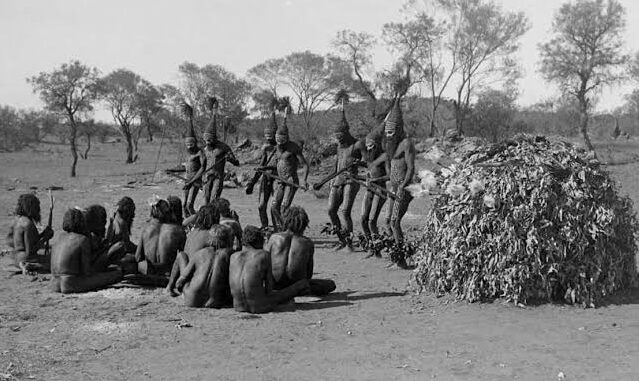
- Ceremony bans: Corroborees, initiation rites, and spiritual practices were prohibited on missions and reserves.
- Sacred sites destroyed: Rock art was defaced, carved trees were cut down, and ceremonial grounds were bulldozed.
- Criminalisation: Practising cultural law could lead to arrest or punishment by police and missionaries.
To outlaw Lore was to outlaw sovereignty. It was an attempt to sever peoples from their spiritual and legal systems, leaving colonial law as the only recognised authority.
Looting and Theft of Art
Aboriginal and Torres Strait Islander art and artefacts were treated as curiosities rather than sacred objects:
- Early explorers and settlers collected shields, spears, and tools as “souvenirs.”
- Museums in Australia, Britain, and Europe hoarded artefacts, many taken without consent.
- Sacred items, including ancestral remains, were shipped overseas and displayed in cabinets or stored in private collections.
What was seen as “collecting” was, in truth, cultural theft. It denied communities access to their own heritage and disrupted spiritual continuity.
Missions and Cultural Control
Missions – run by churches with government support – became key instruments of cultural suppression where children were raised under European values, told their traditions were heathen or evil.
Dress, diet, and daily routines were regulated to erase difference. Parents were pressured, and often forced, to abandon ceremonies, languages, and songs.
In some cases, missionaries genuinely believed they were “saving” Aboriginal and Torres Strait Islander peoples. In reality, they were enforcing cultural erasure.
Survivals and Adaptations
Despite this assault, culture never disappeared. Communities held onto fragments of language, song, and ceremony, often in secret, where Elders whispered language to children out of earshot of missionaries.
Ceremonies were adapted and practiced quietly in remote areas. Art traditions were preserved and later revived, forming the foundation of contemporary Aboriginal art movements.
These acts of cultural survival are testimonies of resilience. Colonisation sought to destroy, but could not erase completely.
The Intergenerational Cost
The destruction of language, art, and lore left scars:
- Many communities lost fluent speakers of their languages.
- Younger generations grew up disconnected from culture, struggling with identity and belonging.
- Elders passed away before transmitting knowledge, creating permanent gaps.
Trauma from being told one’s culture was shameful still reverberates.
This is why cultural revitalisation today – language programs, repatriation of artefacts, revival of ceremonies – is not just heritage work. It is justice work.
Why This Matters Today
When people dismiss colonisation as “just history,” they ignore that many Aboriginal and Torres Strait Islander people are still fighting to recover what was deliberately taken. Languages are still being revived, artefacts are still being repatriated, and sacred sites are still under threat from mining or development.
To understand the destruction of culture is to understand that colonisation was not simply about land. It was an assault on identity itself.
Where This Leads
Culture was suppressed, but families remained. Colonisation then turned its attention to the family unit itself, through missions, reserves, and the systematic removal of children – what we now know as the Stolen Generations.
That is where we turn next.
Continued tomorrow…
Link to Part 9:
From Ignorance to Understanding: Facing the Truth of Colonisation (Part 9)
Link to Part 11:
From Ignorance to Understanding: Facing the Truth of Colonisation (Part 11)
Dear reader, we need your support
Independent sites such as The AIMN provide a platform for public interest journalists. From its humble beginning in January 2013, The AIMN has grown into one of the most trusted and popular independent media organisations.
One of the reasons we have succeeded has been due to the support we receive from our readers through their financial contributions.
With increasing costs to maintain The AIMN, we need this continued support.
Your donation – large or small – to help with the running costs of this site will be greatly appreciated.
You can donate through PayPal or credit card via the button below, or donate via bank transfer: BSB: 062500; A/c no: 10495969


Be the first to comment