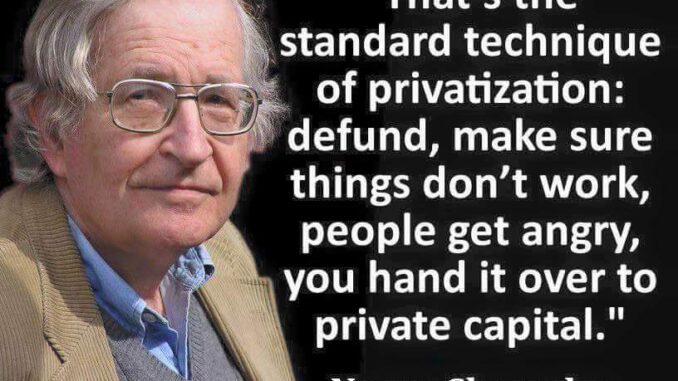
By Denis Hay
Description
Stop the privatisation swindle. Learn how the sale of public assets weakened essential services.
🎧 Prefer to listen to this article? Press play
Introduction
Australia’s privatisation swindle promised efficiency, yet it left ordinary Australians paying more for poorer services. Over the past three decades, essential systems, from energy to aged care, have been carved up and sold to corporations.
Across decades, Australians have seen the impact of selling public assets; we lost not just ownership but also trust in government stewardship.
The privatisation swindle is not just a policy failure, it is one of the biggest transfers of wealth from public hands to private corporations in modern Australian history.
Statistic Box
Billions in assets sold, billions in regret
Since the 1990s, governments have privatised over $200 billion in public assets, shrinking accountability and driving inequality.
The truth is, every time we sell a public asset, we lose more than infrastructure; we lose control. So, why did we let it happen?
The Problem: Why Australians Feel Stuck
Root Cause: Ideology Over Public Purpose
Privatisation is not an economic inevitability; it is a political choice driven by neoliberal ideology and reinforced by both major parties. Governments used myths of “budget restraint” to justify selling public assets instead of using their dollar sovereignty to invest in citizens.
These repeated privatisation failures in Australia stem from the same false premise that markets outperform public systems.
At its core, the privatisation swindle relied on fear, fear of deficits, debt, and public spending, while ignoring Australia’s dollar sovereignty.
Reports by The Australia Institute show privatisation has repeatedly failed to deliver promised competition or efficiency. Instead, it fragmented systems and raised costs for households.
Link: Why Australia Will Never Run Out of Money
Consequence for Citizens: Less Access, Higher Costs
Privatisation pushed essential services out of reach. Power bills surged, toll roads multiplied, and aged care standards declined. The Royal Commission on Aged Care revealed systemic neglect in for-profit models that cut staff for shareholder gain.
Ordinary Australians feel trapped: higher prices, fewer protections, and a sense that government works for corporations, not people.
Every time a public service was sold off, the privatisation swindle deepened inequality and reduced our collective control over essential services.
Link: Royal Commission into Aged Care Quality and Safety
The Impact: What Australians Are Experiencing
Everyday Effects
Energy prices soared after power networks were sold, a visible outcome of the privatisation swindle and decades of privatisation failures in Australia.
The ACCC found privatisation fuelled “gold-plated” infrastructure that consumers paid for. Toll roads now charge families thousands yearly, funnelling profits offshore.
This ongoing privatisation swindle shows how vital infrastructure was turned into a profit machine, leaving the public to pay again and again.
In aged care, privatised providers cut corners to maximise profit, leaving residents vulnerable. Aged care and childcare, once public pillars, are now dominated by corporations prioritising dividends over dignity. It is the lived reality of the privatisation swindle, where private profit now outweighs public purpose.
Link: ACCC Retail Electricity Pricing Inquiry
Link: How Funding Cuts Weakened ABC and SBS
Who Benefits and Who Loses
The winners are the same corporations that lobbied for the sell-offs. The losers are the public, especially regional Australians, who rely on affordable, accessible services.
Governments surrendered steady income streams to private monopolies. Meanwhile, Queensland’s revival of the State Electricity Commissionacknowledges that the privatisation swindle was a costly mistake.
Link: The Guardian – Queensland SEC revival
The Solution: What Must Be Done
Australia’s Monetary Sovereignty and Reform
With Australia’s dollar sovereignty, we can reclaim public ownership without “finding the money.” As the issuer of its own currency, the federal government can invest in energy, transport, and care sectors to serve people, not shareholders.
Modern Monetary Theory (MMT) explains that real limits are resources, skills, and materials, not finance. Australia can use public money to rebuild what the privatisation swindle destroyed.
Link: Australia’s Dollar Sovereignty: Our Strongest Asset
Policy Solutions and Demands
- Re-nationalise electricity, water, and transport as public monopolies.
- Cap tolls and renegotiate unfair long-term PPP contracts.
- Restore public oversight through independent, transparent audits.
- Reinvest profits back into communities and regional development.
- End for-profit models in aged care and childcare.
Ending the privatisation swindle means putting people back in charge of their essential services through public ownership and accountability.
Reversing privatisation in Australia will not be easy, but it is essential if we want public services that truly reflect community needs.
We can do better. We must do better. Imagine an Australia where public services serve people, not corporations.
Frequently Asked Questions
Q1. What is the privatisation swindle?
It is the systematic selling of public assets under the false promise of efficiency, which instead led to poorer services and loss of public control.
Q2. Why has privatisation failed?
Private operators prioritise profits over public purpose, resulting in higher costs and reduced service quality.
Q3. Can Australia afford to rebuild public assets?
Yes. As a currency issuer, Australia can always fund domestic investment in public infrastructure and care through the responsible use of public money.
Q4. How has privatisation affected everyday Australians?
It has increased energy costs, toll charges, and aged care neglect while reducing access for low-income and regional communities.
Q5. What are the alternatives to privatisation?
Re-nationalisation, strong public management, and community ownership models ensure essential services stay accountable and fair.
Final Thoughts
The privatisation swindle has eroded trust, inflated costs, and undermined fairness across every essential service. But as a nation with dollar sovereignty, we can reclaim our collective power. Public services should serve people, not private shareholders.
If we demand transparency, accountability, and compassion, Australia can rebuild stronger, fairer systems, run for the common good.
Learning from these privatisation failures gives us the chance to build a stronger, fairer economy for all Australians.
What’s Your Experience?
Have you seen the effects of privatisation in your community? Do you believe Australia should rebuild public services for the people? Share your thoughts below.
Call to Action
We’d Love to Hear from You
If you found this article insightful, explore more about political reform and Australia’s monetary sovereignty on the Social Justice Australia website.
Please share your thoughts through our Reader Feedback form, check out what others are saying on our Testimonials page, or scroll down and leave a comment below. Your voice helps shape future content.
Spread the Word
Change starts with conversations. Share this article with friends, family, or your social networks so more Australians can see what’s possible. Every share helps build momentum for a fairer society.
Keep Independent Journalism Alive
We’re 100% reader-supported, no ads, no corporate strings, just honest, truth-driven journalism. If our work has informed or inspired you, we invite you to consider contributing. Even $5, or whatever you can spare, helps us keep publishing and reaching more Australians.
Donate Now – one-time or monthly.
Already donated? Share the love by leaving us a quick review on Google to help others find us.
This article was originally published on Social Justice Australia
Keep Independent Journalism Alive – Support The AIMN
Dear Reader,
Since 2013, The Australian Independent Media Network has been a fearless voice for truth, giving public interest journalists a platform to hold power to account. From expert analysis on national and global events to uncovering issues that matter to you, we’re here because of your support.
Running an independent site isn’t cheap, and rising costs mean we need you now more than ever. Your donation – big or small – keeps our servers humming, our writers digging, and our stories free for all.
Join our community of truth-seekers. Donate via PayPal or credit card via the button below, or bank transfer [BSB: 062500; A/c no: 10495969] and help us keep shining a light.
With gratitude, The AIMN Team




Privatisation of public owned services was very much about the attitude that Governments should not be making any money from enterprises that could put profits into the hands of private individuals / companies. The slogan ” privatise the profits, socialise thhe losses” expressed this. It also allowed the neo- conservatives to hammer the point that Government-run enterprises, facilities, services were always going to be more inefficient and wasteful than private ones which would always be leaner. There can be no doubt that privatisation is one of the main philosophies underpinning economic management in Australia, and that any effort to unwind it will be horribly difficult.
All I can suggest is that Governments set up some publicly owned competition. Also that they don’t agree to artificial constraints on continuing government services. An example of this is when the railway bus took over from the passenger train service from Moss Vale to Wollongong, the bus is only allowed to pick up and set down at railway stations, so as not to compete with the coach services.
Essential services such as telecommunications should, in my vie, remain in public ownership from the national security perspective, instead the Howard government sold off Telstra and invited overseas telecommunications companies into the Australian market.
Oddly, one of those is Optus a wholly owned subsidiary of the Singapore government owned Singtel (owned through their investment arm Temasek Holdings). Optus are now the second largest provider of telecommunications services in Australia but are not listed on the ASX and are unable to guarantee a viable 000 emergency service.
Recently Temasek have been offering Optus for sale and were it not for the emergency services fiasco which impacted the sales price it could well have been offloaded to Brookfield Holdings, a Canadian asset management company.
Not a desirable situation for data security in Australia.
Lyndal, you are a gifted commentator.
Public and private monopolies are inefficient and create apathy and malaise in provision of services.
It isn’t a matter of it being one or the other.
I don’t think there is any purpose in the government owning an airline, for example
I also think a key to efficiency is contestibility, where assets are owned by the public, but the operation of it is contested
Thomas Frank’s wrote a decade+ ago the related and prescient ‘The Wrecking Crew’; now being applied to the max by Trump’s Vought et al acting on Koch & Tanton Project2025 for ‘segregation economics’.
Thank you, Lyndal, you’ve summed up the mindset behind the privatisation push perfectly. The idea that governments shouldn’t “compete” with private enterprise was one of the most damaging neoliberal myths ever sold to Australians.
Public services were never meant to generate profits; they existed to ensure everyone could access what society needs to function: energy, transport, water, care, and communication. The slogan you mentioned, “privatise the profits, socialise the losses,” captures exactly how we got here.
Your suggestion of creating publicly owned competition is spot on. If governments use Australia’s dollar sovereignty wisely, they could rebuild public alternatives that deliver quality and accountability, without relying on profit-driven corporations.
The Moss Vale example shows how even “competition rules” were structured to protect private profits, not the public interest. Undoing those constraints will be difficult, but it’s essential if we’re serious about restoring fairness and public trust.
Thanks, Terry, you raise an important point about the national security risks of privatising essential infrastructure. Selling off Telstra not only weakened public oversight, but also exposed Australians to foreign control over critical services.
As you note, Optus being owned by Singapore’s Temasek Holdings and almost sold to Brookfield shows how little control we now have over systems that handle emergency calls, data, and communications. It’s unacceptable that something as vital as the 000 service can fail because profit outweighs public responsibility.
If Australia had retained public ownership of telecommunications, we could have ensured both reliability and security. This is precisely why essential services must remain publicly owned and operated, funded through Australia’s monetary sovereignty, so that national interests, not private profits, come first.
Your example highlights how privatisation hasn’t just cost us money, it’s compromised our security and independence.
AC..
Thanks for your comment. I understand your point about contestability. In theory, competition can drive efficiency, but in practice, it often creates layers of contractors, profit margins, and cost-cutting that weaken accountability and service quality.
When public ownership is combined with strong oversight and community transparency, it can deliver efficiency and equity. The problem isn’t that government services are public, it’s that decades of underfunding and outsourcing have undermined their performance.
Essential services like energy, transport, and healthcare work best when operated for public purpose, not profit. With Australia’s dollar sovereignty, we can fund them properly and ensure they meet real community needs rather than market demands.