By Lee Capocchi
Most drivers and Governments alike understand that EVs remove a huge amount of Carbon from the atmosphere. We know, through experience and science that the cost of an EV pays back its entire carbon footprint in about a single year, depending on the individual vehicle.
Battery costs are the main drivers of purchase price, but as technology and the underlying science improves, those prices will fall. From a manufacturing standpoint, EVs are already cheaper to make because they use far fewer moving parts, which is the current bugbear of the Internal Combustion Engine. ICE engines all have one thing in common. Not only are they big and heavy, but they also continuously use fuel to operate and oils for lubrication. So, on top of the cost to manufacture an ICE vehicle, there is an ongoing operating cost that is measured at the fuel pump.
This cost includes the cost of accessing the oil, transporting it, refining it into fuel and transporting it to a fuel station. Every step consumes energy, every step generates carbon emissions, and every step has a cost and a profit factor.
Sure. EVs still require cabin air filters. gears and bearings still need lubricants, brakes still wear – although brakes on a modern EV last about 4 times longer because regenerative braking does most of the work. However, maintenance on EVs is far cheaper than for an ICE car. No spark plugs, distributors, sumps full of oil, timing chains, valves, etc.
Of course, both types of vehicles still need brakes, suspension, tyres, wheel alignments and body repair. But the only thing that can be recycled from ordinary use in an ICE car is the lubricating oils. The driving fuel is turned into particulates and noxious gasses, both of which cause many health problems, and CO2 which drives global warming.
When someone talks about mining for materials for batteries, they never mention the mining for the materials to make that internal combustion engine and the drive train! They mention tyre wear, but EVs have higher performance and better handling and that demands tyres that are softer and have better grip, while maintaining safety. But that also applies to a high performance sports car, or even a two and a half ton Rolls Royce.
So, with the obvious benefits, why aren’t people buying more EVs?
Let’s start with the big one in Australia: Range anxiety. Now, despite the average Australian car in metropolitan areas only doing between 250km and 380km a week, which between 50 and 80km a day, people worry about that trip to some camping ground that they do between one and 6 times a year.
Already, most EVs have a range that can cover the weekly power consumption, without considering you can top up at home any night, or even during the day, almost for free. City commuter EVs use less energy overall due to the previously mentioned regenerative braking
Over time better battery technology will provide bigger ranges for less money, but there are still a lot of public chargers, some free but slow, some fast, but dearer.
But here lies the biggest problem.
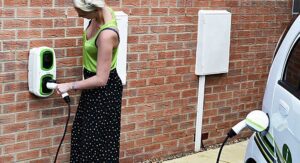
Chargers have come online slowly and all have a common feature: They are separate from a regular service/fuel station, have almost no facilities present and all require an app on one’s phone to find them and pay to recharge the car. Separate apps for every brand!
There is one dual outlet DC charger near me, on a corner near a roundabout with a modern toilet block nearby. Which is locked every night after about 7pm.
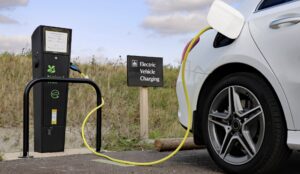
The real objections are as follows: Chargers are at random, out-of-the-way places. Not easily seen and often not working and there are no facilities near most of them. And rarely is there any weather cover. Monitoring or security is non-existent
Many women feel intimidated by the isolation and perceived risk.
People do not want half a dozen apps on their phone whereby they must provide payment details to all these different companies who have no clear and comprehensive privacy and security policies.
EVs still take a bit, or a lot longer to charge than ICE cars take to refuel so facilities are needed to drive usage. And if they continue to increase in popularity regular servos will eventually go out of business as they make a lot of money from sales of in-store food, drinks and other products related to motoring as well as functioning as a defacto “milk bar” or corner store.
The simple solution is to bring chargers into the service station model.
This will ensure less vandalization, regular maintenance and quicker repairs if there is a failure.
A government mandate will be required, but all new service stations and those undergoing major renovations must include at least 1 dual outlet charger, or more if a large one. Maybe as a percentage of bowsers/pumps. Put them under the canopy, not at the corner of the property. Make sure the number of chargers match the percentage of registrations, allowing for the fact that many EV owners also charge at home. This will work for metropolitan service stations. Do the same for regional and highway servos. Some roadside rest area stops should get chargers as well in between the bigger servos, preferably with a toilet block and a light for nighttime. At a minimum a 3 phase, 240V, 22KW connector or single phase 7KW depending on power availability or even a low range DC supercharger. Have a sign displayed so it is easy to find while driving at highway speeds.
Initially at least for Servos, and later for the others, put the cost of charging on the price board so people can find the cheapest ones, with competition keeping a lid on the costs. Make the chargers so the fee can be paid in-store at the console, like we pay for petrol, with cash credit or debit card or phone tap. For chargers at a rest stop, at least swiping a credit card should be an option.
Lastly, the government should create a licencing scheme and provide seed money, or subsidies, for specialists to set up EV battery refurbishing businesses which is a sensible, cost effective service for repairing batteries damaged or with failed cells. Such businesses should also be able to convert vehicle batteries to stationary batteries and certify them to be used as commercial or domestic batteries suitable to be tied to a grid, using a source of generic control systems. Those batteries should be able to connect to a household system without a lot of red tape. In fact, the government should encourage this to offset imports.
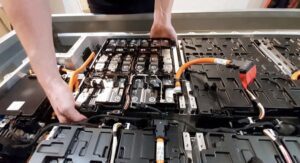
Vehicle batteries have an important feature: The ability to deliver extremely high currents needed for acceleration is critical for vehicle batteries. But when they can no longer deliver those high currents, they are still suitable for grid-tie applications which rarely require the power delivery needed for a car. Tesla uses their pensioned-off batteries in their factories as a grid support battery to cut their own energy costs.
A refurbished vehicle battery should last at least another 10 years and only cost half what we currently pay for a house battery.
When the battery reaches complete end of life, we need recycle services to extract the raw materials for reuse and keep them out of land fill. If you are going to encourage the use of EVs, you must have a plan to deal with the waste. It should be done now while EV take up is still in its infancy.
Keep Independent Journalism Alive – Support The AIMN
Dear Reader,
Since 2013, The Australian Independent Media Network has been a fearless voice for truth, giving public interest journalists a platform to hold power to account. From expert analysis on national and global events to uncovering issues that matter to you, we’re here because of your support.
Running an independent site isn’t cheap, and rising costs mean we need you now more than ever. Your donation – big or small – keeps our servers humming, our writers digging, and our stories free for all.
Join our community of truth-seekers. Donate via PayPal or credit card via the button below, or bank transfer [BSB: 062500; A/c no: 10495969] and help us keep shining a light.
With gratitude, The AIMN Team

The problem is that both oil drilling and lithium mining destroy land. Neither one is a “renewable” resource. And remember Jevons Paradox from 19th century Britain about Coal:
https://en.wikipedia.org/wiki/Jevons_paradox
Uhm ….. THere are many supermarket complexes that I have visited that have electrical vehicle re-charging facilities. The Jessie Street ARMIDALE carpark behind Dan Murphy’s, Highlands Market Place Mittagong. They are coming ….. but so is Christmas.
@Michael. You are correct, but the mining will be used for pretty much any manufacturing involving metals. Aluminium, steel, nickel, lithium, copper, etc. You name it and it involves mining. And mining is dirty with many by-products that are toxic.
That doesn’t change with any form of transport. ICE car, EV, Train, Plane or even bicycles. Whatever form of transport you choose will involve mining.
The issue her is operating the finished product.
Combustible fuels involve drilling or mining but need to be continuously mined or pumped for every form of transport using them. There is the ongoing source of the problem. EVs remove that requirement.
The only way to reduce that demand for resources for the manufacturing side of transport is optimising the mode. Public transport is one way.
The typical medium car weight 1.5 tons. The average car occupancy is 1.4 people. A bus can carry 60 people so a bus can carry the equivalent of 42 cars which is about 64 tons, but the bus weighs 8 tons. So the bus uses one eighth of the raw materials to manufacture. That is a big savings.
The same argument applies to any transport, but you get the drift.
EVs address one part of the problem, better public transport would address the other part.
Michael makes an invalid comparison between oil and lithium. Once the oil is burnt, it is gone. In the battery, the lithium is still there and can be recycled, used in another battery and thus renewable.
The Jevons Effect might be correct – I will do a lot more driving in my new EV, because it is almost free.
ICE cars also have range anxiety. But it is worse, because people are looking for a service station with the lowest prices.
There is also the problem of putting the correct octane rating in the car. I have pulled into service stations in the country where it is the only station in a town, only to find they don’t offer 95 or 98, then wondering if I can make the next town.
Ian:
The ICE range issue is easily solved: fill up a jerry or two where/when it’s cheap and keep on driving. Tricky with an EV. Why isn’t there a portable solar panel that can be used to trickle charge the buggers when you’re not driving? Or even while you are?
leefe, good point about the trickle chargers — I’ve wondered about that also.
Lee, great article.
Mining is required for many/most of the things we use in modern life.
Mining can be reduced if recycling is easier.
Components from EVs, especially the batteries, are much more recyclable than ICE cars.
@ leefe
Yes, I have wondered why there are no chargers built in (or on, as the case may be) electric cars. Have to try and follow the money on that one.
Uhm ….. E-Vs with built-in solar panels?? Yep, check out the European start ups, especially German, where all body panels include a solar panel.
But think about the ”poor” American car industry needing to re-tool to meet the new market demand and the US international fossil fuel industry that will lose their markets when solar panels power the majority of electric vehicles.
In 1994 the US oil industry was able to get American E-V research projects scrapped and obliterated to protect their markets. Then those innovative SE Asians developed an electric vehicle industry that obviously would make ICE vehicles redundant with subsequent fossil fuel sales loss.
It appears that regenerative E-Vs are being slowly added to the sales mix, but at the speed of a sleeping snail to protect the vested interests.