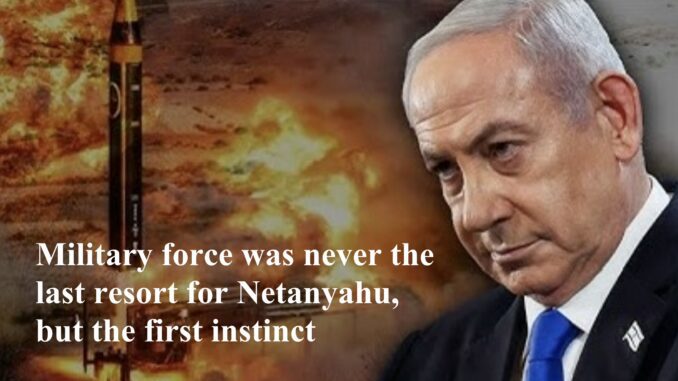
There comes a point when the language of war stops matching the reality of it:
- Bombed apartment blocks become “targets”
- Dead children become “collateral damage”
- Starving civilians become “human shields”
And anyone who questions the destruction is accused of supporting terrorism. Or, as in extreme cases, of being antisemitic.
Watching Gaza burn, Lebanon bombed, and Iran drawn deeper into conflict, I find myself asking a simple question: How much is enough?
I understand the fear Israel felt after the October 7 attacks. I understand the anger. I understand the desire for justice.
What I no longer understand is the growing acceptance of endless civilian deaths as though morality itself now depends on which side is doing the killing.
At the time of the first bombings of Iran I wrote thaṯ:
“Every night, the news flickers across my screen, a parade of tragedies reduced to numbers and soundbites. Gaza burns, its streets choked with rubble and grief, thousands dead under Israeli bombs. Iran mourns too, its people buried beneath the chaos of escalating strikes. Yet the world’s voice is strangely muted, a whisper where a scream should be. But when Iran’s missiles streak toward Israel, claiming far fewer lives, the headlines roar with horror, and leaders amplify their outrage. I sit in my quiet room… trying to unravel this knot of hypocrisy. Why do some deaths ripple across the globe while others sink like stones in a silent pond?”
Perhaps the most disturbing part of all this is that the violence no longer appears temporary. What began as retaliation now feels like permanent war. Gaza destroyed. Lebanon bombed. Iran attacked. Assassinations, airstrikes, threats of escalation; each one defended as necessary, each one promising security, while the region grows more unstable by the day.
At some point the world must ask whether this is still self-defence, or whether the Netanyahu government has become trapped in a cycle where military force is no longer a last resort but the first instinct.
A nation traumatised by terror has every right to defend itself. But defence without restraint can slowly transform into something else entirely.
History is filled with governments that believed overwhelming force would finally bring peace. More often, it deepened hatred, radicalised future generations, and left entire regions scarred for decades.
The tragedy is that every new bomb seems to push peace further away:
Civilians bury their children.
Entire cities learn to live with trauma.
Anger hardens across borders.
And leaders, notably Netanyahu and Trump – especially Trump – continue speaking the language of so-called security while ordinary people inherit the consequences of endless war.
This is disturbing. Not simply the bombs or the missiles, but how quickly human suffering becomes normalised when it is politically convenient.
Somewhere beneath the rubble are children who will never grow old, parents who will never return home, and entire generations learning that the world values some lives more than others.
Perhaps the greatest tragedy is not that this “justified” war brutalises people, but the silence that eventually surrounds it.
History has taught us that.
ALSO BY MICHAEL TAYLOR:
The generation that apparently ruined everything
Keep Independent Journalism Alive – Support The AIMN
Dear Reader,
Since 2013, The Australian Independent Media Network has been a fearless voice for truth, giving public interest journalists a platform to hold power to account. From expert analysis on national and global events to uncovering issues that matter to you, we’re here because of your support.
Running an independent site isn’t cheap, and rising costs mean we need you now more than ever. Your donation – big or small – keeps our servers humming, our writers digging, and our stories free for all.
Join our community of truth-seekers. Please consider donating now via:
PayPal or credit card – just click on the Donate button below
Direct bank transfer: BSB: 062500; A/c no: 10495969

We’ve also set up a GoFundMe as a dedicated reserve fund to help secure the future of our site.
Your support will go directly toward covering essential costs like web hosting renewals and helping us bring new features to life. Every contribution, no matter the size, helps us keep improving and growing.

Thank you for standing with us – we truly couldn’t do this without you.
With gratitude, The AIMN Team

Yes, it’s like living in a parallel universe. Imagine if we were told the world would be like this, only 5 years ago…It’s horrifying how we’ve been overtaken and how little push back there’s been. And how our politicians support it. How can we ever trust a politician again? Can we even trust each other?
Thank you for writing this poignant article Michael.
A nation traumatised by terror has every right to defend itself.
And a people dispossessed of their land, and pushed into ever decreasing fractions of it, also have the right to defend themselves.
Given Mossad’s reputation, it’s hard to believe that they aren’t capable of identifying, locating and surgically removing the true terrorists within Hamas and Hezbollah, rather than needing the IDF to bomb all of Gaza and Lebanon to smithereens while shooting anyone who commits the mortal sin of breathing while Palestinian.
Thank you, Tess.
leefe, I’m aware of all that, and personally, I agree. But that’s not what this article is about.
What else have I missed that annoys you?
Donald Trump’s frequent brain farts on Truth Social act as major catalysts for global financial and oil markets, with those in the know shifting billions of dollars and driving immediate stock market volatility.
This is criminal activity on the part of Trump, his family and friends, his social media blasts result in instant, often violent, swings in asset prices and quick profits for the insiders.
Whether he really wants a peace agreement with Iran tends to be beside the point when you are making money.
It is to be hoped that the finance and market regulators will commence prosecutions soon but don’t hold your breath. Incidentally I am hearing the Board of Peace which should have brought some relief to the suffering in Gaza is a crock of shit like everything else Trump touches.
Also Qatargate scandal in Israel (reported by Haaretz), with Qatar funds going via Israel for the latter to choose Gazan civilians &/or Hamas leadership as recipients.
On October 7, analysis suggests that Hamas took a gamble on catering to Russia and China, for same in return; little criticism or retribution
(Putin called his chum Bibi with condolences post October 7, while the latter refused to take a call from Ukraine’s Jewish leader Zelenskyy).
Indirect outcomes were manna from heaven for allegedly corrupt Netanyahu, Putin’s spluttering ‘special operation’ in Ukraine and Trump’s bad polling.
With Koch Heritage & Evangelicals’ 2024 Project Esther, the Harris ’24 young &/or Jewish vote was suppressed for Trump to prevail, Netanyahu avoided court due to war and Putin got a breather.
Michael:
General observation, not a bitch about what you’ve written. My comments are not generally meant to be aggressive towards the writers; I’m getting rather tired of people assuming that they are.
The mind wanders where it wanders. As Tess said, it’s a poignant piece. Sometimes a little anger helps overcome the feeling of hopelessness these situations engender, but when that happens the anger is directed at the people causing the situations, not those writing about it.
My apologies, leefe.
I’m having a bad day and I needed someone to take it out on. First our GoFundMe page was hacked, and then my PrimeTV account was hacked by a person with very poor taste. I say “poor taste” because they purchased three Eddie Murphy movies and paid with my VisaCard.
Rummaging through a pile of books in a secondhand bookshop on Vancouver Island I found ‘A Peace to Rnd All Pesce’by David Fromkin.
Published in 1989, the book examines the reconstruction of the dismantled Ottoman Empire, laying the foundations for the disaster in the middle east today.
The idea that arabs are not capable either of responsible self government and the imposition of imperial/colonial rule which has been replaced by American hegemony and unquestioned support for Zionist Israrl, denying the possibility of self government under the constant threat of Zionist expansion supported by the idea that ‘arab’, that is broadly any of the indigenous peoples are too backward to run their own countries and manage their recources for the benefit of their own peoples despite their long histories.
While those people are denied their humanity, they will suffer under the arrogance of ‘white’ superiority.
I may be off the mark however maybe it’s collective nihlism.
Cancel your card, Michael and get a new one, for safety’s sake. My card was hacked a couple of months ago by someone within the NRMA, the bank immediately shut it down and reissued. They’ll give you a digital version which you can set up on your phone for use before the physical card arrives.
Now that really sucks, Michael. It’s bad enough being hacked and robbed, but by someone who likes Eddie Murphy …
Thanks, Canguro. Good advice. Shall do.
leefe, it could have been worse, albeit marginally. If the hacker had have been my oldest brother he would have bought Elvis Presley movies.
Israel is again bombing South Lebanon, but why has the US not restrained Netanyahu, when the “ceasefire’ is threatened or, for that matter Israel responding in ways that upheld any “ceasefire”.
If the Americans are still bombing Iran, what example would they set anyway?
“Ceasefire”…typical F…..g bulsh-t !!
On another issue : hacking!
I got hacked on mastercard not so long ago. The bank wiped the debts after an inquiry into it.
Remember that Palestine has been clear demolished by military aggression of the amoral IDF led by butcher Bibi and the nutter rabbis of the ZION@ZI Knesset for the benefit of the international financiers of the re-development, including TACO Trumpery. The ultimate goal is ”Greater Israel” from the Red Sea to the Euphrates River owned and operated by Zion@zis, regardless of the wishes of the current property owners.
Another Hannibal Directive is possible to promote the ”right to self-defence”, the euphemism used to misdescribe ruthless military aggression.