Chapter 22: Voices of Resistance – Aboriginal Activism and Leadership
Survival as Resistance
Colonisation was designed to erase Aboriginal and Torres Strait Islander peoples. The fact that communities, cultures, and languages survive at all is itself an act of resistance. But survival was not passive. From the earliest days of invasion, First Peoples organised, resisted, protested, and led campaigns for justice.
Early Resistance Leaders
Even in the 18th and 19th centuries, Aboriginal leaders stood against dispossession:
Pemulwuy (Eora Nation): Led a guerrilla campaign around Sydney against British settlers in the late 1700s.
Yagan (Noongar): Fought settlers in Western Australia in the 1830s, becoming a symbol of Noongar resistance.
Windradyne (Wiradjuri): Negotiated and fought in the Bathurst Wars of the 1820s.
These were not isolated outbursts but organised resistance, showing that colonisation was met with determined opposition from the very start.
Organising in the 20th Century
As frontier violence gave way to segregation and assimilation, Aboriginal activism adapted.
William Cooper (Yorta Yorta): In the 1930s, petitioned King George VI for representation in Parliament and led protests against the treatment of Aboriginal peoples. He also organised one of the world’s first protests against Kristallnacht in Nazi Germany, linking Aboriginal struggles with global justice.
Jack Patten and William Ferguson: Organised the 1938 Day of Mourning protest on the 150th anniversary of colonisation, declaring it a day not of celebration but of survival.
Pearl Gibbs: A tireless activist for women’s rights, labour rights, and equality in education and health.
These leaders built the foundations of the modern Aboriginal rights movement.
The 1960s Civil Rights Era
The 1960s brought Aboriginal activism into national view:
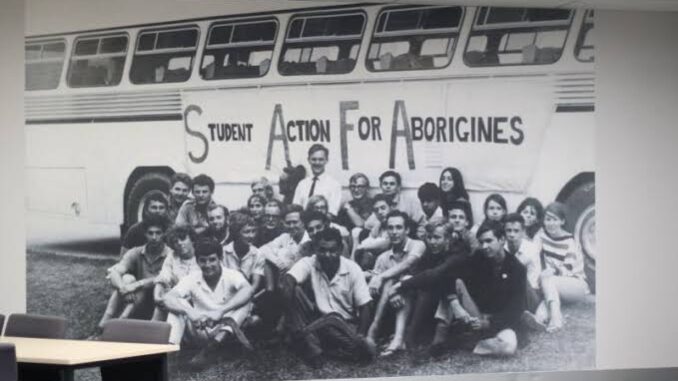
1965 Freedom Ride: Led by Charles Perkins and a group of Aboriginal and non-Aboriginal students, the ride exposed segregation in rural NSW towns, confronting colour bars in swimming pools, pubs, and cinemas.
1966 Wave Hill Walk-Off: Vincent Lingiari and Gurindji workers walked off Wave Hill cattle station in protest at appalling conditions. What began as a strike became a land rights movement, leading eventually to the handback of Gurindji land in 1975.
1967 Referendum: A massive campaign by Aboriginal leaders and allies resulted in over 90% of Australians voting to amend the Constitution so Aboriginal people could be counted in the census and allow the federal government to make laws on their behalf.
These victories showed that grassroots activism could change the nation.
Land Rights and Self-Determination
From the 1970s onwards, Aboriginal and Torres Strait Islander activism increasingly focused on land and sovereignty:
Aboriginal Tent Embassy (1972): Erected on the lawns of Parliament House, it declared the ongoing sovereignty of Aboriginal peoples. It remains a powerful symbol of resistance.
Mabo Case (1992): Eddie Koiki Mabo challenged the lie of terra nullius, leading to the High Court recognition of Native Title.
Wik Decision (1996): Extended Native Title to pastoral leases, sparking fierce political backlash but affirming continuing rights.
Each step was hard-won, resisted by vested interests, yet they shifted the legal and political landscape.
Cultural Renaissance
Activism has not only been legal and political. It has also been cultural.
Art movements like Papunya Tula brought Aboriginal art into global recognition, while maintaining cultural storytelling.
Music and performance – from Yothu Yindi to Archie Roach and Briggs – have blended resistance with creativity.
Language revival programs are bringing back tongues once declared “dead.”
These cultural movements are acts of survival and assertion, ensuring identity cannot be erased.
The Uluru Statement from the Heart
In 2017, hundreds of Aboriginal and Torres Strait Islander leaders gathered at Uluru to craft the Uluru Statement from the Heart. It called for three key reforms:
- Voice: A representative body enshrined in the Constitution.
- Treaty: Formal agreements recognising sovereignty.
- Truth: National truth-telling about colonisation.
The Statement was an invitation to the Australian people to walk together toward a better future. While the 2023 referendum on the Voice was defeated after a divisive campaign, the Statement remains a roadmap – authored by First Peoples themselves – for justice.
Everyday Activism
Not all resistance makes headlines. Much of it is local and everyday:
Elders teaching culture and language to the next generation.
Communities running health clinics, childcare centres, and schools.
Families maintaining connection to Country against the odds.
These acts may not be on the steps of Parliament, but they are the heartbeat of survival.
Why This Matters Today
Aboriginal and Torres Strait Islander activism has always led change. Governments rarely act until pressured by communities. Recognising this flips the usual narrative: justice has not been “given.” It has been demanded, fought for, and won through resilience.
For non-Indigenous Australians, this means listening, amplifying, and supporting – rather than assuming leadership or ownership of the struggle.
Where This Leads
Resistance and activism show a path forward. But they also highlight a truth: reconciliation cannot happen without justice. The next chapters will explore what true truth-telling, reparations, and treaty might look like – and why vested interests fear them so much.
Continued tomorrow…
Link to Part 21:
From Ignorance to Understanding: Facing the Truth of Colonisation (Part 21)
Link to Part 23:
From Ignorance to Understanding: Facing the Truth of Colonisation (Part 23)
Dear reader, we need your support
Independent sites such as The AIMN provide a platform for public interest journalists. From its humble beginning in January 2013, The AIMN has grown into one of the most trusted and popular independent media organisations.
One of the reasons we have succeeded has been due to the support we receive from our readers through their financial contributions.
With increasing costs to maintain The AIMN, we need this continued support.
Your donation – large or small – to help with the running costs of this site will be greatly appreciated.
You can donate through PayPal or credit card via the button below, or donate via bank transfer: BSB: 062500; A/c no: 10495969


Be the first to comment