Adelaide University Media Release
Australia may need to fundamentally redraw its rural landscape – retiring farms, restoring vast tracts of vegetation and reshaping regional economies – if it is to avoid accelerating species loss and meet global biodiversity targets.
That’s the stark conclusion from a recent Adelaide University graduate examining how South Australia could meet an internationally agreed goal to return 30% of land to nature – a benchmark that scientists say is critical to prevent ecosystems from tipping into irreversible decline.
The warning comes amid growing global concerns that the planet is already deep into a human-driven mass extinction event.
According to the Grantham Research Institute on Climate Change and the Environment, species are disappearing at 10 to 1000 times faster than the natural rate of extinction, with at least 1.2 million plant and animal species under threat of extinction.
Against that backdrop, Environmental Science Masters graduate Peter Martin argues that restoring at least 30% of landscapes to functioning natural systems is the bare minimum needed to stabilise biodiversity.
The target was endorsed globally in Montreal in 2022, including by Australia, but translating it into reality – particularly in heavily cleared agricultural regions – could prove difficult, Martin says.
His project, completed in 2025, examined four South Australian local government areas – the Coorong, Yorke Peninsula, Grant and the Copper Coast – all of which fall well short of the 30% benchmark.
In some areas, native vegetation has been reduced to just a fraction of its original extent. The Copper Coast, for example, retains only 3.6%.
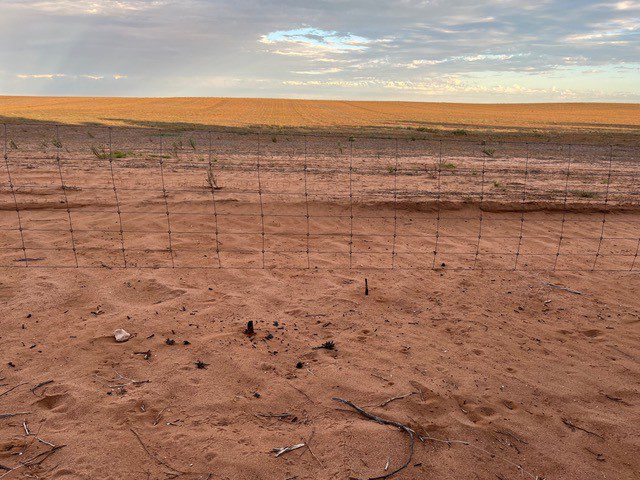
To reach the target, large areas would need to be restored – not just marginal land, but in some cases even productive farmland. In the long term, some properties would need to be taken out of agriculture and returned to native ecosystems.
“This is not tinkering at the edges,” Martin said. “It implies major land use change at a district scale.”
The long-term vision is a new farming landscape with a mosaic of restored ecosystems that are highly valued by local communities.
“Instead of communities seeing their district as a ‘wheat-sheep zone’, they’d see and value it as a ‘wheat-sheep-mallee ecosystem’ zone, suggests Martin.
“The region might generate slightly less agricultural produce, but social and health science suggests that a more natural and diverse landscape can significantly improve human health and mental wellbeing.”
Using historical vegetation maps prepared by the SA Herbarium, the project outlined what a 30% restored landscape could look like. In the Copper Coast, for example, a future scenario shows native mallee, woodland and shrubland returned to 30% of the region.
The approach avoided complex modelling, instead relying on well-established knowledge of where different vegetation types once thrived. The presence of roads, towns and other key infrastructure was considered, alongside the need to minimise fire risk.
The biggest barrier is not technical feasibility, but ‘social licence,’ according to Martin.
“Community acceptance of sweeping, long-term change is slow and difficult. Farming regions built over generations of clearing and production are unlikely to embrace rapid and large-scale ecosystem restoration, particularly if it threatens livelihoods.
‘Transition guided by such a blueprint would need to unfold over decades, possibly even a century. It is possible but would need to be backed by sustained government and community support.
“Climate change adds further urgency and complexity. As temperatures rise and rainfall patterns shift, areas currently suitable for cropping may become marginal or unviable. In South Australia’s Mid North, for example, the historic boundary for reliable agriculture known as Goyder’s Line is already moving south.
“By the end of the century, climate projections suggest that Kadina, a major grain-producing centre, could resemble the far drier conditions of Hawker in the Flinders Ranges today.
Martin says that shift could render some current farming areas unsustainable, strengthening the case for alternative land uses, including the use of new crop varieties better suited to the new climate, or new land uses altogether, such as ecotourism in areas where ecosystems had been restored.
His study delivers a blunt assessment: Australia is still managing its landscapes largely according to a 19th-century model, despite decades of scientific evidence showing it is ecologically unsustainable.
“We continue to maintain an 1840s approach to landscape management long after science has made it clear it is driving species to extinction’, says Martin.
“There is a lot of lip service on conservation from political parties and on government web sites. However, the big question is whether we have the wisdom and courage to make the major land use changes that science tells us is urgently needed.”
Also from Adelaide University
Australia must tackle unemployment to reduce suicide rates
Could the world’s smallest possum be living on the Yorke Peninsula?
Sweet lifeline for wildlife after bushfires ravage their habitat
Sniffer dogs team up with air sampling device to tackle wildlife trafficking
Keep Independent Journalism Alive – Support The AIMN
Dear Reader,
Since 2013, The Australian Independent Media Network has been a fearless voice for truth, giving public interest journalists a platform to hold power to account. From expert analysis on national and global events to uncovering issues that matter to you, we’re here because of your support.
Running an independent site isn’t cheap, and rising costs mean we need you now more than ever. Your donation – big or small – keeps our servers humming, our writers digging, and our stories free for all.
Join our community of truth-seekers. Please consider donating now via:
PayPal or credit card – just click on the Donate button below
Direct bank transfer: BSB: 062500; A/c no: 10495969

We’ve also set up a GoFundMe as a dedicated reserve fund to help secure the future of our site.
Your support will go directly toward covering essential costs like web hosting renewals and helping us bring new features to life. Every contribution, no matter the size, helps us keep improving and growing.

Thank you for standing with us – we truly couldn’t do this without you.
With gratitude, The AIMN Team
Reports like this one released by Adelaide University are akin to those of the community of climate scientists… appropriate, serious, concerning, but likely to ultimately be shelved, with the powers that be assuming a ‘nothing to see here, move on’ response.
That position, to date, has been the majorly dominant response to the ever more urgent data issuing from the scientific community studying global warming consequences. Fossil fuel profits are unabated, and despite the uptake of EVs globally, fossil fuel resources extraction continue and are on the increase.
In this case above as outlined by Adelaide University research, there is, for those who pay attention to these matters, nothing surprising in the data. Australia has led the world to some extent in terms of rate of ecosystem degradation; the country is at the top of the leaderboard for threats of extinction to native species, it is also overrun with feral species, who, it seems, almost attract protected status inasmuch as next to nothing is done to eradicate these pests – birds, animals, fish – and we are burdened with a political class that is firmly asleep at the wheel despite the manifest problems. Our media, rather than banging the drum and constantly alerting the Australian populace of the urgency of the issues, instead focuses on sporting stories and housing prices and other fluff issues – pathetic doesn’t begin to describe their uselessness in raising the alarm.
Feral creatures are bad enough, but the issues compound when feral plants are also considered, and compound again when farming practices and land clearing are also brought into the mix. We have, in the relatively small time since colonisation, literally stuffed this country.
Well done, white man, hang your collective heads in shame.
Readers should take heart from the fine example being set in the feral electorate of New England where the former representative of the Notional$ now a PHONey has managed to avoid any economic development projects likely to impede the NOtional$ preferred option of creating a genuine, original, authentic 19th century rural slum. this strategy will cover up the fact that for the past about 60 years the NOtional$ politicians have been more interested boozing, philandering and personal pecuniary interests than building a strong economic post-agriculture electorate.
The exception has been the Windsor years, 1988-2000 for Tamworth and 2000-2013 for New England when economic development launched Tamworth into the 21st century as the regional capital now having about 60,000 population and planning for 100,000 before 2050.
No surprise that our 18th/19th century cities are built on the best arable land. Despite it being concreted and tarmaced over, it gives an enduring cold comfort to our vast cosseted city dweller majority.
And successive Oz govts would rather provide them with bling and propaganda, lie about the land, and entrench in destructive hyper-capitalism.
Some farmers and rural folk are becoming more aware & enlightened, but they too are being swamped out by our govts parlaying with broadacre & mining multi-nationals whose feckless investors only see short-term money making machines.
Governments and the populace at large have been ignoring basic cause and effect of their existence on the environment and their own bodies for decades.