Sadly, the left has a long record of devouring itself at the worst possible moments. From the bloody purges and power struggles that followed the Russian Revolution, to the great Labor splits in Australia, to the destructive Rudd-Gillard civil war, history shows a recurring pattern of self-sabotage. This goes far deeper than simple tribal rivalry between Labor and the Greens, or the rise of Teal independents in the 2019–2022 election cycles.
This is not a call for another superficial rebrand or a return to “Third Way” centrism – whether Tony Blair’s New Labour, Bill Clinton’s New Democrats, or the Hawke-Keating consensus in Australia. The crisis is more fundamental.
Visit ordinary branch meetings in rural and suburban working-class electorates that were once reliable Labor heartlands. You will see the same troubling trend: large numbers of young Zoomer and Millennial working-class men, along with many middle-aged women, are drifting toward populist right-wing voices. Even traditional conservatives and a significant portion of the ageing Boomer base are shifting in the same direction.
What is driving this shift is not abstract ideology but lived reality. Disillusioned younger and middle-aged voters are finding answers in populist rhetoric on the issues that hit them hardest: immigration, wages, inflation, housing affordability, and the broader cost-of-living crisis. While environmental and climate concerns remain important, the left has dangerously lost sight of the fundamental truth once captured by James Carville: “It’s the economy, stupid.”
The centre-left is in crisis across the Western world – especially in the United States, Europe, the United Kingdom, and Australia. Populist right-wing parties and candidates have made major gains in recent elections and polling. The main exception is the UK Greens, who have surged by appealing to younger progressives – an important lesson for the broader left. In the US, the MAGA movement may have reached its electoral high-water mark, with Donald Trump now recording some of the weakest congressional and presidential polling since George W. Bush and Richard Nixon. A Democratic “blue wave” in upcoming midterms remains possible. Yet elsewhere, progressive movements are either in retreat or consumed by internal infighting.
The central question is whether the US Democrats – and centre-left parties globally – will learn the right lessons from their wilderness years, or repeat the same mistakes.
When you attend a typical monthly branch meeting – whether for Labor, the Greens, or even a local community town hall – you will usually find the room dominated by ageing Boomers and a handful of middle-aged Gen Xers. While many bring professional experience from all walks of life, the overall impression is one of staleness.
This mirrors the problem the US Democrats faced for years: an ageing supporter base paired with long-term representatives and senior leaders who, despite real achievements, came to be seen as out of touch. Joe Biden was a clear example. Elected at 78 as one of the oldest presidents in US history, he was relentlessly branded “Sleepy Joe” or “Brandon,” portrayed as ineffective and incompetent even as his administration delivered major wins on climate and pandemic stimulus. The same pattern applied to long-serving figures like Senate Leader Chuck Schumer and Speaker Nancy Pelosi, both of whom held senior roles for roughly 40–45 years.
This stands in stark contrast to an earlier generation of leadership. John F. Kennedy, at just 43 years old, captured the imagination of a new era with his call for a “New Frontier” – a bold vision tackling space exploration, science, civil rights, and poverty under fresh, energetic leadership.
Today, the dynamic has flipped. Many younger voters are drawn instead to loud, confrontational populist figures who yell, insult, and appeal to raw emotion rather than logic or policy detail. In doing so, they are too often distracted while their wealthy backers quietly extract what remains of their economic security.
It is a giant con. Yet this approach explains why parties like Pauline Hanson’s One Nation can poll as high as 30% on primary votes in Queensland (per Newspoll), successfully weaponising fear and resentment for electoral gain while advancing the interests of their corporate allies.
Personal Reflections: Lessons from Local Politics
Take my own journey as an example. I am a 15-year political activist with roots in retail and fast-food work during my late teens and early twenties. I grew up in Brisbane’s bayside suburbs – the Redlands and Wynnum-Manly areas – attending Wynnum North and Thornlands primary schools and Cleveland High. Later, I moved into media advertising, government, and market research roles. I travelled across Australia while completing TAFE and university. These experiences, combined with years of political organising, taught me valuable lessons.
My local federal seat of Bowman (Redlands) was once the most marginal in Australia. In the 2007 Rudd landslide, LNP MP Andrew Laming held it by just 64 votes. I joined the ALP in 2011. At the time, I was largely oblivious to the deep tensions dividing my own extended family on North Stradbroke Island (Minjerribah). One side had benefited generationally from sand mining and strongly supported its continuation. The other advocated for Native Title recognition. This created painful fractures across the island.
I worked alongside unionist and future Labor MP Leanne Enoch to campaign for Labor, while other relatives backed LNP candidates Andrew Laming, Mark Robinson (who won the state seat in 2009), and Campbell Newman, along with the mining company Sibelco. This was the height of the Bligh Labor Government and local mayor Melva Hobson’s era in the newly formed Redland City Council. Controversial asset sales had split the union and labour movement, while Indigenous Land Use Agreements (ILUAs), Native Title laws, and debates over eco-tourism versus mining were intensifying.
As a young Indigenous person, I was naïve but inspired. I had been energised by Kevin Rudd’s Apology to the Stolen Generations, advances in Native Title, and Barack Obama’s election as the first Black US President. I believed a new generation of leadership could deliver real change.
Then came the devastating 2012 Queensland state election. Labor was slaughtered, reduced to just seven seats. I joined a local branch encouraged by the state Labor candidate, Jo Briskey – daughter of long-serving MP Darryl Briskey – who later became federal MP for Maribyrnong. At 18, I was devastated by the loss but determined to understand it. Reflecting on Labor’s success just four years earlier in 2007, it was clear the party had forgotten how to communicate effectively with ordinary voters. It had become overly reliant on an ageing base of supporters – some of whom had been handing out how-to-vote cards since the 1940s and 1950s.
Aside from Jo Briskey (then 27), I was often the only young person in the branch with the energy and drive to campaign enthusiastically and speak passionately about policy. That fire helped breathe new life into the group. At the same time, I learned a great deal from the older Silent Generation stalwarts – particularly the codes of conduct, meeting procedures, chairing, minutes, agendas, and rules that keep organisations functioning.
I was soon elected Branch Secretary, working alongside a former public servant as President. Together we focused on recruiting younger members to help rejuvenate the branch. One key addition was Alex Smock, another Cleveland High graduate (who later became UQ Union Secretary). He joined me in steering the branch.
In the early years (2012–2014), former Labor MP and police officer Phil Weightman chaired meetings as President. After he stepped back due to health issues with cancer and retired from politics, I became Vice-President. For much of 2013–2014, I served as Vice-President across key Redlands ALP bodies, including the Bowman Federal Electoral Council (FEC) and the Cleveland State Electoral Council (SEC). I was later elected President and Cleveland SEC Secretary.
One of my main responsibilities was preventing infighting between rival branches – particularly Ormiston and Cleveland-Wellington Point – both of which had dwindling, ageing memberships despite our recruitment drives targeting younger voters. This internal division remains a challenge for Labor today.
With Alex Smock serving as my Secretary and later Vice-President, I also worked closely with Alex David – a former public transport and QR rail route planner, intersex activist, and future Greens candidate for Chandler ward. As Branch Secretary, Alex helped us push stronger public transport policies and rally branch support for marriage equality.
During this period we backed the newly endorsed state candidate Tracey Huges. She was unpopular with many in our branch and neighbouring ones, though she had stronger support in her own base. Despite internal backlash, I worked with the party office to secure campaign funding for her ahead of the 2015 Queensland state election. We focused our efforts on winnable areas such as Capalaba and parts of Redlands.
We successfully won back Capalaba for unionist Don Brown (son of Queensland’s former industrial commissioner, Don Brown senior). However, we fell short in Cleveland and Redlands, where barrister Deborah Kellie was our candidate. These efforts still laid important groundwork. Labor later endorsed businesswoman Kim Richards as our federal candidate in Bowman for the 2016 election. She went on to win the state seat of Redlands in 2017.
Yet these victories proved short-lived. The ALP’s backflip on its earlier opposition to the unpopular Adani Carmichael coal mine in central Queensland, along with support for the Toondah Ramsar high-rise development (originally approved under the Newman LNP Government), forced me to seriously question my future in the party.
During my time in the ALP, I had to quickly learn the internal mechanics of the party. At the time, the Labor Party was largely controlled by union bosses and their delegates. Rank-and-file members had relatively little real influence compared to the weight of the union blocs.
I caucused with the ALP Left, which strongly backed Jo Briskey and her father. This aligned with the same union bloc that endorsed Don Brown (formerly United Voice, now the United Workers Union – UWU). Different unions backed different factions and ideological positions.
I aligned with the Socialist Left, supported by unions such as the AMWU (Australian Manufacturing Workers Union), UWU, CFMEU (Construction, Forestry, Maritime, Mining and Energy Union), RTBU (Rail, Tram and Bus Union), and ASU (Australian Services Union). This faction generally favoured Keynesian nation-building programs, was critical of the US alliance, and strongly supported marriage equality, social justice, economic equity, and the pro-Palestine cause.
In contrast, the Labor Right was primarily backed by the AWU (Australian Workers’ Union), TWU (Transport Workers Union), and SDA (Shop, Distributive and Allied Employees Association). While also Keynesian on economics, they were more supportive of the US alliance and favoured a “Third Way” centrist approach similar to Clinton and Blair.
There was also a third group – the former Centre faction (Labor Unity) in Queensland. Between 2016 and 2017, I briefly supported them. I helped coordinate the phone bank for their candidate’s Brisbane City Council Central Ward campaign. This faction had backing from former Prime Minister Kevin Rudd, and I had earlier volunteered in his Griffith divisional office in Morningside.
Earlier, in the 2012 Queensland state election, I worked as casual call centre staff gathering market research and polling data for the unions. I also interned for the Queensland ALP under Reece Pianta (later husband of Labor Minister Nikki Boyd), who was then Vice-President of Young Labor. Through my friendship with Reece, I became a whip for the Labor Left and was elected to the policy committee representing the Left in 2013–2014.
I soon became disillusioned. The policy committees of Young Labor rarely met outside of annual conferences. Meetings only seemed to happen when someone covered an endless bar tab. It felt more like a social club than a serious policy-making body.
Enter Fabianism and Democratic Party Reform: Labor Listening to Its Rank and File
In 2013–2014, I became involved with the Queensland Fabians and the Local Labor reform group. We supported former Prime Minister Kevin Rudd in his push to regain leadership after he was dumped by Julia Gillard. Gillard had achieved significant reforms in her own right, but the manner of her ascension had tarnished both leaders.
Rudd championed rule changes that gave party members a 50% say in leadership ballots. These reforms, recommended by the Bracks-Faulkner-Carr Review following Labor’s minority government in its second term in 2010, helped democratise the party.
The Fabians – who had played a key role in reforming the ALP in the late 1960s and early 1970s under Gough Whitlam – endorsed these changes. They had helped shift Labor from a party that supported the White Australia Policy to one focused on multiculturalism, social justice, environmental issues, universal healthcare (Medicare), and free education. The Fabians and Local Labor worked together to back Rudd’s democratisation push.
At the state level, Queensland Labor – newly returned to government after the Newman LNP era – adopted a similar but modified model: a 30-30-30 split between rank-and-file members, unions, and parliamentarians.
During this period, I served as Secretary of Local Labor, working under the organisation’s founder, Stuart J. Whitman. I also became Assistant Secretary and Membership Officer of the Queensland Fabians (2016–2017).
At the same time, I contributed to renewed advocacy for Treaty and Truth-Telling through the Queensland Indigenous Labor Network (QILN). This push was supported by Lara Watson (Electrical Trades Union, later an ACTU organiser). Building on the unfinished business of the Hawke era Treaty efforts in the late 1980s, we worked to have Queensland Labor adopt a formal Treaty process. This was championed by my second cousin on my father’s side, Leanne Enoch (from the Martin Delaney Enoch family), who became a senior minister in the Palaszczuk and Miles Labor Governments.
In 2016, Lara and I were elected as state conference delegates to negotiate the Treaty platform at the party’s Gold Coast conference. The party ultimately endorsed the push for Treaty.
However, once the major democratisation reforms were achieved, the effectiveness and momentum of Local Labor quickly faded. Disillusioned, I resigned shortly afterwards.
LEAN, Infighting over Toondah and Adani, the Success of Redlands 2030, and the Greens
My growing disillusionment with the pace of party reform, combined with a strong interest in environmental issues, led me deeper into Labor’s environmental wing — the Labor Environmental Action Network (LEAN). I contributed to the redrafting of Labor’s Chapter 5 policy platform, “Our Environment, Our Future.”
This work drew me into local koala preservation efforts with the Redlands branch and candidate Deborah Kellie. I had stood down as President of the Cleveland-Wellington Point branch in 2015–2016. The issue became personal after the original protests during the Newman LNP era, when both state and local councils supported major overdevelopment at Toondah Harbour, including areas around GJ Walter Park.
Former Labor councillor (later Independent) Cr Craig Ogilvie, who represented Division 2 (North Stradbroke Island/Minjerribah and Cleveland), raised serious concerns about the proposal at a Cleveland ALP branch meeting. Both former MP Phil Weightman and I became alarmed. When Labor performed a policy U-turn on the project just 18 months later, my concerns deepened and I became actively involved with LEAN.
I served as LEAN’s advocate inside the Redlands ALP, and later as Secretary of the Cleveland-Wellington Point branch again in 2017. In that role, I pushed for a merger of the rival Ormiston branch. The merged branch was later renamed Oodgeroo in honour of my distant relative on my father’s side – Kath Walker (Oodgeroo Noonuccal), the celebrated poet, activist, 1967 referendum campaigner, and former ATSIC councillor.
While this was unfolding, Tracey Huges was preparing her run for Redland City Council as the Labor candidate. Irene Henley – a former nurse administrator, then Bowman FEC/Cleveland SEC President, and later twice the Oodgeroo Labor candidate – became Huges’ campaign manager. Irene was also working with Alex Smock and me to rejuvenate the local party.
It was during this period that clear divisions emerged. Don Brown MP (Capalaba and Ormiston) and Tracey Huges’ group clashed openly over the Toondah Harbour development and the Adani Carmichael coal mine.
After tense, often vicious debates that occasionally bordered on physical confrontations, I resigned from the ALP in 2017 along with several others, just ahead of the state election. Some members quietly relocated or stepped back out of fear of repercussions. It was an intensely uncomfortable time.
I made my resignation public through a letter published in the Redland City Bulletin. In it, I highlighted the hypocrisy: Labor was forcing Stradbroke Island (Minjerribah) miners out of work with little consultation or fair compensation through the local Native Title body QYAC, while simultaneously supporting a far larger and more environmentally damaging coal mine in central Queensland (Adani Carmichael).
I became more active in the community group Redlands 2030, the successor to the earlier campaign group STIR (Save Toondah Invaluable Resources). This built on earlier fights against overdevelopment at Toondah Harbour, which dated back to the Joh Bjelke-Petersen state government and local Country/National Party figures. That earlier era had already seen the controversial Raby Bay canal estate built over original mangrove wetlands in what was once the sleepy fishing village of Cleveland, before the shire mergers.
Redlands 2030 brought together a diverse coalition of young and older locals fighting to protect the Toondah wetlands. The group included supporters from Birdlife Australia, the Australian Conservation Foundation (ACF), CARP, the Koala Action Group (KAG), and the Redlands Greens. Our efforts attracted the attention of Greens Senator Larissa Waters and future Senator and Bowman candidate Penny Allman-Payne.
The Greens endorsed young, dynamic candidate Emerald Moon – later a radio host and staffer – who strongly advocated for wetland protection during the 2019 federal election. In the 2020 local government election, I ran as a social democratic independent on a platform of rejuvenating the Cleveland CBD and preserving the Ramsar-listed wetlands at Toondah. At the time, I was briefly serving as Queensland Fabians Secretary and had advocated on the Toondah issue to national office holders Kevin Conway (health policy advocate) and Convenor Billy Colless (ASU unionist).
I received 19% of the primary vote. Irene Henley, running on a more moderate platform, gained 28%. However, we were both outpolled by the LNP-aligned incumbent Cr Peter Mitchell, who secured 46% on primaries and won comfortably on preferences.
Despite the electoral losses, Redlands 2030 gave us a genuine voice. It allowed us to speak openly and forcefully on these critical environmental and community issues – and in doing so, helped protect the soul of the Redlands.
During this period, I worked closely with former Cleveland MP and Environment Minister Rod Welford (who held the seat of Stafford before Murray Watt, now a senior Albanese Government minister). Along with Peter Shooter (AMWU and former ALP head office organiser) and LEAN Secretary Peter Casey, we lobbied both state and federal Labor conferences to protect the Ramsar-listed wetlands at Toondah Harbour.
Young people joined the campaign in large numbers, alongside locals from all walks of life and Quandamooka elders who raised their own serious concerns. It was never about me – it was about saving Toondah, no matter the personal cost. The broad Save Toondah alliance proved highly effective. Our efforts helped shift Labor Party policy, although the vote succeeded at every level except for a narrow loss at the Bonner/Bowman regional conference.
The campaign culminated in 2024 when the Alliance helped convince the Albanese Government’s then Environment Minister, Tanya Plibersek, to reject the Toondah development proposal. It was a bittersweet victory. Tragically, Rod Welford passed away from cancer the following year.
After completing my degree in 2021, I became involved in an industrial dispute with a major retailer. With the support of RAFFWU (Retail and Fast Food Workers Union), former Queensland coordinator Bill Storey Smith (who also served as Assistant Secretary and Membership Officer of the Queensland Greens and hosted the workers’ rights program Workers Power on 4ZZZ), and their legal team, I won my case and received compensation.
I subsequently joined the Queensland and Redlands Greens. I was elected as their Indigenous Officer and as a State Council delegate. It was during this time that I also found a new home at 4ZZZ radio as a co-host.
The Queensland Greens performed strongly in the 2022 federal election, even as Labor returned to federal government under Anthony Albanese. The party gained the seats of Brisbane, Griffith, and Ryan, with former Young Labor Left colleague Max Chandler-Mather winning one of them. I was particularly inspired by the Greens’ strong environmental platform and their advocacy for better housing and rental affordability during the worsening cost-of-living crisis that followed the pandemic.
The Successes and Failures of the 2024 Redland City Council Election
In late 2023, after short stints working as a debt operative at the Australian Taxation Office (ATO) and for Sealink and the Queensland Human Rights Commission (QHRC) in Rockhampton, I was approached by former Redland City Councillor Adelia Berridge (2020–2024). She asked me to help Brisbane Bayside Australian Conservation Foundation coordinator Tania Kromoloff with community organising for mayoral candidate Jos Mitchell’s campaign.
The timing followed the dramatic downfall of LNP-aligned Mayor Cr Karen Williams, who was forced to resign after being caught drink-driving and facing strong community backlash. We worked to build a broad coalition for Redland City Council.
Jos Mitchell – an artist, photographer, motorcycle enthusiast, and former local government manager in Sustainable Communities at Byron Shire Council in NSW, as well as a former Queensland police officer and police prosecutor – was a highly qualified candidate. By comparison, the conservative side’s main offerings were Cindy Corrie (former advisor to Mayor Williams and Chamber of Commerce Chair) and the controversial former federal MP Andrew Laming, whose political career had collapsed ahead of the 2022 federal election amid harassment and bullying allegations.
We built a diverse coalition that included people from the environmental movement, community groups, the local ALP (despite my past history with the party), Indigenous organisations, disillusioned conservatives, and everyday apolitical residents who simply cared about the future of the Redlands.
We ran a strong, consistent campaign. This included extensive door-knocking in blue-collar and working-class areas, as well as targeted letterbox drops focusing on cost-of-living pressures and rising council rates.
Jos Mitchell’s team ticket performed exceptionally well. She secured a landslide victory, winning around 67% of the vote after preferences. However, her candidate team fell short in two key divisions – by just 400 votes combined. These were Division 2 (Cleveland and North Stradbroke Island) and Division 5 (Redland Bay and the Southern Moreton Bay Islands), the same areas where Irene and I had previously run.
Elections are ultimately about coalition-building. With more time to recruit strong, qualified grassroots candidates – rather than reacting to our opponents – we could have secured a clear majority with only a handful of extra votes. Our main shortcoming was placing too much focus on the mayoral race at the expense of the candidates running on the team ticket.
As Mayor, Cr Jos Mitchell has delivered meaningful reform despite operating in a constrained environment. Her achievements include introducing a carbon reduction plan, conducting operational cost reviews, advocating for a new indoor sports centre, progressing the Cleveland CBD revitalisation, and overseeing the Capalaba CBD redevelopment (strongly championed by former Councillor Adelia Berridge).
She has also scrutinised the impact of the 2032 Olympics rollout across South East Queensland, particularly following the election of the LNP Crisafulli State Government in 2024.
The Failures of Redlands 2030, the Greens, and Overambition
In 2024, I ran as the Queensland Greens candidate for the state seat of Oodgeroo. I campaigned on concerns about the proposed Birkdale White Water Community Precinct and cost-of-living pressures. I was up against popular conservative Senator Amanda Stoker, a former Assistant Attorney-General in the Morrison Government. She won the seat comfortably, while I polled 9%.
Drawing on my background in politics and advertising, I also worked as the Queensland Greens’ Marketing Manager for the Redlands area. I ran the local advertising campaigns for our state team ticket candidates, Kristie Lockhart (Redlands) and Donna Weston (Capalaba). We managed to increase the Greens’ vote locally despite the party going backwards in other parts of Queensland.
The broader results were difficult. In the 2024 state election, Greens MP Amy MacMahon lost her seat of South Brisbane. A year later, during Labor’s federal landslide under Albanese, Max Chandler-Mather lost Griffith and Stephen Bates lost Brisbane. Senator Larissa Waters performed strongly and held her Senate seat, even as federal Greens leader Adam Bandt lost his seat in Melbourne.
My main issue with the Queensland Greens during this period was their tendency to disengage from political reality through overambition. Party leaders spoke confidently about winning up to 11 seats and holding the balance of power in Queensland Parliament. In practice, the Greens gained only one additional Brisbane City Council seat in 2024, lost their second state seat in inner Brisbane, and lost two more federal seats the following year in 2025.
While the 2024–2025 election results fell short of what the Greens had hoped for, several factors contributed to the setbacks.
The CFMEU controversy spilled over and damaged the Greens due to the union backgrounds of Adam Bandt and Max Chandler-Mather. There was also a perception that Labor and the Greens were more focused on fighting each other than on solving problems, particularly during tense negotiations over housing policy at a time of worsening cost-of-living and rental crises. Despite the real policy wins achieved by figures like Chandler-Mather, the optics hurt the party.
I also believe the Greens suffered from a lack of coordinated focus on winnable seats and retaining existing ones. Both the Greens and Redlands 2030 have struggled in recent years to retain long-term, experienced members. Talented local voices such as Emerald Moon chose not to run again, and I eventually stepped back as well.
A heavy focus on inner-city seats has come at the expense of grassroots engagement in suburban and regional areas. In many of these places – where Labor is also struggling – disillusioned voters are turning to the LNP or considering One Nation.
Redlands 2030 should be particularly careful of its own ageing demographic. Many long-term supporters no longer see the value in attending long, often tedious meetings only to be lectured or told off for expressing disagreement. These are the same cultural and organisational problems Labor has had to confront – and the Greens (and community groups like 2030) now need to learn similar lessons.
Do the Greens and Redlands 2030 Have a Future? Yes, I believe they do – but only with serious renewal.
Look at the UK Greens, who are successfully appealing to younger and wider audiences. They currently hold 7 seats in the UK Parliament (5 in the Commons and 2 in the House of Lords) and an impressive 911 seats in local government. In Australia, the Greens hold 73 seats nationwide, including 11 federal parliamentarians (10 in the Senate and 1 in the House of Representatives). These are solid foundations, but the party must do more to empower fresh, younger voices and give them real participation and responsibility.
In the Redlands, the local Greens have taken a positive step by electing SEQTA founder, public transport advocate, and activist Imogen Buckley as their new Convenor.
Redlands 2030 and leaders like Steve McDonald deserve strong credit for their sustained success in saving and preserving Toondah Harbour for future generations. However, the group must avoid falling into a perpetual NIMBY (“Not In My Backyard”) mindset. In a rapidly growing region, there needs to be realistic engagement on key infrastructure needs where bipartisan support exists – such as the Eastern Busway extension to Capalaba. Over-opposition on such issues risks isolating Mayor Jos Mitchell from her support base and creating space for right-wing populists who over-promise with unrealistic solutions.
Like the ALP before them, both the Greens and Redlands 2030 rely heavily on an ageing base of pensioners and retirees. Many lack the energy or drive to build a consistent, long-term movement. They are also competing against a well-resourced conservative campaigning machine backed by a local newspaper that amplifies their narrative.
Redlands 2030 has done excellent work online, particularly on transparency issues. To survive and grow, however, it must deliberately pass the torch to a new generation and plan for generational renewal. Without this, it risks the same fate as the original STIR group, which faded after its early successes in the 1990s. The group has also underestimated the changing media landscape and failed to adapt effectively to the partisan local newspaper environment.
Renewal is essential if these movements are to remain relevant and effective.
I also worry about how Labor will fare in future elections. Ideally, I would like to see all progressive community groups, community Independents, the Greens, and Labor work through their differences in pursuit of shared goals – rather than remaining beholden to donors and lobbyists.
For the record, despite our past clashes over Toondah, I respect former Labor MP for Capalaba Don Brown. He has shown willingness to question the Birkdale White Water Olympics proposal alongside Redlands 2030 and has supported the Eastern Busway extension to Capalaba. I regret our earlier misgivings and am happy to agree to disagree on Toondah. Don demonstrates real skill in learning from mistakes – something I hope the local Greens and Redlands 2030 can continue to do with their own bases. Healing these relationships over time will allow us to keep delivering good outcomes for the wider community and “keep the bastards honest,” as Don Chipp famously said.
There are important lessons from my local experiences, but they also reflect broader challenges playing out across Australia and the world – particularly how fragile democracy can be in the current climate.
The Real Tragedy: The Decline of Third-Way Politics, Community Groups, and the Rise of Disinformation
Having worked extensively in media advertising and political organising, I have witnessed firsthand how the information landscape has deteriorated.
Social media platforms and news outlets have become increasingly partisan and less concerned with facts. The weakening of media ownership laws, combined with the dominance of wealthy tech giants on X (formerly Twitter), Meta (Facebook), and Instagram, has supercharged echo chambers. These platforms reward conspiracy theories, fake news, and emotionally charged content over logic and evidence. The problem is worsened by trolling, “mesosphere” culture, attack bots, and unregulated influence operations.
Traditional regional newspapers have also declined. Fairfax Media’s merger into Nine Entertainment and subsequent sale of assets to Australian Community Media (ACM) led to the closure of the Redland City Bulletin. While positive community papers like The Community Leader have emerged in Brisbane’s bayside, they have been joined by more controversial outlets. The Redland Bayside News and associated titles owned by businessman Warren Pryde have expanded across South East Queensland and Ipswich, employing tactics reminiscent of Fox News in the United States – highly partisan and narrative-driven.
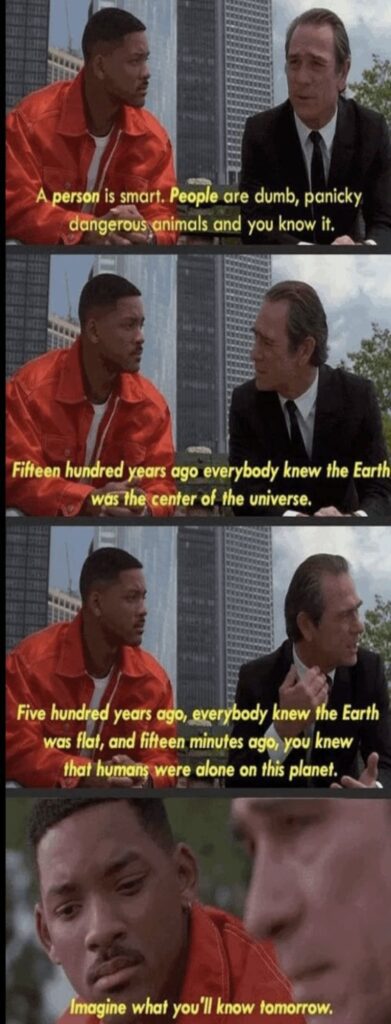
The current electoral landscape is best captured by the park bench scene in the 1998 film Men in Black. As Agent K tells Agent J: “A person is smart. People are dumb, panicky dangerous animals.” Voters can too easily be swayed by simple three-word slogans and the politics of fear. We have seen this pattern before – in Nazi Germany, McCarthyism in 1950s America, Cold War “red peril” hysteria, and more recently in the MAGA movement.
This shift away from thoughtful “Third Way” politics and strong community-based organisations toward emotion-driven, fear-based campaigning represents a real tragedy for democracy.
Good Night and Good Luck
This is my final article for The Australian Independent Media Network (The AIMN) for the foreseeable future. I am returning to regular airtime on 4ZZZ radio with Workers Power and other news and current affairs programs on the station.
In the coming years, I will consider running for Redland City Council in the 2028 local government elections, most likely in Division 3 (Thornlands, Victoria Point, and Cleveland South). I commend Mayor Jos Mitchell for what she has achieved since her election in 2024. I remain committed to finding common ground with people across the political spectrum to make the Redlands a vibrant, sustainable, and inclusive place for generations to come.
I want to thank everyone who has read my articles over the years. A special thank you to Michael for publishing them on The AIMN – your support has played a big part in helping me develop my writing and public voice.
I am considering returning to politics because I am deeply concerned about the direction of politics – internationally, nationally, in Queensland, and especially in my own local community where I grew up. All politics is local.
In the words of the great American journalist Edward R. Murrow, who bravely challenged McCarthyism during the hysteria of the 1950s – a time that mirrors today’s partisan climate – I will simply say:
Good Night and Good Luck.
To everyone who questions those in power and pays close attention to what is happening in their communities: please keep doing so. We need more of you.
About the Author

Callen is a proud Quandamooka man of Nunukul, Goenpul (Snake), and Ngugi (Dolphin) saltwater heritage from Minjerribah (North Stradbroke Island). He is also of mixed Celtic, Scandinavian, German, Polish, Latvian, Spanish, Fijian, and Filipino ancestry.
A unionist and political activist since 2011, Callen has spent 15 years working on campaigns at local, state, and national levels. He has previously been involved with the Queensland ALP and the Greens. He ran as a social democrat-aligned independent for Redland City Council in Division 2 during the 2020 local government elections – campaigning to protect Toondah Harbour and its Ramsar wetlands while advocating for the economic revitalisation of Cleveland CBD. In 2024, he stood as the Greens candidate for the state seat of Oodgeroo against LNP politician Amanda Stoker.
Callen has a diverse professional background in retail, business, market research, and media advertising. He is currently a co-host of Workers Power on 4ZZZ radio (since 2022), volunteers with several local community groups, and is a member of the Queensland Fabians Society and a Queensland Socialist.
Keep Independent Journalism Alive – Support The AIMN
Dear Reader,
Since 2013, The Australian Independent Media Network has been a fearless voice for truth, giving public interest journalists a platform to hold power to account. From expert analysis on national and global events to uncovering issues that matter to you, we’re here because of your support.
Running an independent site isn’t cheap, and rising costs mean we need you now more than ever. Your donation – big or small – keeps our servers humming, our writers digging, and our stories free for all.
Join our community of truth-seekers. Please consider donating now via:
PayPal or credit card – just click on the Donate button below
Direct bank transfer: BSB: 062500; A/c no: 10495969

We’ve also set up a GoFundMe as a dedicated reserve fund to help secure the future of our site.
Your support will go directly toward covering essential costs like web hosting renewals and helping us bring new features to life. Every contribution, no matter the size, helps us keep improving and growing.

Thank you for standing with us – we truly couldn’t do this without you.
With gratitude, The AIMN Team
Callen, thanks for a great history of progressive politics in Qld.
And good luck for the future.
A fundamental cause of the lack of drive in left-wing movements the world over, is that the US spends unimaginable sums annually to ensure that precise outcome.
De-stabilising leftish governments is a well-known hobby, but they also infiltrate progressive movements to ensure that US interests are not put at risk.
One tactic that they use here in Oz is to take young Labor party activists on US study tours, where they are brainwashed into accepting the brilliance of the US approach to domestic and international politics.
I met one such victim who was being groomed by the QLD Labor machine, he had just returned from the US where he had been trained in how the Democrats run election campaigns.
It was clear that he was still high from the experience.
He had become putty in the hands of The Empire.
I’m surprised Callen did not get such an offer — perhaps the scouts recognised his untouchability.
Callan,
The real crisis is not that the left “devours itself”; it is that it keeps mistaking internal factionalism for the main political problem. The decisive force now shaping politics is not branch-room drama or generational style, but the coming displacement of workers by AI, automation, and concentrated ownership. Voters are not simply drifting because parties are old or disorganised; they are losing faith because mainstream politics has no credible answer to declining security, rising rents, stagnant wages, and the threat of mass unemployment.
That is why the standard prescription of renewal, moderation, and better messaging is inadequate. A movement that limits itself to managing decline will keep losing people to resentment, cynicism, and the right-wing. The left needs to stop treating change, including AI, as a distant productivity story and start treating it as a direct class question: who owns the production, who gets the profit, and who is protected when work is no longer enough. The answer cannot be another centrist compromise. It must be a program that redistributes gains and …gives people bargaining power outside the labour market.
The case for an AI mass unemployment movement is therefore simple: if technology is going to reduce the need for human labour, then society must guarantee human dignity, income, and freedom independently of employment. That means a serious push for a better deal and a universal basic income, funded by the wealth created by automation rather than left to accumulate at the top. Anything less leaves working people to absorb the shock while corporations capture the reward.
The conclusion is simple.
Your essay mourns the decline of old political forms, but it never confronts the economic force that is making those forms obsolete. The left does not need another sermon about discipline, presentation, or generational optics. It needs a mass movement for economic security in an AI economy: not charity, not nostalgia, not another centrist rebrand, but a better deal and a basic income that gives people power it is no longer guaranteed by work.