By James Moore
“Men never do evil so completely and cheerfully as when they do it from religious conviction.” (Blaise Pascal, Pensées).
I suppose I am being indelicate by writing about this subject on Easter Sunday but allow me to blame Pete Hegseth, the Pentagon’s God of War. As science propels us around the far side of the moon, a man in control of the planet’s largest military is dropping explosive terror on another country in the name of God, or, in his case, Jesus and Christianity. Maybe just fight your war, Petey, and leave religion out of it because, if there is a God, she’s washed her hands of human affairs. We claim God is on our side in battle and forget to ask where she was when our troops were killed.
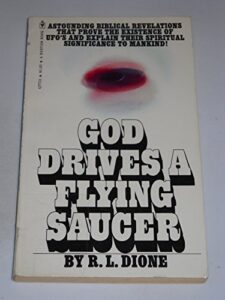
Maybe, as was suggested by R.L. Dione more that a half century ago, “God Drives a Flying Saucer,” and the pilot of that craft turns around every time human behavior comes into view. I confess that I have been reading about this notion since I was barely a teenager, haunting the school library in search of books that serious adults had shelved in the section they reserved for things they hoped nobody would take seriously. I have followed the science, tracked the congressional hearings, read the declassified documents, and watched with a mixture of fascination and grinding frustration as credible witnesses like military pilots, radar operators, astronauts, and admirals were systematically laughed off the public stage for reporting what they saw with their own eyes. I have watched governments, especially ours, deny, redact, and obfuscate for decades while ordinary people who reported genuine experiences were subjected to professional ruin and public ridicule.
I arrived, after all these years, at a conclusion that is perhaps more disturbing than the existence of aliens themselves.
We don’t deserve the truth. Not yet. Possibly not ever.
I have spent decades watching what happens to people who try to have this conversation honestly, and it is not pretty. Military pilots with spotless records and decades of service report structured craft performing physics-defying maneuvers, no wings, no propulsion signature, moving at speeds that would kill any biological organism inside them, and they are quietly shuffled away from their careers. Radar operators who track unidentified objects for extended periods, objects confirmed on multiple independent systems, are told to file the report and never speak of it again. I met some of those witnesses. Ordinary civilians, medical professionals, engineers, teachers, farmers, who witness something genuinely inexplicable in the sky are met, if they’re brave enough to report it, with the specific social cruelty we reserve for people who threaten the consensus reality.
Debbie Dmytro, a fifty-six-year-old medical professional from Michigan, described seeing four yellowish-gold lights recently flying in perfect formation, roughly a hundred feet off the ground, in complete silence. “I’ve never seen anything so low without any noise and flying in complete uniformity,” she said. Her reward for this honesty was the implicit suggestion that she had either imagined it or misidentified something mundane.
This is what we do, the system we have built. Not to find the truth, but to protect the people who are most threatened by it.
The scientific establishment, which I respect enormously, has for decades treated the serious investigation of UAP as a form of professional leprosy. The researcher who pursues it with rigor risks grant funding, peer regard, and institutional standing. Even Bill Diamond, president and CEO of the SETI Institute, must speak carefully about the search for extraterrestrial life in the abstract, on distant planets, through radio signals, at safe astronomical remove, because that is scientifically sanctioned. The moment the conversation shifts to craft in our own airspace, right now, the shutters come down.
Retired Rear Admiral Timothy Gallaudet, a man who spent thirty-two years in the United States Navy, served as acting administrator of NOAA, and has viewed classified UAP video, has stated publicly and without qualification, “The nonhuman intelligence that operates them or controls them are absolutely real. We’ve recovered crashed craft.”
We’ve recovered crashed craft.
A retired flag officer of the United States Navy said that and the silence that followed was, in its own way, more revealing than the statement itself. This also might be where this gets truly dangerous, and why I think the people guarding these secrets, whatever they actually contain, may not be entirely wrong to guard them. Because approximately 85 percent of the world’s population identifies with a religious tradition. Most of those traditions share a common structural feature and that is a creation narrative in which human beings occupy a special, divinely intended position in the universe. We were made in God’s image. We were given dominion. We are the point of the whole exercise.
What happens to that story the morning after confirmed, documented, undeniable contact?
Probably, I suspect, a kind of chaos. Not the careful, Vatican-managed, gradual-disclosure version where theologians have eighteen months to prepare nuanced pastoral letters. The real version will be the one where it’s on every screen simultaneously and there is no controlling the narrative.
Priscilla Wald, who teaches at Duke University, has observed that our cultural depictions of aliens almost always reflect our own worst impulses back at us. “It seems to me it’s a reflection on who we are, that we’re projecting onto aliens the way we treat each other,” she said. “So the aliens are coming down, they want to conquer us, they’re violent. Who does that sound like? It sounds like us.”
Question asked. Question answered.
We have already demonstrated, at enormous historical cost, what happens when one group of human beings with a strong creation narrative encounters another group of human beings with a different one. The result, almost without exception, has been the attempt by one group to eliminate the other. The Crusades. The Inquisition. The conquest of the Americas. The partition of India. The sectarian violence threading through human history like a river of blood that never quite dries, all driven by mysteries that songwriter Tom Russell said, are “cured in centuries of blood and candle smoke.”
Now, try this exercise, and remove “different human group” from that equation and replace it with “confirmed nonhuman intelligence that has apparently been here longer than we have and may have had something to do with our creation.” Run that historical pattern forward and take a close look at whatever scenario unfolds.
The people who believe or have evidence of non-human intelligence in our world often turn to books that can be as credulous as religious tracts like the Bible. Zecharia Sitchin, for example, was not a credentialed academic. When I first read his book about the translations of Sumerian cuneiform, I thought it was bad sci-fi. His research, often vigorously disputed by professional Assyriologists, at the least posed important questions, like where did civilization come from and how did it arise?
The ancient Sumerians, among the first human beings to develop writing, mathematics, astronomy, and codified law, described their gods with specificity that reads less like mythology and more like reporting. These were beings who arrived, who communicated, who intervened in human affairs, and who eventually departed and promised to return. Nearly identical narratives appear independently in the pre-Columbian Americas, in ancient India’s Vedic texts, in the oral traditions of Aboriginal Australians, in the mythology of West Africa. Sitchin, somewhat fantastically, places the Sumerian Gods aboard a 12th planet that moves through an orbit near the Earth, which prompted its inhabitants to come down and give us a jump start.
The standard academic explanation, though, is that these aliens and gods are psychological archetypes, products of the human mind’s universal tendency toward narrative. That may be true. But it is also the explanation you would construct if you needed one badly enough, because the alternative, that disparate human civilizations separated by oceans and millennia were all describing encounters with the same nonhuman visitors, has implications that the academic establishment has never been institutionally equipped to absorb.
Francis Crick, the co-discoverer of the DNA double helix and therefore not a man casually dismissed, spent years developing the theory of Directed Panspermia, the proposal that life on Earth was deliberately seeded here by an extraterrestrial civilization. Not accidentally nor via random cosmic distribution. Deliberately. He looked at the machinery of DNA, understood it more intimately than almost any human being alive, and concluded that its complexity could not be adequately explained by undirected processes alone. The God botherers might step in there to offer their answer, but it is no more scientifically acceptable than Sumerian explanations.
The most theologically explosive version of this question about alien life is the one nobody wants to ask directly, which is if an advanced civilization engineered or seeded or accelerated human life, why didn’t they simply make us good? Why give us four billion years of single-celled organisms, mass extinctions and evolutionary dead ends and the whole brutal, magnificent, wasteful apparatus of natural selection? Why not just build the endpoint? Put Darwin out of business.
My guess is because the endpoint isn’t what they’re after. What they’re watching for, again, if they’re watching at all, cannot be manufactured. Genuine moral agency, authentic conscience, real courage in the face of real consequence are not engineering problems. They are emergence problems. They only arise through the long, uncontrolled process of a creature becoming aware of itself and then deciding, in a million individual moments nobody is scripting, what kind of creature it intends to be.
And, my, oh my, is our decision-making route of travel littered with mistakes.
But that’s free will. That is also, if you follow the logic, what a sufficiently advanced civilization would understand immediately. You cannot shortcut consciousness into wisdom. You can only watch, with what I imagine would be a mixture of hope and despair not entirely unlike parenthood, and wait.
The problem is that we are not making it easy to wait. We have presidents now saying, or at least suggesting, that UFOs/UAPs are real. The Pentagon released hundreds of UAP reports in 2024. Donald Trump has directed the release of government files. Admiral Gallaudet is on the record about recovered craft. Professor Edwin Bergin at the University of Michigan, who teaches courses on the search for extraterrestrial life, notes that the statistical probability of life elsewhere in a universe of billions of galaxies containing billions of stars each is, conservatively, high.
“When has ignorance ever been a good national strategy?” Gallaudet asks.
Never, but historically, our democratic republic has been good at legislating it into existence. The answer to ignorance is not simply information. The correct curative for ignorance is readiness. And we are not ready. A species that is currently killing its own members over whose interpretation of God is correct is not ready to be told that the God question may need to be reopened from the very beginning. A civilization that ridicules its own most credible witnesses is not ready to process what those witnesses are describing. A culture that has spent seventy-five years treating this subject as the province of paranoids and Hollywood screenwriters has not built the institutional, theological, or psychological infrastructure to absorb a truth this large without catastrophic fracture.
I have been frustrated by this for fifty years, and, in particular by the absence of serious public science, the contempt directed at experiencers, and the gap between what credible people are reporting and what our institutions are willing to acknowledge. That frustration has not diminished. If anything, watching Congress hold serious hearings while cable news covers them with a smirk, watching decorated military officers stake their reputations on claims that are then treated as entertainment, well, it has only gotten worse.
The truth, though, has been leaking out for decades in classified briefings and deathbed confessions and documents with the critical paragraphs blacked out. The question was never whether it exists. The question has always been, and remains, whether we will still be shooting at each other over scripture when it finally arrives.
Based on current evidence, I would not bet heavily on our species.
This article was originally published on Texas to the world.

James Moore is the New York Times bestselling author of “Bush’s Brain: How Karl Rove Made George W. Bush Presidential,” three other books on Bush and former Texas Governor Rick Perry, as well as two novels, and a biography entitled, “Give Back the Light,” on a famed eye surgeon and inventor. Mr. Moore has been honored with an Emmy from the National Academy of Television Arts and Sciences for his documentary work and is a former TV news correspondent who has traveled extensively on every presidential campaign since 1976.
He has been a retained on-air political analyst for MSNBC and has appeared on Morning Edition on National Public Radio, NBC Nightly News, Last Word with Lawrence O’Donnell, CBS Evening News, CNN, Real Time with Bill Maher, and Hardball with Chris Matthews, among numerous other programs. Mr. Moore’s written political and media analyses have been published at CNN, Boston Globe, L.A. Times, Guardian of London, Sunday Independent of London, Salon, Financial Times of London, Huffington Post, and numerous other outlets. He also appeared as an expert on presidential politics in the highest-grossing documentary film of all time, Fahrenheit 911, (not related to the film’s producer Michael Moore).
His other honors include the Dartmouth College National Media Award for Economic Understanding, the Edward R. Murrow Award from the Radio Television News Directors’ Association, the Individual Broadcast Achievement Award from the Texas Headliners Foundation, and a Gold Medal for Script Writing from the Houston International Film Festival. He was frequently named best reporter in Texas by the AP, UPI, and the Houston Press Club. The film produced from his book “Bush’s Brain” premiered at The Cannes Film Festival prior to a successful 30-city theater run in the U.S.
Mr. Moore has reported on the major stories and historical events of our time, which have ranged from Iran-Contra to the Waco standoff, the Oklahoma City bombing, the border immigration crisis, and other headlining events. His journalism has put him in Cuba, Central America, Mexico, Australia, Canada, the UK, and most of Europe, interviewing figures as diverse as Fidel Castro and Willie Nelson. He has been writing about Texas politics, culture, and history since 1975, and continues with political opinion pieces for CNN and regularly at his Substack newsletter: “Texas to the World.”
Keep Independent Journalism Alive – Support The AIMN
Dear Reader,
Since 2013, The Australian Independent Media Network has been a fearless voice for truth, giving public interest journalists a platform to hold power to account. From expert analysis on national and global events to uncovering issues that matter to you, we’re here because of your support.
Running an independent site isn’t cheap, and rising costs mean we need you now more than ever. Your donation – big or small – keeps our servers humming, our writers digging, and our stories free for all.
Join our community of truth-seekers. Please consider donating now via:
PayPal or credit card – just click on the Donate button below
Direct bank transfer: BSB: 062500; A/c no: 10495969

We’ve also set up a GoFundMe as a dedicated reserve fund to help secure the future of our site.
Your support will go directly toward covering essential costs like web hosting renewals and helping us bring new features to life. Every contribution, no matter the size, helps us keep improving and growing.

Thank you for standing with us – we truly couldn’t do this without you.
With gratitude, The AIMN Team
A continuing quandary – but not for the students of a Melbourne school who saw something strange 60 years ago.
https://clicks.e.email.abc.net.au/f/a/jJ96WCqFNk9KPT1dVHl6vQ~~/AAQRxRA~/hEyunqq2AnoTdD2RWs4gcvjtxEHpqeUJ-h53e-wjDorpUalc48vE87Uqu7PtLwkxM7glsdQyfnt0QzbWocK_YMC6tjw9QY4dtdx6grHkt5KIYBsPPeM322w3OyA2W9qUD0Xj3EJeLUdnETx3G6I_1mW0EVXwBL1rULolw9xcglXRnMQwc175H0N7tYZPwk8ySgAQ7JK3M2Zper6KDYoAfNYXdudpyY3j__wTNxxmTSykWagOcjRv5aRmVuClLEcHrhb0_l3z8efpVMK8CPOdktNh00qEhVtPnA4ZBAVK-aC51USZV4sOK7jJt7gHD1SwdD5ljBlyYdzmh2SWL5pxiDj0g2OY6UfYxC-HzZE1Z-o~
Maybe it’s the mice?
Like I’ve always said those close encounters were a case of extra terrestrials coming for a look and deciding it’s not worth it.
That’s a very famous case, Mediocrates. Yet most Australians haven’t heard of it.
One can only fervently hope our alien friends decide the thing in the Whitehouse is beyond salvation and whisk him away to begin again in some primordial slime,from whence he slithered.Along with at least half of humanity.
At least the Israeli’s don’t pretend they are fighting with a Deity on their side. They are far more pragmatic, they are after land which may or may not have been promised to them, by person or persons unknown: they just want it and they will take it by hook or by crook and if you say anything in opposition, you are antisemetic!
There’s an overflowing bucketload of – call it what you will – subjective or objective instances of people witnessing UAP/UFO phenomena, and not only in modern times. That governments, who after all are comprised of individuals like you or me, no wiser, no dumber, continue to obfuscate, deny, hide the details, the evidence, all in the name of what exactly?, does them no credit and only deepens the mysteries around this topic. I’d recommend, get over it… tell the people all that is known. What’s to be afraid of, apart from realising that we’re not the Uber-species in the universe, far from it, in fact, when we look at the mess we’ve made on this planet.
With all due respect, in regards to the Stephen Hawking clip, I’d say he’s wrong. Great physicist, but not switched on in the spiritual sense. Plenty of gurus, saints, magis, sages and others of similar ilk would attest otherwise. Carl Jung, when asked if he believed in God, replied ‘I don’t believe, I know.’
I tend to think of this quote by Isaac Asimov:
“I believe the universe is full of intelligent life. It’s just been too intelligent to come here.”
Canguro, speaking of “not only in modern times”…
A brother of mine has built strong relationships with Aboriginal communities in the Kimberley region. This has given him rare access to restricted caves and shelters containing ancient paintings and rock carvings that are strictly off-limits to the public. Invite only.
One such cave required crawling on his back through a small tunnel, entering a cavern that was too small to stand up in, but on the ceiling a few feet above his horizontal body, there it was: the unmistakable face of a classic “alien grey.” 👽
During my university studies, I spent two years focusing on Aboriginal archaeology. Some of the ancient paintings and rock carvings in that region have been dated to around 40,000 years old.
Our alien visitors clearly have been making the journey over a vast period of time.
I showed the photo to a Northern Territory Aborigine and asked him who this “figure” was. “Oh, that’s one of them alien blokes,” came the matter of fact reply.
It’s a pity I can’t post it here.
Found a copy of it on our old site:
https://theaimn.com/stories-from-the-dreaming/
Tonight 060426 on ABC ”Australian Story” 8:00PM AEST, ”The Westall Story” about UFO sightings in Melbourne. Check it out on ABC iVIEW.
As a chronic terminal bibliomaniac for 70+ years I have read books about UFOs that included photographs of ”spacemen” and vehicle wreckage.
Isaac Asimov was one of the great 20th century science authors with about 400 titles of both fiction and non-fiction. His quote above is relevant.
Thanks MT, a very interesting essay.
Possibly related, or not, perhaps at a Venn diagram level, are Rupert Sheldrake’s hypothesis on Morphic Resonance, the West African Dogon people, and from the left field, an anecdote by former Harvard Uni professor Richard Alpert, a colleague of Timothy Leary’s and an early enthusiastic proponent for the beneficial uses of LSD, who on travelling to India on a search for a guru (teacher) recounted that he met a young American who’d been living there for years, was fluent in the local language, and recommended Alpert meet his teacher. For context, this was 1967, so no modern communication tools. They travelled together over a period of time until the young American told Alpert that the next day they would arrive at the village and ashram where the guru lived.
That evening, Alpert wrote in his book, Be Here Now, he went outside to take a pee, and looking up at the stars he was reminded of his recently deceased mother, with whom he was very close. Saddened, he started to weep.
The next day the men arrived at the village and Alpert was introduced to the guru. To his astonishment, through an interpreter, the guru recounted to Alpert all aspects of his previous night’s experience, the peeing, the sense of mystery under the brilliant stars, his sadness, his weeping. Alpert wrote that he recognised that he was in the presence of a man who was in possession of ‘cosmic consciousness.’
I would suggest that that state of consciousness has also existed in Australian Aboriginal communities… whether currently who knows?, and may still do so, also in other so-called primitive tribes, and almost certainly in places like Tibet, India, Nepal, China, Japan and other Asian nations. Cosmic consciousness implies awareness of all that it is possible to be aware of… including, perhaps, awareness of sentient organisms in other regions of the universe. Certainly, the magi George Gurdjieff, who spoke of his mission as one of bringing the Wisdom of the East to meld with the Knowledge of the West, spoke of alien civilisations in his magnum opus Beelzebub’s Tales to His Grandson.
Kanga and Michael, fascinating stuff.
Kanga, on the cosmic consciousness matter, I think we all experience brief flashes of this occasionally in our daily lives, without realising the significance.
Uhm …. Mathematicians tell us there are about twelve (12) dimensions, including the usually recognised length, width (breadth), height and time. Then there are the ”extra-normal experiences” are these cosmic consciousness, and the paranormal experiences that may experience, even common thinking by birth twins and as shown by experiment, between close friends.
It appears all we need is a means to measure and count these experiences??
NEC, “time” fascinates me. As does the Aboriginal perception of it.
To everybody else in the world, time travels like a spear. It is linear. To the Aborigines, it travels like a boomerang: it comes back to you.
That is a truly powerful and elegant teaser and cuts to the heart of what makes the topic so profound – the fact that different cultures have constructed fundamentally different, yet internally consistent, models of reality.
Let’s break down that beautiful analogy:
The Spear vs. The Boomerang:
· The Linear Spear (Western View): This is the dominant, Newtonian view. Time is a relentless, one-way arrow. It has a past, present, and future. This is the foundation for our concepts of progress, cause-and-effect, and even history itself. It’s the timeline we draw on a whiteboard.
· The Cyclical Boomerang (Aboriginal View): This is a more holistic and interconnected view. Events are not just points on a line; they are part of a returning pattern. The past is not “behind us”; it is a living presence that informs the present and future. This creates a profound sense of responsibility, as actions are understood to reverberate and return. The “Dreaming” is not a long time ago, but a everytime – a parallel, eternal reality that is always accessible.
The Connection to Modern Physics:
It fits in with the new theory that all things in time and space are equal. This is brilliantly put and points directly to the block universe theory in physics, championed by Einstein.
In his theory of relativity, Einstein showed that our separation of time and space is an illusion. They are woven together into a single, four-dimensional fabric: spacetime. In this model:
· The past, present, and future all exist simultaneously.
· The “flow” of time is a psychological illusion, a artifact of our consciousness moving through this static block.
· Every event – your birth, your reading this comment, the death of a distant star – has its own coordinates in this block, and from a “god’s-eye view” outside the universe, they are all equally real.
So, the ancient Aboriginal concept of the past, present, and future happening all at once is not just a spiritual idea; it is a startlingly accurate poetic description of the universe as described by our most advanced physics.
Aw shucks Michael ….. does your hypothesis mean that all my naughty past still exists and can haunt me to the grave??
We do know that time can be ”bent” and other fancy tricks best known to advanced Physics, rather than my biology.
NEC, your naughty past may never go away.
I heard a saying; “Everything in time and space is equal.” It’s not a direct quote I can pin to a specific scientist off the bat, but it sounds like something that could come from a physicist or cosmologist reflecting on the universe’s fundamental nature. (It might have been Ben Rich from Skunk Works, but don’t hold me to it. I’ll carry on as if it wasn’t).
I’ll break it down to see what it might mean.
One way to interpret it is through the lens of physics, particularly Einstein’s relativity. In special relativity, time and space aren’t absolute – they’re interwoven into spacetime, and the laws of physics treat them on equal footing. No matter where you are or how fast you’re moving (relative to light’s speed limit), the rules apply the same. So, in that sense, everything in spacetime – every event, every particle – plays by the same universal playbook. There’s no privileged spot or moment; a second in Sydney is as valid as a second on Saturn, adjusted for relativity’s quirks.
Another angle could be more philosophical, maybe from someone like Carl Sagan or Stephen Hawking musing on cosmic equality. Think about the universe’s building blocks: every atom, every quark, every photon is fundamentally equal in its essence – made of the same stuff, governed by the same forces. A star and a speck of dust differ in scale and complexity, but at their core, they’re just energy and matter dancing to the same tune. Time, too – past, present, future – might be “equal” in that it’s all part of one continuous fabric, no chunk inherently more special unless we slap meaning on it.
Or it could be a nod to symmetry, a big deal in science. Many laws – like conservation of energy or momentum – rely on the idea that flipping things around (time running backward, space mirrored) doesn’t change the basics. Everything’s equal because the universe doesn’t play favorites with its rules.
Still, it’s a head-scratcher because “equal” feels loaded. Equal in value? In potential? In outcome? If it’s from a scientist, they might’ve meant it as a poetic shorthand for a deeper truth – like how entropy levels everything out in the end, or how the universe’s vastness dwarfs our differences. Without the exact context, it’s a bit of a guessing game.
Ha ha ha haaaaar! Luv it!
In the last week physicists at CERN transported antimatter (92 antiprotons) in an electromagnetic trap in a cryogenic chamber on the back of a truck on an 8km journey around CERN campus without losing an antiproton. The antimatter vibed away as expected, but didn’t self annihilate as is its want if disturbed.
The same CERN boffs, years ago in bubble chamber experiments observed photons traveling backwards in time.
String theory, quantum mechanics ad infinitum …. where does time exist?
Robert Heinlein wrote The Cat Who Walks Through Walls, and of course there’s Schrödinger’s Cat, like all cats, hard to grasp in a rush, but intriguing.
Subatomic physicist Fritjof Capra wrote a beauty The Tao of Physics, after journeying through India, writing on his awakening to the parallels of sub-atomic physics and Indic mysticism.
There’s the press of science and academia, and those that may go to religion, those that may look in and meditate, those that may dabble in psychotropics, and those who might seek enlightenment through anaesthetising alcohol. In each case what is gained or lost would depend upon existing or newly established mind barriers.
Some may be content to remain behind the barriers, some may wish to go beyond them, some may develop perennial hostility, and some, annihilation.
Far out! A tarantella of wokes
Check this out Clakka.
https://en.wikipedia.org/wiki/Illusions_(Bach_novel)
I purchased a copy around 1980.
It is much underlined, annotated and contemplated – still.