Australian Koala Foundation Media Release
The Australian Koala Foundation (AKF) is proud to recognise World Environmental Education Day, a global event that highlights the importance of education in protecting and restoring our natural environment.
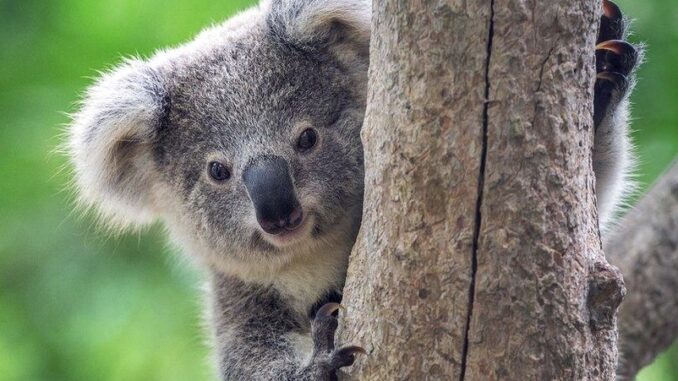
For the AKF, environmental education is at the heart of Koala conservation. With Koalas listed as endangered across much of eastern Australia, it has never been more vital to inspire young people, communities, and decision-makers to understand the threats facing our native wildlife and the habitats they depend on.
Central to this is the AKF’s advocacy for the Koala Protection Act (KPA). Unlike existing environmental legislation, such as the flawed EPBC Act – that has proven ineffective at protecting habitat, the KPA is a simple, yet powerful piece of proposed law designed to protect Koala habitat before it is destroyed. It places responsibility on decision-makers to prove that developments will not damage Koala populations or the ecosystems they rely on. “You have to ask why our Government still has faith in such inadequate protection of habitat for the most iconic species on the plant,” said Deborah Tabart OAM, Chair of the AKF.
The AKF believes education is key to building understanding and support for the KPA. By informing communities about how habitat destruction directly affects Koalas and millions of other species, many of whom are endangered – and how legislation can prevent further loss – the AKF hopes to empower people to call for stronger protection measures at both local and national levels.
Through programs such as Plant-A-Tree, Adopt-A-Koala, and the Koala Army, the AKF continues to engage schools, communities, and supporters worldwide, ensuring Koalas remain a flagship species for environmental education and action. Along with Save The Koala Month, held each September, and Save The Koala Day, the AKF works to raise awareness and educate people worldwide. The AKF also works year-round to advocate for stronger protection of Koalas and their habitat, ensuring that conservation and education remain at the forefront of public attention.
To honour World Environmental Education Day, the AKF calls on Australians to reflect on the role of education in protecting not only Koalas but also the ecosystems we all share.
Together, with knowledge and action, we can make a difference.
Get involved today: visit our website to see how you can help, hold a fundraiser or bake sale, make this topic the focus of a school term or early education project, or join the Koala Army and stand with us in calling for the Koala Protection Act. Every action counts – the future of Koalas and their habitat depends on it.
To find out more about AKF visit savethekoala.com
To download educational resources, visit Koalas For Kids
Keep Independent Journalism Alive – Support The AIMN
Dear Reader,
Since 2013, The Australian Independent Media Network has been a fearless voice for truth, giving public interest journalists a platform to hold power to account. From expert analysis on national and global events to uncovering issues that matter to you, we’re here because of your support.
Running an independent site isn’t cheap, and rising costs mean we need you now more than ever. Your donation – big or small – keeps our servers humming, our writers digging, and our stories free for all.
Join our community of truth-seekers. Donate via PayPal or credit card via the button below, or bank transfer [BSB: 062500; A/c no: 10495969] and help us keep shining a light.
With gratitude, The AIMN Team

A wonderful article however has no truck with the likes of Albanese or Watts, who have done and continue to undermine our Natural Environment.
I’ve watched the devastation rendered by Corporations and Government for the past 30 years and have never understood why nobody ever made the case for funding the environment as a first line of defence for forestry, water and river conservation, mangroves, broad-acre land management which all contribute to healthy agriculture, healthy civil society and regulating of ocean and weather systems.
It’s not hard to choose better public education, better public transport across the network and regional areas, not subjective as politics of the day has seen, better health systems that support young, middle and mature aged cohorts who all suffer from poor health literacy, and certainly better education systems that teach history, political sciences and financial systems.
You can’t eat money, and you can’t eat dirt, however apparently you can eat propaganda from a two-party system that will happily gaslight you along the way.
World Environmental Education Day matters for more than koalas, notwithstanding the very real peril they face in terms of continuity as a beloved and iconic Australian species.
Like heather’s comments above, I too have witnessed the incessant degradation of this continent’s environment over the passage of the last fifty years; the remorseless clearing of forests in search of extra profit for landholders, the over-extraction of water from river systems which has the inevitable consequence of ecosystem failure which in turn leads to added stress for all living creatures that inhabit these environments. Birds, fish, mammals… all under extreme habitat stress due to decline & degradation.
Australia bears the sorry distinction of being the planet’s Number One hotspot for extinction of species. It’s also a fact that in less than three hundred years we’ve effectively fu^ked this country’s landscapes; soil erosion, salinisation, destruction of river systems, weed and feral pest infestations that are seemingly beyond capacity to control let alone eradicate, not to overlook the consequences of so-called modern agriculture that has poured millions upon millions of litres of herbicides, pesticides, fungicides and artificial soil-destroying fertilizers into the environment without any serious consideration of the long-term impact of these products; this is, naturally, referred to as responsible economic and social managment in pursuit of product and income.
What a cost! What a loss, truly considered! One has only to travel into the hinterlands away from the cities to witness the sad state of the environment… massive eucalypt dieback across broad landscapes as a function of loss of the fungal mycorrhiza and their critical symbiotic role in relationship to these majestic trees.
Irredeemable damage, would be an appropriate conclusion.