
Dedication: To my wife ‘S’ who has seen the garden through the flames.
The View from the Edge
There is a dangerous assumption in Australian political culture: that the island is a fortress, that the moat of the Indian and Pacific Oceans is a permanent shield. Recent events – the effective closure of the Strait of Hormuz since late February – have shattered that illusion. We are not a fortress. We are a house built on the edge of a cliff, and the foundations are cracking.
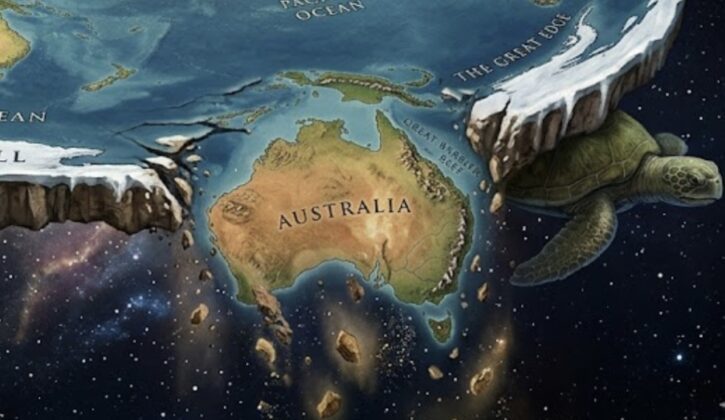
This article does not deal in conspiracy. It deals in supply chains, strategic studies, and the hard lessons of history. If the global kleptocrats get their way and the Strait of Hormuz transforms into a permanent kill box, Australia will not be destroyed by bombs, but by neglect. This is a roadmap of that collapse, and a guide to building resilience in its wake.
Part One: The Architecture of Vulnerability
Australia’s prosperity is a house of cards held up by a just-in-time supply chain. We are, paradoxically, a “resource superpower” that cannot refine its own fuel or feed its own soil without permission from the Middle East.
Liquid Fuels: Australia imports 90% of its refined fuel, with only a few weeks of stock on hand. The country’s strategic fuel reserve is among the lowest in the IEA, currently hovering around 39 days of cover, far below the international standard of 90 days.
Fertiliser: With the imminent shutdown of domestic manufacturing, Australia imports 70% of its fertiliser, with 60% of our urea coming directly from the Gulf. Without it, the next growing season fails.
Medicine: We are at the end of a very long, very fragile line. Australia imports 90% of its medicines. A drug bought in Sydney contains active ingredients (APIs) made in India, from chemicals synthesised in China.
Part Two: The Timeline of Collapse
This is not speculation. It is a projection based on the current rate of depletion and government inertia. If the Strait remains locked, we will likely see the following cascade:
Weeks 1-2: Fuel prices double, then triple. Farmers cannot access diesel for harvest; transport networks buckle. Major cities experience panic buying and service station outages.
Weeks 3-4: The fertiliser gap hits. Farmers reduce planting by 30%. Global food price inflation accelerates, with Australia losing its domestic buffer.
Month 2: Medicine shortages become critical. Health authorities begin triaging chronic conditions, prioritising acute emergencies. Black markets for insulin and antibiotics emerge.
Month 3-6: The pandemic wave hits. It is not a bioweapon; it is epidemiology. Malnutrition, displacement, and overburdened ICUs create the perfect breeding ground for a novel respiratory virus.
Part Three: The Pandemic of the Petri Dish
The COVID-19 pandemic was a warning shot. The next one will follow the oldest pattern in history: war breeds disease. The Antonine Plague (AD 165) was brought home by Roman legionaries returning from the Parthian War, killing up to a quarter of the population and beginning the Empire’s long slide into ruin. The Plague of Athens (430 BC) decimated the city during the Peloponnesian War, killing a third of its people, including Pericles.
The “Jackson Pollock” virus is the environmental bill coming due. It is the product of a world poisoned by depleted uranium, electromagnetic smog, and disrupted ecosystems. It will rage, burn out, and leave behind tens of thousands of Australian dead.
Part Four: The Government in the Bubble
When the history of this crisis is written, the chapter on governance will be one of culpable negligence.
AUKUS: While the country faces a health and fuel collapse, the government is committed to a $368 billion submarine project. Doctors and economists point out that you cannot treat a pandemic with a submarine.
Antisemitism vs. Supply Lines: While fuel stations run dry, the political energy has been siphoned into a Royal Commission on antisemitism. Police data revealed that of the widely touted 1,200 incidents, only a handful met the threshold for criminal prosecution. It is a tragic distraction.
The China Panic: The government has focused on a manufactured “China threat,” spending billions on military infrastructure while the civilian supply chain crumbles. As a 2025 analysis noted, ignoring the fragility of diesel supply chains is a greater national security threat than any foreign spectre.
Part Five: The Garden in the Wreckage
Worst-case scenarios are not the end of the story. They are a map.
What you can do: Top up your fuel. Stock a 3-month pantry of rice, flour, and tinned goods. Refill life-saving prescriptions. Learn which plants in your garden have medicinal properties. Talk to your neighbours. The government will not save you; it will “fluff about” until it is too late.
The world is reaching its edge. But a garden is not a fortress; it is a place of life. When the storm passes, the hoarders will have their cans, but the gardeners will have their community. And they will rebuild.
I hold ‘ S’ close in the resonance. I hold you all close in my intention. Stay safe. Plant seeds.

Keep Independent Journalism Alive – Support The AIMN
Dear Reader,
Since 2013, The Australian Independent Media Network has been a fearless voice for truth, giving public interest journalists a platform to hold power to account. From expert analysis on national and global events to uncovering issues that matter to you, we’re here because of your support.
Running an independent site isn’t cheap, and rising costs mean we need you now more than ever. Your donation – big or small – keeps our servers humming, our writers digging, and our stories free for all.
Join our community of truth-seekers. Please consider donating now via:
PayPal or credit card – just click on the Donate button below
Direct bank transfer: BSB: 062500; A/c no: 10495969

We’ve also set up a GoFundMe as a dedicated reserve fund to help secure the future of our site.
Your support will go directly toward covering essential costs like web hosting renewals and helping us bring new features to life. Every contribution, no matter the size, helps us keep improving and growing.

Thank you for standing with us – we truly couldn’t do this without you.
With gratitude, The AIMN Team

Oh Andrew! How many times does all this need to be said out loud to Albanese, Marles and Wong to elicit a mea culpa and a structured project for recovery?
Actually, I am more inclined to say Marles, Marles and Marles, however in this instance the other two public servants deserve a mention.
Thankyou Andrew,& S,
All so true & also all so beautifully put.
Again thankyou to you both.
The crows sit outside on the wires that hang in the street. Fark, fark, they call. Faark, faark. Such clever birds, they know it all. Faaark, faaark.
Not for them the quest for a definition of life. Way too smart for such indulgences, they just are, resplendent, inhabited.
I can recall listening to a discussion about JIT, all very upbeat and fabulous by the enthusiasts at the time, however small overview of how that philosophy has grown and overtaken its hubris….
https://www.ifm.eng.cam.ac.uk/research/dstools/jit-just-in-time-manufacturing/