Google has become something of a fixture in digital infrastructure in the Pacific. In late 2023, Canberra announced a joint project with the US, Google and Vocus, an Australian digital infrastructure firm, to deliver the A$80 million South Pacific Connect initiative. The object: to link Fiji and French Polynesia to Australia and North America, with the hopeful placement of landing stations in other South Pacific countries.
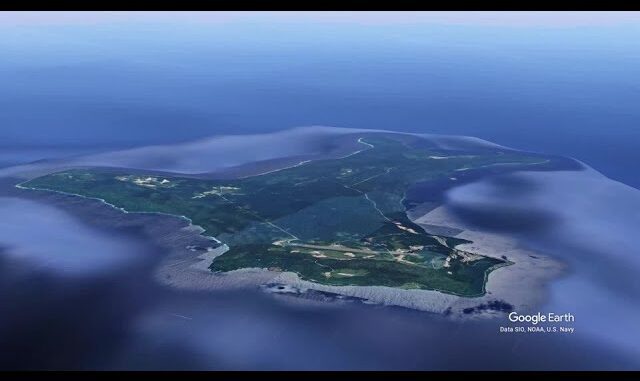
Interest in Google’s relationship with the Australian government was also piqued this month by promised activity on Christmas Island, located 350 kilometres (220 miles) south of Indonesia. The Indian Ocean outpost of exquisite environmental beauty has often been sinister in its secrecy. Unwanted refugees and asylum seekers have periodically found themselves as detainees on the island, victims of Australia’s sadistic approach to undocumented naval arrivals. In August 2016, the Asylum Seeker Resource Centre claimed that the Christmas Island Detention Centre had all the brutal features of “a high security military camp where control is based on fear and punishment and the extensive internal use of extrajudicial punishment by force and isolation is evident.”
The goal of the Silicon Valley behemoth lies elsewhere. Occasioned by the signing of a cloud deal with Australia’s Department of Defence earlier in July, the company promises to build what Reuters describes as “a large artificial intelligence data centre” on the island. Advanced talks are being held on leasing land near the island’s airport that will be used for the site. This will include an arrangement with a local mining company to deal with any necessary energy needs for the 7-megawatt facility, which will be powered on diesel and renewable energy.
The scale of the project, let alone its broader significance, is not something the company or government wonks wish others to know about. “We are not constructing ‘a large artificial intelligence data centre’ on Christmas Island,” came the sharp response from a Google spokesperson to Data Center Dynamics. “This is a continuation of our Australia Connect work to deliver subsea cable infrastructure, and we look forward to sharing more soon.” Planning documents further show the company’s vision for an “additional future cable system” that will connect Christmas Island to Asia.
The Australian Department of Infrastructure has confirmed the Google project, which includes plans to link the island to Darwin using the services of US-based contractor SubCom. The bureaucrats were also quick to gloss over what disruptions might arise to the 1,600 residents heavily reliant on diesel to patch up inadequate renewable sources. “The department is in discussions with Google to ensure energy requirements for the proposed project are met without impacting supply to local residents and businesses.” A spokesperson also stated that, “All environmental and other planning requirements will need to be met for the project to succeed.”
The same cautionary note has not been struck by enthusiasts who see the military potential of the island outpost. Former US Navy strategist Bryan Clark, fresh from being involved in a tabletop war game involving personnel from the US, Japanese and Australian militaries, was keen to inflate the importance of the data centre. That importance, he stresses, lies in the field of conflict. “The data centre is partly to allow you to do the kinds of AI-enabled command and control that you need to do in the future, especially if you rely on uncrewed systems for surveillance missions and targeting missions and even engagements.”
He considers the use of subsea cables more reliable in frustrating any mischief that might arise from China (who else?), notably in attempts to jam Starlink or any satellite communications. Such cables also provided more bandwidth for communication. “If you’ve got a data centre on Christmas, you can do a lot of that through cloud infrastructure.” Again, American power uses Australian territory as a conduit to maintain the imperium.
Google’s ties with the military tendrils of several nations continues the ongoing penetration of Big Tech companies into the industrial complex. The circle between military Research and Development pioneered by government agencies and their partnering with private contractors is complete. Indeed, digital-military-industrial complexes are now battling in steady rivalry (the two most prominent being China and the United States). “This is contributing to the blurring of state-corporation boundaries even more than what was observed during the second half of the twentieth century with the rise of transnational corporations,” write Andrea Coveri, Claudia Cozza and Dario Guarsacio in Intereconomics.
This blurring has served to diminish company accountability and government independence, however well-dressed the issue of planning approvals is. Christmas Island residents will be left to the mercies of unimaginative officials easily seduced by the promise of investment and returns. “There is support for it,” says a convinced Steve Pereira, Christmas Island Shire President, “providing this data centre actually does put back into the community with infrastructure, employment and adding economic value to the island.” As for the military dimension? “We are a strategic asset for defence.” What a comfort for the local citizenry.
Keep Independent Journalism Alive – Support The AIMN
Dear Reader,
Since 2013, The Australian Independent Media Network has been a fearless voice for truth, giving public interest journalists a platform to hold power to account. From expert analysis on national and global events to uncovering issues that matter to you, we’re here because of your support.
Running an independent site isn’t cheap, and rising costs mean we need you now more than ever. Your donation – big or small – keeps our servers humming, our writers digging, and our stories free for all.
Join our community of truth-seekers. Donate via PayPal or credit card via the button below, or bank transfer [BSB: 062500; A/c no: 10495969] and help us keep shining a light.
With gratitude, The AIMN Team


Clearly there are security issues in any proposed development of defence-related materiel and virtual infrastructure on the island. There’s more afoot to this than meets the unvetted eye. Christmas Island is isolated and a sitting duck for a missile strike (as are NW Cape, Pine Gap, Tindall airbase and more) if an adversary wished to neutralise Australian and allied defence infrastructure (including virtual infrastructure) in the event of an actual conflict
You wouldn’t want to be looking for reds under the beds on Christmas Island, you might get nipped by one of their claws.
Sorry, couldn’t help myself. It could’ve been worse, I trying to weave into it ‘craw not craw’ – I’m a Get Smart fan.
Thanks for the heads up Binoy.
There is also militarization of the Cocos (Keeling) Islands.
“The next level of enhanced US-Australia force posture engagement in northern Australia must now focus on northwest Western Australia and the Cocos (Keeling) Islands”
The Australian government is claiming this is part of a defence strategy, to take the defence of Australia further from Australian mainland shores.
It raises the question is it more an offence strategy aimed at China? and how will the locals be affected, will this become another Diego Garcia? where the locals were dispossessed and displaced.
https://www.ussc.edu.au/posturing-the-adf-to-maintain-an-indian-ocean-strategic-balance