By Chen Ziqi
Every time the Chinese New Year approaches, I find myself paying closer attention to the animal of the year. Not just the symbolism, but the stories behind it, where those meanings came from, and why they still resonate today.
As February ushers in the Year of the Horse, that curiosity feels especially alive.
While the horse holds a special place in Chinese tradition, symbolizing vitality and progress, its meaning extends far beyond national borders. From ancient civilizations to modern societies, the horse has emerged as one of humanity’s most enduring global symbols, shaped by its vital role in transportation, warfare, culture, and social development.
Even today, in a world powered by engines and algorithms, the bond between humans and horses continues to evolve.
Although modern societies no longer rely on horses for survival, the human-horse connection remains highly visible in contemporary life. Across Europe, Latin America, the Middle East, and many parts of Africa and Asia, equestrian culture continues to thrive, encompassing elite sport and recreational riding. Together, these practices reflect enduring ideals of elegance, discipline, courage, and harmony between human and animal.
Horses also play a key role in shaping tourism and local identity. In China, ethnic communities in Xinjiang and Xizang (Tibet) have preserved strong traditions of horsemanship, where riding and racing remain integral to cultural life. When I spoke to locals while researching this story, many described horses not as tools, but as companions passed down through generations.
The Ili Horse Culture and Tourism Festival in Xinjiang offers a vivid example.

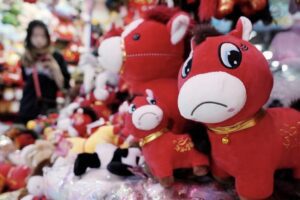
Much like British “Sad Keanu” meme or the unexpectedly popular plush toys Jellycat characters in Europe and North America, China’s “Cry-Cry Horse” reflects how animals illustrates how animals are reimagined in pop culture as emotional shorthand.
Beyond sport and culture, horses are now playing a surprising role in people’s well-being. Equine-assisted therapy allows individuals with mental health challenges, post-traumatic stress, or developmental disabilities to connect with these gentle animals, emphasizing trust, interaction, and sensory experience.
Research in China has explored how riding horses can benefit children with autism. The horse’s gentle, rhythmic gait creates movement patterns that help improve balance, coordination, and hand-eye coordination. More importantly, with professional guidance, children often display greater focus and emotional expression while riding, revealing the subtle resonance between humans and horses.
China’s exploration of equine-assisted therapy mirrors programs in countries such as Germany, the United States, and Australia, where therapeutic riding has been used for decades to support veterans with PTSD and children with developmental challenges. Across cultures, the horse’s calming presence consistently proves to be a powerful therapeutic partner.
(If you find this interesting, tune in to the latest mini-series of our podcast program “Footprints” where we tell horse related stories that are visceral and heart-tugging. From a transformative horse-therapy project in Beijing helping children find emotional healing, to the rugged life of a wild horse conservationist dedicated to breeding programs that span the globe, these shows will be worthy of you time.)
This deep connection between humans and horses has translated into substantial economic value. According to the Equine Business Association, the global equine industry, including breeding, racing, equestrian sports, equipment, and tourism, generates an estimated US$300 billion annually and supports millions of jobs worldwide. Europe accounts for roughly US$133 billion of this impact, while the United States contributes about US$102 billion, highlighting the horse’s ongoing importance to modern economies.
China’s growing equestrian economy parallels long-established horse industries in Europe and the United States. What distinguishes China is how quickly traditional horsemanship is being integrated into modern tourism and cultural industries.
Horses have become a shared cultural icon because of their pivotal role in social progress. Archaeological evidence indicates that horses were first domesticated around 3500–3000 BCE at the Botai culture sites in northern Kazakhstan, where residues of horse milk on ceramic shards suggest that these animals were carefully managed for food and sustenance.
Over time, horses became far more than a source of nutrition. They were vital partners in riding, farming, long-distance travel and trade. They expanded human mobility – and with it, communication, commerce, and cultural exchange. In many societies, horses also came to signify wealth, prestige, and social status, with prized breeds or ceremonial horses marking the power and rank of their owners.
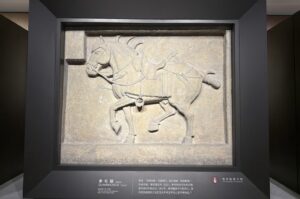
Throughout history, horses were instrumental in warfare. On the battlefield horses were not merely mounts but companions whose lives were closely tied to those of their riders.
In the Romance of the Three Kingdoms, a 14th-century historical novel, during the Battle of Wancheng in 197 AD, warlord Cao Cao’s steed, Jue Ying, carried him through enemy lines, pressing on even after being wounded by arrows. Across Europe, a Spanish epic recounts how the knight El Cid was carried safely through perilous battles by his faithful horse Babieca. These stories illustrate how horses came to symbolize loyalty, courage, and the deep affinity between humans and animals.
Horses carried spiritual meanings as well. From China’s Qin Dynasty (221 BCE), people honored horse deities or spirits each spring to pray for the protection of their horses, as well as fertility and a good harvest. In many other societies, horses symbolized a bridge to the spiritual world, carrying prayers or blessings across realms. In ancient India, for example, the Ashvamedha, or royal horse sacrifice, was one of the most important rituals to affirm kingship, prosperity, and fertility.
Across deserts, rivers, and mountains, horses have carried humanity’s labor, imagination, and aspirations. From festivals and rituals to therapy sessions and popular culture, they have become a shared cultural thread that transcends borders.
Just as horses once connected distant peoples and civilizations, humans, too, can choose to be companions rather than competitors – moving forward together toward a shared future.
About the author: Chen Ziqi is a reporter from CGTN Radio, China
Keep Independent Journalism Alive – Support The AIMN
Dear Reader,
Since 2013, The Australian Independent Media Network has been a fearless voice for truth, giving public interest journalists a platform to hold power to account. From expert analysis on national and global events to uncovering issues that matter to you, we’re here because of your support.
Running an independent site isn’t cheap, and rising costs mean we need you now more than ever. Your donation – big or small – keeps our servers humming, our writers digging, and our stories free for all.
Join our community of truth-seekers. Donate via PayPal or credit card via the button below, or bank transfer [BSB: 062500; A/c no: 10495969] and help us keep shining a light.
With gratitude, The AIMN Team

“Just as horses once connected distant peoples and civilizations, humans, too, can choose to be companions rather than competitors – moving forward together toward a shared future“… a poignant observation…
Excavations of historical tomb sites in China often revealed the skeletal remains of horses and carriages that had been buried alongside the dignitary; such sacrifices of these animals believed to be as a way of assisting the dead nobleman on his passage to heaven. In Xian, the royal tombs also furnished evidence of multiple remains of women who were entombed within the underground burial chambers… no doubt dying in a manner incomprehensible to modern thought; in darkness, starving, terrified (given the contemporaneous beliefs about ghosts and the afterlife)… extraordinary to reflect on the Chinese vision of the afterlife and its realities.