Part 13: Global Health & Diplomacy
When America sneezes, the world often catches cold. That cliché is doubly true in global health. For decades, the U.S. has been the backbone of vaccine funding, logistics, and diplomacy. Now, with its health secretary promoting the myth that vaccines cause autism, the ripple effects extend far beyond American borders.
The WHO in the crosshairs
The World Health Organization has long warned that vaccine hesitancy is one of the top ten threats to global health. Until recently, the U.S. was among its strongest allies in combating it, both as a funder and as a political backstop. But when Washington’s own health leadership begins questioning vaccines, WHO’s credibility is caught in the crossfire. Mixed messages ripple through international meetings. Countries already sceptical of multilateralism point to U.S. policy as cover for their own inaction.
Fragile systems, heavier burdens
The greatest harm is borne by low- and middle-income countries. Many of them rely on American support through programs like PEPFAR, Gavi, and COVAX. If U.S. contributions shrink or stall, supply chains weaken, leaving fragile health systems exposed. Anti-vaccine rhetoric, amplified online, does not stop at the U.S. border. It migrates into communities where health services are already thin and misinformation spreads faster than fact. The result is predictable: measles and polio outbreaks in regions that had celebrated hard-won victories.
Allies step in, but not enough
Allies like the EU, the UK, Canada, and Australia are already signalling they will step up. But fractured coalitions rarely match the coherence of a unified American push. Without U.S. coordination, gaps emerge – different standards, competing priorities, slower responses. And while scientists abroad still value their American colleagues, they increasingly view them as politically constrained, unable to speak freely or secure reliable funding. Trust erodes.
Disinformation as a weapon
Authoritarian states are quick to exploit the vacuum. Russia and China have both used vaccine disinformation as a geopolitical tool before, and they are doing it again. Russian-linked accounts amplify claims about vaccine dangers in English, French, and Spanish. Chinese suppliers frame their own vaccine platforms as “safer alternatives.” What begins as a domestic falsehood in Washington becomes an asset in global influence campaigns.
The slow-motion brain drain abroad
International collaborations, once anchored by the NIH and U.S. universities, are drifting. Major research programs are being reoriented toward Europe and Asia. This migration isn’t just about funding – it’s about trust. Partners no longer see the U.S. as a reliable steward of vaccine science. For the first time in decades, America is losing its role as agenda-setter in global immunisation.
Human costs
Behind the geopolitics are human lives. When vaccination campaigns falter, it is children in fragile states who pay the price. Infant and child mortality climb. Sustainable Development Goals recede into the distance. Decades of progress can be undone in a single generation.
The lesson
A myth may be born in one country, but its consequences do not respect borders. When the United States undermines its own vaccine policy, it destabilises global health systems, emboldens authoritarian disinformation, and leaves the world’s most vulnerable children at risk.
Next: Part 14 – Recommendations.
We’ll draw together the evidence and propose clear steps: restoring U.S. coverage, reforming compensation programs, investing in real autism research, supporting autistic people with dignity, and re-establishing global leadership.
Part 14: Recommendations
After tracing the history, evidence, and consequences of the vaccine–autism myth, the question becomes: what can be done? The answer is not a single fix but a set of coordinated actions across public health, science, law, media, autism policy, and global diplomacy. Each reinforces the others. Together they represent a roadmap for moving beyond myths and rebuilding trust.
Public health: restoring trust on the ground
The first priority is to close the coverage gaps that let diseases resurge. That means restoring transparent dashboards that show vaccination rates at sub-county levels, so communities can see where they stand. Outreach has to go where people are: mobile clinics, weekend hours, partnerships with schools and churches. Outbreak response teams should be fully funded and ready to surge into undervaccinated clusters. Visibility and access build confidence—and prevent outbreaks before they start.
Science & institutions: protecting innovation
The U.S. cannot afford to hollow out its own biomedical engine. Cuts to mRNA programs must be reversed, not only to protect pandemic readiness but to advance cancer and rare-disease research. Scientific agencies need insulation from political interference: independent ombuds offices, reinstated advisory committees like ACIP and VRBPAC, and explicit protections for scientists against censorship. Without these steps, the brain drain will accelerate and America will lose a generation of innovation.
Law & liability: strengthening safety nets
The vaccine compensation system is a strength, not a weakness. But it needs updating. VICP claims must be streamlined to avoid families waiting years. The scope of covered vaccines should expand as new immunisations enter the schedule. The CICP, which handled COVID-19, must be made transparent, fair, and timely. Above all, the public needs clear communication that compensation does not equal causation. These reforms would both protect families and close off avenues for misinformation.
Media & communication: inoculating against myths
Misinformation spreads faster than fact, but communication science offers tools. Prebunking – warning people about false claims before they encounter them – has been shown to build resistance. Fact sandwiches – truth, myth, truth – make corrections memorable without reinforcing the lie. Trusted local voices, from clinicians to community leaders, should be amplified alongside national experts. And media outlets must require disclosure of conflicts of interest whenever covering vaccine safety. Fighting myths isn’t just about facts; it’s about communication strategy.
Autism & ethics: centring dignity
Autism should never be weaponised as a scare tactic. The ethical path is to fund what autistic people and families actually need: early supports, inclusive education, respite and adult services. Policymakers must commit to de-weaponising autism – stopping the language of “epidemic” or “injury” – and instead embracing neurodiversity perspectives that highlight strengths alongside challenges. Most importantly, autistic voices must be present in policy and research decisions. Respect, dignity, and inclusion are the antidotes to stigma.
Global health & diplomacy: restoring leadership
The U.S. cannot retreat from global vaccine leadership without consequences. It must recommit funding and political support to the WHO, Gavi, and COVAX. Working with allies – EU, UK, Canada, Australia – it should rebuild strong vaccine diplomacy coalitions. At the same time, authoritarian disinformation campaigns must be recognised and countered, whether they originate in Moscow or Beijing. Stabilising global supply chains and protecting vulnerable countries is not charity. It is enlightened self-interest: in a connected world, outbreaks anywhere are a threat everywhere.
The lesson
None of these recommendations are optional. They are interlocking pieces of the same puzzle. Public health depends on scientific integrity. Science depends on trust. Trust depends on communication and ethics. And all of it depends on international cooperation.
If myths are allowed to shape policy, the world pays in preventable deaths, stalled science, and fractured trust. If truth is defended – not just in studies but in systems – then the future of autism research, vaccine safety, and global health can be brighter than the present.
Next: Part 15 Conclusion & Bibliography.
We’ll close the series by tying together the key lessons, reaffirming the dignity of autistic people, and providing a curated bibliography with links for readers who want to go deeper.
Part 15: Conclusion & Bibliography
Conclusion: Beyond the Myths
This series began with a falsehood: the claim that vaccines cause autism. We traced its roots to a fraudulent study in 1998, followed its spread through media and politics, and examined how it endures in 2025 under the megaphone of U.S. Health Secretary Robert F. Kennedy Jr. Along the way, we looked at what science actually says – about genetics, prenatal influences, environmental exposures, and why autism prevalence has risen without vaccines playing any role.
The lessons are clear. Autism is not a vaccine injury to be prevented but a condition to be supported. Vaccines save lives and protect societies; they do not cause autism. Myths thrive not because evidence is lacking, but because fear, repetition, and political opportunism make them useful. And myths carry cascading costs: preventable outbreaks, stigma for autistic people, scientific brain drain, and weakened global health systems.
But there is also hope. We are not powerless. Policymakers can restore science-based programs, fund services, and recommit to global health leadership. Communities can embrace neurodiversity, support families, and resist stigma. Journalists and platforms can stop giving false balance and amplify truth with dignity. And individuals can choose to trust evidence, listen to autistic voices, and inoculate themselves against misinformation.
The path forward lies not in scapegoating but in solidarity – between scientists and citizens, between autistic people and allies, between nations that still believe health is a shared good. Beyond the myths, there is the possibility of rebuilding trust, protecting public health, and honouring autistic lives with the respect they deserve.
Bibliography & Key Sources
Vaccines & Autism Evidence:
Madsen KM et al. (2002). A population-based study of MMR vaccination and autism. NEJM.
Hviid A et al. (2019). Measles, mumps, rubella vaccination and autism: a nationwide cohort study of 657,461 children. Ann Intern Med.
Taylor LE, Swerdfeger AL, Eslick GD. (2014). Vaccines are not associated with autism: a meta-analysis of case-control and cohort studies. Vaccine.
National Academies of Science (2004, 2011). Immunization Safety Reviews.
Wakefield & the Fraudulent Paper:
Deer B. (2011). BMJ investigation into Wakefield’s conflicts of interest and misconduct.
The Lancet (2010). Retraction of the 1998 Wakefield paper.
Autism Prevalence & Diagnosis:
CDC Autism and Developmental Disabilities Monitoring (ADDM) Network, 2000–2022.
Maenner MJ et al. (2023). Prevalence and characteristics of autism among children aged 8 years. MMWR.
Environmental & Prenatal Risk Factors:
Christensen J et al. (2013). Prenatal valproate exposure and autism risk. JAMA.
Volk HE et al. (2014). Air pollution and autism: meta-analysis. Epidemiology.
Gunier RB et al. (2017). Prenatal residential proximity to agricultural pesticides and autism. BMJ.
Nature Communications (2024). Prenatal BPA exposure, gene–environment interaction, and autism traits.
Outbreaks & Policy Fallout:
CDC (2019). Measles outbreaks in the United States.
Durrheim DN et al. (2020). The 2019 Samoa measles epidemic. Lancet.
Patel M et al. (2023). Modeling re-establishment of measles transmission in the U.S. JAMA.
Science Capacity & Brain Drain:
STAT News, Nature, PBS (2024–25). Reports on NIH/BARDA resignations and mRNA funding cuts.
Inside Higher Ed (2025). Academic recruitment struggles under U.S. vaccine policy shifts.
Law & Liability:
U.S. HRSA: National Vaccine Injury Compensation Program (VICP) data reports.
Omnibus Autism Proceeding (2009). U.S. Court of Federal Claims rulings.
Ethics & Autistic Community:
Silberman S. (2015). NeuroTribes: The Legacy of Autism and the Future of Neurodiversity.
Autistic Self Advocacy Network (ASAN): policy briefs on services and stigma.
Global Health & Diplomacy:
WHO (2019). Ten threats to global health in 2019.
Gavi, the Vaccine Alliance: Annual reports, 2023–2025.
UNICEF (2024). Global immunisation updates.
Closing note
This bibliography is not exhaustive. It is a foundation – pointing readers to the strongest evidence, the clearest investigations, and the most urgent policy lessons. It shows that the truth is not hidden. It is available, published, and consistent. The challenge is not to find it, but to defend it.
✅ This concludes the series: Beyond the Myths: Protecting Autistic Lives, Public Health, and the Future of Science.
✦ Epilogue ✦
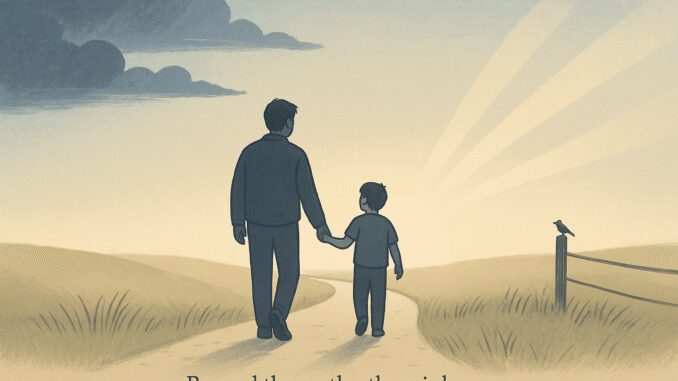
After the Storm
You did not choose this path of twists and turns,
but you walk it with courage the world seldom learns.
Between sleepless nights and the weight of the day,
you carry a love that will not give way.
The myths are loud, but the truth is more clear:
your child is not broken – they are fully here.
Different, not lesser; complex, not wrong,
their presence a verse in humanity’s song.
The road can be heavy, the systems unkind,
yet brilliance still glimmers in ways you will find.
In patterns, in laughter, in details unseen,
in futures reshaped from what might have been.
Take heart in the networks that hold you upright,
in teachers, in allies, in friends who bring light.
Each small act of kindness, each barrier removed,
is proof of a world where all people are proved.
So stand in the storm, but remember the skies:
beyond every shadow, new mornings will rise.
Your care is a compass, your love is a guide –
together you’ll flourish, together abide.
Link to Part 4:
Beyond the Myths: Protecting Autistic Lives, Public Health, and the Future of Science (Part 4)
Dear reader, we need your support
Independent sites such as The AIMN provide a platform for public interest journalists. From its humble beginning in January 2013, The AIMN has grown into one of the most trusted and popular independent media organisations.
One of the reasons we have succeeded has been due to the support we receive from our readers through their financial contributions.
With increasing costs to maintain The AIMN, we need this continued support.
Your donation – large or small – to help with the running costs of this site will be greatly appreciated.
You can donate through PayPal or credit card via the button below, or donate via bank transfer: BSB: 062500; A/c no: 10495969


Lachlan:
There are many gaps in the truth in your essay. May I suggest that apart from whatever references you have drawn from, you should expand your knowledge and credibility by considering with rational and objective reasoning the following links so that you may realise the lack of balance in your writing.
The first link is from Maryanne Demasi PhD, an Australian science journalist whose academic record enables her to critically assess current scientific publications and comment on recent activities of ACIP, an advisory committee to the CDC in USA.
https://blog.maryannedemasi.com/p/exclusive-retsef-levi-hits-back-after?utm_source=post-email-title&publication_id=1044435&post_id=172378939&utm_campaign=email-post-title&isFreemail=true&token=eyJ1c2VyX2lkIjoyNTk3MzUxNzgsInBvc3RfaWQiOjE3MjM3ODkzOSwiaWF0IjoxNzU2Njc4NzQzLCJleHAiOjE3NTkyNzA3NDMsImlzcyI6InB1Yi0xMDQ0NDM1Iiwic3ViIjoicG9zdC1yZWFjdGlvbiJ9.kgo6SKGe_7NmccfDdFZ9efIldQp2xyggbGzZt91_DzY&r=4an0y2&triedRedirect=true&utm_medium=email
The second link is from Dr Robert Malone, a pioneer bio-medical researcher of mRNA “vaccine” technology who was appointed to the re-constituted ACIP Committee by HHS Secretary RF Kennedy Jr.
https://www.malone.news/p/the-apex-predator-of-captured-science?utm_source=post-email-title&publication_id=583200&post_id=165953223&utm_campaign=email-post-title&isFreemail=true&r=4an0y2&triedRedirect=true
I could also provide numerous links to peer reviewed publications that reveal the flawed nature of the politics and “science” relating to the Covidian pandemic and Covid-19 “vaccines”. Thus the lie that the vaccine was marketed as “safe and effective” and that the mandates were, and are, scientifically illogical, ineffective and unnecessary would be revealed to you.
However that would be another story.
As to RFK Jr’s stated intentions as Secretary of HHS: he is intent on ensuring the safety of available vaccines for those who wish to avail themselves of them, rather than denying access to all the current versions of vaccines. When you research his previous publications you will learn that pre-marketing safety surveys of new vaccines were not performed at all! And there is legal indemnity for liability for vaccine injury that protects vaccine producers – so no wonder there is now increasing public scepticism and “vaccine hesitancy” appearing.
Lachlan, Independent journalism requires an accurate assessment of all available data to be considered before publication. The mainstream media completely failed in this endeavour. Your essay simply comes from the handbook of the WHO and the bio-pharmaceutical industry that provided our health bureaucrats and politicians with repetitive mantras that protected vested interests.
The overwhelming bias in your essay does you no credit.
Further more;
As to your references to Dr Andrew Wakefield I suggest you view the following links and then reconsider your reference list.
https://informedchoice.substack.com/p/dr-andrew-wakefield-interviewed-by?utm_source=post-email-title&publication_id=600367&post_id=163772010&utm_campaign=email-post-title&isFreemail=true&r=4an0y2&triedRedirect=true
And
https://info.thehighwire.com/rd/9z4z1fsi02537sc361pg6tj5l481jbv7e88pffm4qsg_rp22sh2s8gm4pj6c1hm4or24no
I acknowledge your interest in Equity & Inclusion, with over three decades of experience in healthcare. My interests are similar and are based on 51 full time years experience in medical laboratory science, now retired.
Mediocrates:
Blogposts and conspiracy theory sites are not convincing evidence of anything.
Mediocrates cites the usual roster: Demasi, Malone, Wakefield, Bigtree. All are central figures in the anti-vaccine echo chamber. Every one has been discredited by mainstream science and journalism. Our article draws on peer-reviewed evidence from NEJM, Ann Intern Med, JAMA, CDC, WHO — not blogs built on fraud.
Thanks for your comment, Mediocrates. I’ve looked closely at your sources. Maryanne Demasi, Robert Malone, Andrew Wakefield, and The HighWire are well-known figures in anti-vaccine networks. Each has been widely discredited: Wakefield for fraud, Malone for exaggerated claims of invention, Demasi for opinion pieces rather than peer-reviewed research, and The HighWire as a propaganda outlet.
By contrast, the article’s references come from peer-reviewed cohort studies (NEJM, Ann Intern Med, JAMA), CDC data, WHO, UNICEF, and National Academies reviews. These are transparent, replicated, and globally recognised.
Your assertions — that vaccines were never tested for safety, that ‘safe and effective’ is a lie, and that mandates were illogical — don’t align with the evidence. Every licensed vaccine undergoes multi-phase safety trials; COVID vaccines had tens of thousands of participants. Post-marketing surveillance and compensation programs exist precisely to ensure accountability and transparency.
Most importantly, your comment doesn’t address the article’s core argument: that disinformation undermines global trust, weakens fragile health systems, and weaponises autism as a scare tactic. That’s the conversation we need to stay focused on.
Thanks, Leefe – exactly. The piece is about how disinformation distracts from evidence and ends up harming autistic people and public health. You’ve cut through to the point: blogposts and conspiracy sites don’t change the overwhelming peer-reviewed science. Appreciate your clarity.
Lachlan; I appreciate your enthusiasm however, your characterisation of Demasi, Malone and Wakefield follows the ad hominem ad nauseum pattern often found in Wikipedia where unsubstantiated slanderous claims do not stand before the facts. Wikipedia does not permit any rebuttal of such slanderous publications.
It is unfortunate that you have not addressed the proven fact that elements of the bio-pharmaceutical industry provide a large proportion of the operational budgets of regulating agencies such as Australia’s TGA and America’s CDC, both organisations integral to the release of new products to the health industry market.
Questions relating to the aetiology of autism spectrum disorder (ASD)indicate that various factors may be involved however, I believe that HHS Secretary RF Kennedy Jr is correct in insisting that studies of the cumulative effects of vaccine adjuvants be performed, particularly now that the US pediatric vaccine schedule provides up to 78 vaccinations for neonates to 18 year olds. As this schedule has increased the number and variety of vaccinations since 1986 so too has the rate of ASD increased. Parental compliance with the vaccine schedule is “enforced” by mandates requiring proof of vaccination prior to admission to educational institutions. Freedom of choice is thus denied. Thus we see a parallel between the rising incidence of ASD and the frequency of adjuvant laden vaccinations. To date there is no published scientific evidence that the cumulative effects of aluminium adjuvants in vaccines are NOT related to distortions of the neonate gut biome that normally modulates immune responses and neuro-immunological pathways; thus enabling the possible development of ASD and dementia. Comprehensive research must be done to determine whether or not vaccine adjuvants may be causing more harm than benefit. Do dismiss this possible correlation as misinformation is ill- advised.
Typo last sentence: To dismiss this possible correlation as misinformation is ill-advised.
Mediocrates:
The rise in ASD diagnosis has been explained. It is mostly due to better and more widely applied diagnostic tools. Continually trying to link it to vaccines is disingenuous.
Mediocrates, I appreciate you engaging, but let’s keep to evidence.
On Demasi/Malone/Wakefield — these aren’t ad hominems, they’re established records: Wakefield’s paper was retracted for fraud, Malone repeatedly misrepresents his own role, and Demasi has had serious conflicts flagged. That matters for credibility.
On regulation/funding — yes, TGA/CDC budgets include industry fees. But that’s precisely why they have transparency protocols, conflict-of-interest registers, and independent review committees. Suggesting this makes science invalid ignores decades of safeguards.
On autism & vaccines — the claim that rising ASD rates track vaccine schedules has been studied exhaustively. The rise is explained by broader diagnostic criteria and greater awareness (CDC ADDM, 2000–2022). Massive cohort studies (Hviid 2019, Madsen 2002, Taylor 2014) show no link between vaccines/adjuvants and autism.
On aluminium adjuvants — adjuvants have been used safely since the 1930s. The doses in vaccines are lower than what infants ingest naturally via food, formula, or breastmilk. No peer-reviewed evidence supports a causal link between adjuvants and ASD.
Science isn’t ‘dismissing’ — it’s weighing evidence. And the evidence here is overwhelming: vaccines do not cause autism. Repeating disproven correlations risks re-harming autistic people by treating their existence as pathology rather than humanity.
Thanks, Leefe – you’ve nailed it. That’s the point: rising autism prevalence reflects better recognition and broader criteria, not vaccines. And turning back to the main theme, framing autism as an injury only fuels stigma against autistic people. Evidence and dignity belong together.