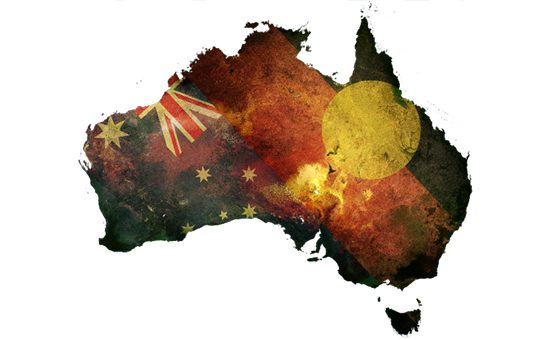
Our recent article, What if the highest achievement of a civilisation is not what it leaves behind, but what it leaves intact?, examining First Nations peoples’ relationship with Country and their role as its caretakers, generated lively discussion. As is often the case with subjects of this nature, not all of the responses were supportive.
In hindsight, the social media “hook” we used to promote the article may have been a little more confrontational than intended:
The next time someone argues that the Aborigines “did nothing with the country for 65,000 years,” instead of arguing back I will keep my answer simple:
“Unlike the white fella, they looked after the place.”
Amid the spirited debate, however, came a message to The AIMN that stood out for its thoughtfulness and quiet wisdom. It is a perspective that deserves to be heard – not only by our admin team, but by everyone. We hope it resonates with you as much as it did with us.
For people to ‘argue’ our position – to what extent are non-Aboriginal people ‘experts?’
At its core, Aboriginal People’s Sovereignty is about deepening sovereign and democratic principles where it exists and introducing them where it is absent. Our nation is not simply a banal amalgamation of procedures, an uncontroversial set of norms and rules that everyone can get behind. Our Sovereignty is both personal and collective, as an expression of human rights for all.
Our sovereign democratic ideals embrace consensus, and egalitarianism, the flattening of steep hierarchies, the shattering of structures that confer undue wealth and power and privilege. Sovereign consensus is necessary to mitigate the decision-making power away from the corporate titans and wresting the billy club out of the beat cop’s hands.
It divests the domineering husband of his authority and brings the imperial power to its knees and lifts the colonial subject, the slave, the worker, the migrant and the original peoples of this continent.
What struck us most was this passage:
“Our Sovereignty is both personal and collective, as an expression of human rights for all.”
It reframes Aboriginal sovereignty not as something that diminishes the rights of others, but as something that can strengthen democratic principles for everyone. That is a perspective many people, whose understanding has been shaped by political slogans rather than thoughtful discussion, may never have considered.
We were also struck by the author’s contrast between power and consensus. The message suggests that sovereignty is not merely about who exercises authority, but about how authority is exercised – through consensus rather than domination. That reflects many anthropological observations about the decision-making traditions of numerous Aboriginal societies, where authority often rested on respect, kinship obligations and persuasion rather than coercion. At the same time, it is important to remember that Aboriginal societies were, and are, richly diverse, so no single description can apply universally.
Whether readers agree with every sentiment expressed, we believe this message makes a thoughtful and worthwhile contribution to a conversation that too often descends into slogans and division.
Keep Independent Journalism Alive – Support The AIMN
Dear Reader,
Since 2013, The Australian Independent Media Network has been a fearless independent voice – holding power to account and delivering journalism that matters.
Running this site isn’t cheap. Rising costs mean we need your support now more than ever. Every donation, big or small, keeps our servers running, our writers working, and our stories free for everyone.
Donate here:
PayPal or credit card – just click on the Donate button below
Direct bank transfer: BSB: 062500; A/c no: 10495969

We’ve also set up a GoFundMe as a dedicated reserve fund for hosting and future improvements.

Thank you for standing with us. We couldn’t do this without you.
With gratitude,
The AIMN Team
Be the first to comment