By James Moore
“In the early morning hours he sat in the café and watched the people in the plaza. He watched them coming and going and he thought that God had withheld from the young the full knowledge of life not out of cruelty but out of mercy. For the young are not equipped to know it.” (Cormac McCarthy, “The Crossing”).
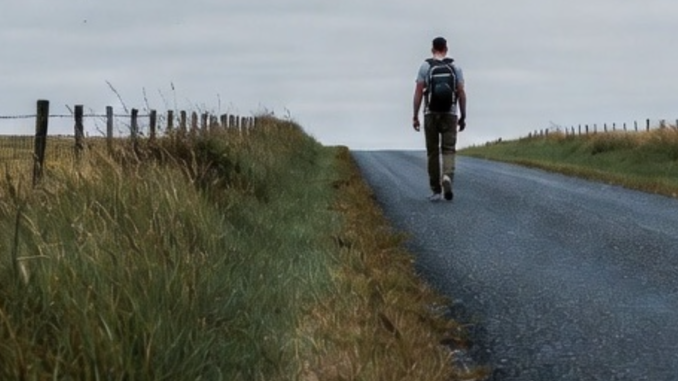
The trucker was running Interstate 80 west of Omaha and carried a load of new refrigerators bound for a distribution warehouse in San Francisco. Weary of standing by the side of the road, futilely hitchhiking, I had approached him at one of those giant fuel and food plazas in Iowa. I asked if he were going toward the West Coast, and when he said yes, I didn’t even have to ask for a ride.
“You want a lift, climb up,” he said. “You can put your backpack rig behind the seat.”
My hope was to get the Rocky Mountains in my sight before dusk and as we bounced along I looked out the window toward the Platte River and the scattered cottonwoods dipping roots into the muddy flow. Nebraska, to the traveler passing through, did not seem to offer many prospects. Sand hills rose in the distance and a large herd of cattle trailed up the soft inclines and out of sight beyond the riverbank. The stretch of the Platte that the highway traced had been a section of the Oregon Trail. I recalled having read in college an historian’s estimate that there were enough lives lost on the pioneer journeys west that there could be a grave every 50 yards along the 2000-mile route.
My considerably less arduous adventure involved looking for radio broadcast towers on the horizon. My pack was partially loaded with reels of audio tapes that I had recorded working for the university radio station. My idea was to stop wherever I saw a tower and apply for a job as a newscaster or reporter. Darkening rain clouds in the northwest and a flash of lightning illuminated a red and white structure in the distance, which meant there was a nearby radio station.
“Hey, Phil, you mind letting me off at the next exit ramp?”
“At North Platte? Sure will, son. Ain’t much of a town, though.”
“Yeah, I know, but they’ve got a few radio stations and I thought I’d apply for a job.”
A few hours earlier he had finally asked me about the reasons for my travel and assumed I was just a college kid wanting to see the country. When I shared my motivation, he was more than a bit skeptical.
“Sure, I’ll pull off. Hate to see ya go so soon. I enjoy having someone to talk to.” He looked over at me bouncing in the high seat on the passenger’s side of his cab, making another appraisal. “Anyway, you still don’t look like no newscaster to me.”
“Yeah, I know. I don’t look like one to me, either.”
The spot where I jumped off presented a fence between the local road and me, which meant I also had to cross a wet field of center pivot irrigation rigs spinning watery nitrate fertilizer rainbows in every direction. Thunder from the gathering rain storm also increased in timbre. I felt the decibels in the wind.
Main Street in North Platte ran north and south and intersected I-80, and after ten minutes of muddy trekking, I finally reached a sidewalk and got to the bus station. Inside of a bathroom stall, I changed my blue jeans, put on the only shirt I had with a collar, and then went to the sink to wash my face and rinse mud off my hush puppies. My backpack fit nicely into a rented locker and a radio station studio was just around the corner past brightly painted storefronts and down broad sidewalks. I looked beyond a small hill that rose to the north and the town appeared to simply stop as the land opened up to the farms and ranches in the sand hills of Western Nebraska.
My career ambitions were modest, a consequence of naïveté about the broadcasting business, and I fantasized about my future life on the High Plains, doing Saturday morning broadcasts from hardware stores and grain elevators, announcing high school sports, and taking long weekends to race to the Rockies for hiking and camping. The station’s call letters, KAHL, were painted in broad letters on the glass door and the lobby was air-conditioned and cool. A receptionist, wearing a bright green dress, smiled warmly as a strange young man came in off the street and approached her desk.
“May I help you?”
Nervous, I cleared my throat. “Yes, ma’am, I’m a reporter and I’m looking for a job. This is my tape and resume’ and I was just wondering if you had any openings in your news department.”
“Well, well,” she said. “You may have the best timing of anyone I’ve ever met.”
“What do you mean?”
“Our news director of many years announced he was quitting today. We need someone to replace him and to hire a few other reporters.” Her kindness was genuine, and I wondered if she acquired it from living all her years on the remoteness of the plains. Had she ever even been to Chicago?
I was as still as stone, afraid to move, as if I might make some motion that would destroy my unfolding opportunity. A job at the first place I stopped was not an outcome I had even pondered. She picked up a phone, spoke softly for a moment, and then motioned for me to take a seat on an old sofa.
“Mr. Dahl will see you shortly,” she said.
The lobby was austere with yellowish paper and wood paneling on the walls and had the temporary feel of a mobile home. The control room, which was visible through a window into the studio, was gray and indistinct. The back of the head of the announcer playing records on the other side of the glass was bald and in the low light his shoulders leaned over the turntable where he was cueing up an album cut.
Ed Dahl came through the door from his office wearing a plaid sport coat and displaying the enthusiasm and energy of an endlessly optimistic farm implement salesman. We shook hands and my knuckles collapsed under his fervent grip.
“Come on,” he said. “Follow me. I gotta tell ya, son, what did you say your name was? You just seem like a blessing walking in off the street right now.”
“So, you need a reporter then?”
“You aren’t gonna believe this but my newsman, who has been here more than a decade, just told me this morning he’s gotta leave for a new job.”
Ed Dahl took off his coat and hung it on the back of a swivel chair.
“This is my tape and resume’.” I slid the envelope across the glass top of his walnut desk.
“Good, good,” he said. “What kind of experience do you have. Where have you worked? You live here in North Platte? Somebody tell you about my guy leaving?”
“Um, no sir, Mr. Dahl. I just came in off the highway. I’m traveling around the country applying for radio jobs. I’ve only worked at my college radio station.”
Ed Dahl’s big, soft hands paused for a second as he reached for my tape, and he frowned.
“Tell ya what,” he said. “I don’t like to listen to no pre-produced tapes. I like to see what a fella’s got, how good he is on his feet. Let’s go tear some wire copy, have you do a rewrite, and then record me a newscast and we’ll go from there. What do you say to that?”
“It sounds great,” I said.
He stood and I followed him to a corner next to the main control room where an old Underwood typewriter and a green swivel chair were waiting for me across from an Associated Press wire machine. The newsroom was little more than a low shelf for writing and spreading wire copy and holding up a microphone. Mr. Dahl tore off a stretch of the yellow AP feed, scanned it quickly, and handed it to me.
“Why don’t you rewrite this? I’ll go put a tape in the machine and all you’ve got to do is hit that red record button when you are ready. When you get done, just go out front and tell my secretary and she’ll bring me the tape to give it a listen.”
“Okay, sure. Thank you, sir.”
Many of the stories on the AP wire were about Vietnam. Richard Nixon had resigned as president and Gerald Ford was trying to find a way to expedite a peace process. American ground troops had been removed from the battlefield but were still flying air support for the Army of the Republic of Vietnam. The anticipated completion of the U.S. withdrawal meant there was no longer a need for a draft. Legions of trusted American journalists were doing a fine job of keeping the country and the world informed, and I was desperate to join their number.
After quickly rewriting and then recording the AP copy, I went back to Mr. Dahl’s secretary and told her I was finished with his assignment. She went to collect my tape and take it to her employer’s office. In a few minutes, much less than it would have taken him to listen to the entire newscast I had recorded, Mr. Dahl came out and motioned me back into his expansive workspace. Photos of his family were on a bookshelf behind him and I stared at them as he began to talk with a tone of voice that sounded like a doctor delivering a terminal prognosis.
“Son, I hope you don’t think I’m an SOB for telling you this,” he said. “But if that’s how you react, maybe someday down the road you’ll thank me for being an honest SOB.”
“I’m not sure I understand.”
“Well, here’s how it is and I’m not gonna sugarcoat this for you. But you need to think about doing something else with your college degree. You see, everybody can’t be a broadcaster. Some people just aren’t cut out for it. They either don’t have the voice or the writing skills, or just whatever it takes. It’s like somebody wanting to be a major league ballplayer but they can’t hit a curveball. You have to make adjustments in life, you know what I mean?”
“I guess so.”
“Look, I need somebody and if I thought I could work with you, smooth out the rough spots, I’d give you a shot, son. But you just don’t have a voice that is ever gonna work in broadcasting. And I know I asked you to write that copy fast because that’s the way things work in radio, but the writing just doesn’t communicate, either.”
“I didn’t think I was that bad.”
“What you ought to do, if you are determined to work in broadcasting; you should think about sales or management or something of that nature that keeps you off the air and out of the creative side of things.”
“Yes, but I want to be a reporter. I got my degree in journalism. It’s all I’ve ever wanted to do really; except be a writer. But I’ve got to make a living and I can’t wait to make it as a writer. Takes too long, and I thought I might learn to write better and gain experiences in journalism.”
“Well, I’m sorry, son, that I can’t be of any help. I wish I could tell you something more positive. Best way I can help you is to be honest with you and I just don’t think you have much of a future as an on-air broadcaster in radio and certainly not television. Why don’t you give something else some thought?”
“I don’t know what else to think about. I’ve been thinking about this since I was a boy.”
Mr. Dahl stood up and came around the desk, indicating our conversation had concluded. His hand fell on my shoulder as he walked me to the lobby.
“Well, good luck with your career, whatever you decide to do,” he said.
“I appreciate you talking to me.”
“Sure, sure.”
Ed Dahl watched me move toward the door of his family business, a radio station he had built to be an influence in his community and had proudly placed his surname in the call letters. I did not think he was intentionally cruel, but I did hope he was wrong.
“Wait a minute, young man,” he called out. “Just a minute. As long as you are just out running around the country looking for a job, why don’t you go down to McCook? I own another station down there and I just got a call from my general manager yesterday and he needs a newsman, too. McCook’s not as big a community as North Platte but maybe he can use you and give you your start. How about I call him and tell him you’re coming?”
“Oh my gosh, thank you so much. That would be great. I’ll head down that way now.”
“Good. Good. I’ll give him a call and tell him you are on your way.”
There are probably not too many more humbling rejections than being told by a radio station in North Platte, Nebraska that you have made a horrible career choice; especially when you decided that future when you knew no more about life than whether you wanted cheese on your hamburger. I went back to the bus station and grabbed my backpack, walked over the Interstate bridge, and stood on the southbound side of Highway 83 to McCook. How did such a small farm town even have a radio station?
A farmer stopped his pickup and his wife motioned me to jump in the bed after I told them I was going to McCook. The south wind of summer and the sun blasted my face as I hung to strands of hope that reminded me that I was being completely irrational. Surely, Mr. Dahl predisposed his McCook manager to my lack of potential, and was asked the reasonable question: “Why didn’t you hire him?” I tried hard not to think of the absurdity of my situation. Four years of learning at a major university, a degree, and I had delivered myself, sweaty and dust-covered with wind-strewn hair and rumpled clothes, to the bed of a pickup bound for a small town in the Western Nebraska corn fields.
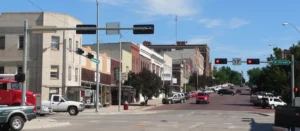
I was dropped off just north of town and assumed I looked a bit more like a cowboy searching for work than a nascent journalist. The radio station’s tower and studio was a half mile straight ahead and when I reached the wooden steps to the lobby, dripping with sweat, I leaned my pack against a railing before trying to straighten out my wind-tangled hair.
The general manager was friendly and quite young, and I hoped he might be impressed by my determination to go anywhere and do most anything to get a start in the industry. He was perfunctory in his interactions with me, though, and I sensed a measured distance that made me less hopeful of any outcome I might celebrate. Rather than making me record in his studio, he listened to the audition tape of my college radio show that I had taken out of my pack, and he let me sit in the room as he tried to remain expressionless, but I knew his response before he touched the stop button on the tape deck. I was impressed that he had lasted through the entire four minutes and thirty seconds.
I never even got his surname before he ran his hand across his flattop haircut and gave me his painful, though limited, analysis.
“You’re not really what I’m looking for,” he said. “And I don’t even know exactly what I am looking for. But I’m pretty sure you’re not it.”
I knew enough to understand that I was trying to make it in an industry that relied more on subjective judgments than any measurable information, and I had a great appreciation for honesty, but he seemed to take a bit too much pleasure in his blunt summation.
“Really? Can you tell me what I need? Anything I can do?”
“No, no. I don’t think so.”
“No, critique? Nothing? How can I get better?”
“Can’t help ya out there, either. It’s just a matter of taste.”
“Well, okay. Thanks for your time.”
I recall his name was Jerry, and he stood quickly and went to the front door without even looking to see if I had followed. He seemed to have some urgency in getting the drifter out of his little lobby. I would not have been surprised had he locked the door behind me to make sure I did not return and plead, desperately, for any kind of job. I almost stumbled down the wooden steps into the gravel parking lot. My journalistic dreams had certainly never been significantly grandiose, but they were greater than McCook, Nebraska. I suppose I could’ve used a little guidance from a professor or a mentor and maybe avoided this tortuous process of seeking broadcast work.
I still had a hope that I might one day be reading newscasts and doing reporting for a big city radio station and writing novels during my spare moments in the evenings. Maybe I needed more modest goals. A university degree was a guarantee of nothing more than an education, and the grants and loans and scholarships did not appear to be an investment that was accumulating value just then in the Nebraska gloaming. What kind of a future does a guy have when he is not even good enough for North Platte or McCook?
I shuffled westward along the westbound side of Highway 34, which used to be Highway 6, the transcontinental route that had given life to communities like McCook before they were bypassed by the restricted access superhighways. The sun was almost down and there was an orange and purple glow lingering along the edge of the plains in the direction of Denver. I thought about the Rockies, just four hours distant, and hiking and camping all summer along mountain trails. I needed work, though, and was still hoping I might get started on my business career. Instead, my determination was overcome with weariness, and all I could think about was sleep.
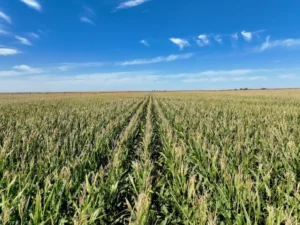
I stepped across an irrigation ditch and walked down a corn row, deep into a farmer’s field. Less than $20 in crumpled bills and coins were in my pocket but I did not worry about money. When I got far enough into the stands of tall stalks and was confident I could not be seen from the road, I unrolled my sleeping bag. The heavy dark foliage of what appeared to be a bumper crop hung over me as I watched it part the stars. I fell asleep listening to the wind shuffling cornstalks beneath the big, black curve of a Nebraska night sky.
And I had no idea what I was going to do next.
This article was originally published on Texas to the world.

James Moore is the New York Times bestselling author of “Bush’s Brain: How Karl Rove Made George W. Bush Presidential,” three other books on Bush and former Texas Governor Rick Perry, as well as two novels, and a biography entitled, “Give Back the Light,” on a famed eye surgeon and inventor. Mr. Moore has been honored with an Emmy from the National Academy of Television Arts and Sciences for his documentary work and is a former TV news correspondent who has traveled extensively on every presidential campaign since 1976.
He has been a retained on-air political analyst for MSNBC and has appeared on Morning Edition on National Public Radio, NBC Nightly News, Last Word with Lawrence O’Donnell, CBS Evening News, CNN, Real Time with Bill Maher, and Hardball with Chris Matthews, among numerous other programs. Mr. Moore’s written political and media analyses have been published at CNN, Boston Globe, L.A. Times, Guardian of London, Sunday Independent of London, Salon, Financial Times of London, Huffington Post, and numerous other outlets. He also appeared as an expert on presidential politics in the highest-grossing documentary film of all time, Fahrenheit 911, (not related to the film’s producer Michael Moore).
His other honors include the Dartmouth College National Media Award for Economic Understanding, the Edward R. Murrow Award from the Radio Television News Directors’ Association, the Individual Broadcast Achievement Award from the Texas Headliners Foundation, and a Gold Medal for Script Writing from the Houston International Film Festival. He was frequently named best reporter in Texas by the AP, UPI, and the Houston Press Club. The film produced from his book “Bush’s Brain” premiered at The Cannes Film Festival prior to a successful 30-city theater run in the U.S.
Mr. Moore has reported on the major stories and historical events of our time, which have ranged from Iran-Contra to the Waco standoff, the Oklahoma City bombing, the border immigration crisis, and other headlining events. His journalism has put him in Cuba, Central America, Mexico, Australia, Canada, the UK, and most of Europe, interviewing figures as diverse as Fidel Castro and Willie Nelson. He has been writing about Texas politics, culture, and history since 1975, and continues with political opinion pieces for CNN and regularly at his Substack newsletter: “Texas to the World.”
Keep Independent Journalism Alive – Support The AIMN
Dear Reader,
Since 2013, The Australian Independent Media Network has been a fearless voice for truth, giving public interest journalists a platform to hold power to account. From expert analysis on national and global events to uncovering issues that matter to you, we’re here because of your support.
Running an independent site isn’t cheap, and rising costs mean we need you now more than ever. Your donation – big or small – keeps our servers humming, our writers digging, and our stories free for all.
Join our community of truth-seekers. Donate via PayPal or credit card via the button below, or bank transfer [BSB: 062500; A/c no: 10495969] and help us keep shining a light.
With gratitude, The AIMN Team

Can’t wait for the next instalment.
“If one advances confidently in the direction of his dreams, and endeavors to live the life which he has imagined, he will meet with a success unexpected in common hours. He will put some things behind, will pass an invisible boundary; new, universal, and more liberal laws will begin to establish themselves around and within him; or the old laws be expanded, and interpreted in his favor in a more liberal sense, and he will live with the license of a higher order of beings.
In proportion as he simplifies his life, the laws of the universe will appear less complex, and solitude will not be solitude, nor poverty poverty, nor weakness weakness.
If you have built castles in the air, your work need not be lost; that is where they should be. Now put the foundations under them.”
Henry David Thoreau
@ Steve: Ahhhhh ….. the philosophical genius of Thoreau, still rings true.