Living in Australia teaches you an early lesson about proximity.
When you swim in the ocean here, you are almost certainly closer to a shark than you realise. Not because sharks are everywhere in a dramatic sense, but because this is their environment, not ours. Most of the time nothing happens. The risk is low. But the consequence, if it does, is catastrophic.
That awareness doesn’t make me hate sharks. I don’t want them culled. I don’t think they’re malicious. I respect them enough to accept a simple truth: I don’t need to be everywhere, and I don’t need to be close to everything.
Low probability does not cancel high consequence.
This distinction gets lost more often than it should. We tend to talk about risk as if it exists on a single axis – either something is “dangerous” or it isn’t. Either you’re afraid or you’re irrational. But most serious harm comes from things that are unlikely to go wrong until they do, irreversibly.
That’s why aviation safety is obsessive. Why industrial machinery is guarded. Why firearms are regulated. Why nuclear plants are built with layers of redundancy. Not because disaster is common, but because the cost of failure is final.
Animals are no different. We just struggle to talk about them honestly because emotion gets in the way.
I love animals. That doesn’t mean I want to make them pets.
Tigers are magnificent. Killer whales are awe-inspiring. Sharks are ancient, elegant predators. Cows are powerful, social animals with real mass and strength – and they injure or kill far more people than sharks ever do. I admire them all. I don’t want to own them, confine them, or pretend that affection neutralises what they are capable of.
Appreciation does not require possession. Respect does not require proximity.
Once you accept that, certain uncomfortable questions follow.
All dogs can bite. That’s true, and it’s often repeated as if it ends the conversation. But it doesn’t. While a Chihuahua can be aggressive, it is not equipped to kill an adult human. The ceiling on harm matters.
Some dogs, by contrast, are physically capable of catastrophic injury. Broad chests, thick necks, powerful jaws, and bodies designed to sustain force under stress change the equation entirely. When things go wrong, they go wrong very badly.
This isn’t about demonising animals. It’s about recognising capability.
The phrase that appears after so many fatal dog attacks – they’d never behaved like this before – isn’t mysterious. It’s predictable. Catastrophic failures are rare by definition. They don’t rehearse themselves gradually. They reveal themselves when the cost of being wrong is permanent.
That’s why “low risk” is not reassurance when the outcome is death or lifelong disfigurement.
I’m a large person. I don’t need a dog to protect me, and I don’t want one projecting toughness on my behalf. I don’t consider myself tough, and I don’t want borrowed menace. I prefer small-to-medium dogs – sturdy enough to live safely in the world, but not built in a way that turns rare failure into irreversible harm.
That isn’t fear. It’s calibration.
We already accept this logic elsewhere without controversy. We don’t accuse people of cowardice for keeping a safe distance from heavy machinery. We don’t insist that loving the ocean requires swimming anywhere, anytime. We don’t argue that respect for wildlife demands hands-on contact.
Yet when it comes to animals we keep close, restraint is often reframed as prejudice or ignorance.
Perhaps the real discomfort lies in the limits this imposes. We like to believe love overrides biology. That good intentions cancel instinct. That care alone can undo physical reality. And when those beliefs collide with tragedy, the response is often denial rather than reflection.
Some things are simply too powerful to love up close – not because they are bad, but because they are what they are.
Recognising that isn’t cruelty. It’s humility.
In a culture that increasingly confuses bravado with courage, choosing distance where the stakes are irreversible may be the most responsible form of respect we have left.
Keep Independent Journalism Alive – Support The AIMN
Dear Reader,
Since 2013, The Australian Independent Media Network has been a fearless voice for truth, giving public interest journalists a platform to hold power to account. From expert analysis on national and global events to uncovering issues that matter to you, we’re here because of your support.
Running an independent site isn’t cheap, and rising costs mean we need you now more than ever. Your donation – big or small – keeps our servers humming, our writers digging, and our stories free for all.
Join our community of truth-seekers. Donate via PayPal or credit card via the button below, or bank transfer [BSB: 062500; A/c no: 10495969] and help us keep shining a light.
With gratitude, The AIMN Team


Lachlan, beautifully written
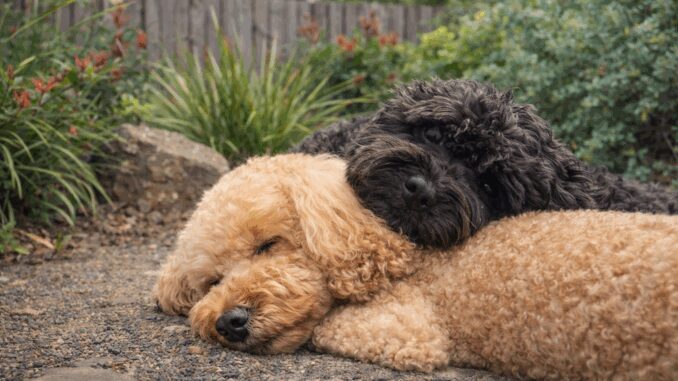
Am in love with Aubrey and Fergus And am pining for a pooch but can’t afford vet bills on a pension, that’s the truth and it wouldn’t be fair. But have never underestimated the powerful love ( yes love ) that exists between animals and humans, particularly pooches. Love isn’t anthropomorphic. It just is. Are Aubrey and Fergus your companions, Lachlan ?
Sigh………
Yes, they’re our companions ❤️❤️
How wonderful,they look so very contented and I imagine they bring great joy to you as you would to them.
A magpie swooped me once.
I still like magpies.
Dogs have bitten me twice. I have the scars to prove it.
I still like dogs. My kelpie x rough collie bitch, Mooie, will be five in a couple of weeks. She’s my favourite creature in the whole world.
I had an Aussie mate when I worked in Korea, he had a pair of Jindo-gyeon, the Korean equivalent of our dingoes. They’re semi-wild, untameable. His arms were scarred from their bites, but he loved them anyway.
Most folk have swooped by Maggies at least once.THey breed in spring and get tetchy about others on their patch.
Just as well Noisy Mynahs are not Magpie size.
I suppose it is interesting that Lyndal’s comment is the most detailed comment.
But on the bit about big noahs arks, only just watched a doco from California where a fairly big boat is checked out by a 20 foot white shark, While another, 12-14 ft is kept back with the surf.
Dogs.
Mine were perfect everyone elses was a bastards.
I’d almost prefer swooping from the local magpies. (The Tasmanian variety, for some reason, don’t. The spurwing plovers/masked lapwings are the real avian menace). There’s one extended family here who have decided that I’m their best friend. Having the yard treated as their main creche is fine, but I can’t even leave the doors open or some of them will come inside. Then there’s the constant begging when the latest brood has hatched …
btw, does anyone know how to discourage bandicoots from digging up your yard? 42 holes to repair this morning.
@ Roswell: Once Magpies accept that you are ”part of the furniture” they will accompany you digging the garden, (for unearthed worms and grubs), dance along the verandah rail before feeding and sing wonderful songs when encouraged.
Once a Magpie presented herself at the farmhouse door with a leg tangled in tie-wire. After she allowed herself to be caught & the wire removed she went back into the yard. A couple of months later, then every year until she passed, the babies would be personally introduced and a long discussion about their futures ensued.
rofl…Leefe, I have a family of them turn up from time to time for a feed of mince.
Thoughtful tho, the bandicoots giving you something to do, to stave off boredom.
NEC, Magpies are smarter by yards than than some of the people in my street. Even me?
Roswell, your hairy adventure into the harsh world of nature, in the form of an encounter with the avian threat, are a signature or beacon moment for other readers.
I have a magpie warble as the ringtone on my phone. It beats anything that’s offered by default.
I put it on because much of my everyday life is spent in silence, and if the phone rang the call would startle me… the body would give a little jump.
Maggie’s warble is so much easier on the ears and body.
paul, please don’t give them mince. It’s really bad for them, especially the nestlings; it can lead to all sorts of deformities and other problems. If you insist on feeding them, there are avian insectivore feeds available from vets and even some supermarkets.
Yes, Ive wondered. It is ok for the heads up, Leefe.
I’ve suspected it’s wrong to feed them occasionally( welfare dependency, as Tony Abbott put it), but they are smart, they make eye contact, like you are their best strong friend. Spectacularly good at humbugging.
Love the story, and the comments.
Having grown up and lived in the bush (as well as cities), I have many such stories. But I won’t go into them now.
All I have to say is that anyone that says, or thinks one cannot communicate with animals is misguided. I feel for their narrowed experience. Perhaps it’s other humans that have given them that idea – sad really.
Like for everything, enquiry and respect is a good foundation.