Greenpeace Australia Pacific Media Release
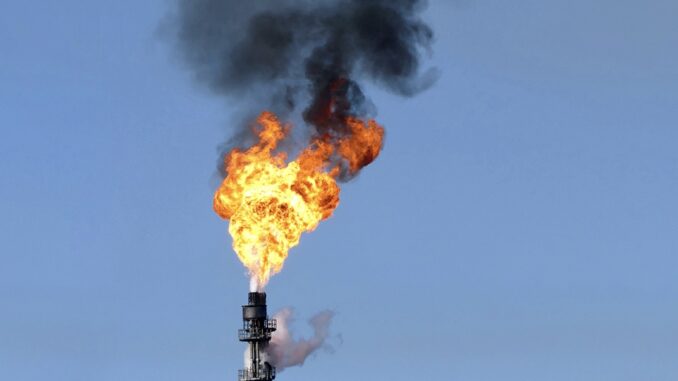
A Deloitte report leaked to the media, commissioned by the government of Western Australia, confirms WA’s gas exports are fuelling the climate crisis by delaying Asia’s clean energy transition, says Greenpeace.
The report’s findings reinforce other independent analysis on the global energy transition, and expose the massive climate and economic risk of the state’s continued expansion of new fossil fuel projects.
Greenpeace gas campaigners in Australia and Southeast Asia say the report firmly challenges the gas industry’s claims that WA’s gas exports are helping countries in Southeast Asia to decarbonise, when it is actually delaying the renewable energy transition and fuelling climate disasters.
Joe Rafalowicz, Head of Climate and Energy at Greenpeace Australia Pacific, said: “This report confirms what experts have been warning for years: WA’s gas exports are fuelling the climate crisis and delaying the roll-out of clean energy in Asia. The CSIRO concluded the same thing in a 2019 report Woodside tried to hide.”
“How many more reports will be buried before the Government of Western Australia accepts the truth: WA gas is fuelling the climate crisis, and any claims made by the gas industry that suggest otherwise are nothing but a smokescreen to wring every dollar out of their stranded fossil fuel assets.
“Our trading partners need clean, reliable energy, not expensive, polluting gas — and Western Australia can be the one to provide it, as Greenpeace’s recent modelling clearly shows. If we act now, renewable energy can be our next big success story. We encourage the WA Government to accept the overwhelming evidence and firmly lean into the state’s green economic future.”
Anchalee Pipattanawattanakul, Campaign Leader at Greenpeace Southeast Asia, said: “Australia’s growing gas exports are among the factors holding back Thailand and the region from transition toward renewable energy, keeping us dependent on fossil fuels and worsen the devastating climate impacts that we are already experiencing.
Expensive gas imports from Australia, often resold by other countries, are a direct driver of our surging electricity prices. In 2022, growing gas imports contributed to a doubling of domestic gas prices in Thailand, hitting ordinary people with record-high power bills.
Instead of helping us, this flood of expensive gas flowing in from Western Australia is delaying our transition to cheap, clean energy and fuelling more severe climate disasters like floods, droughts and extreme heat. We need partners for a renewable future, not polluters who lock us into expensive, fossil-fuel dependency, while big gas corporations keep the profits.”
Keep Independent Journalism Alive – Support The AIMN
Dear Reader,
Since 2013, The Australian Independent Media Network has been a fearless voice for truth, giving public interest journalists a platform to hold power to account. From expert analysis on national and global events to uncovering issues that matter to you, we’re here because of your support.
Running an independent site isn’t cheap, and rising costs mean we need you now more than ever. Your donation – big or small – keeps our servers humming, our writers digging, and our stories free for all.
Join our community of truth-seekers. Donate via PayPal or credit card via the button below, or bank transfer [BSB: 062500; A/c no: 10495969] and help us keep shining a light.
With gratitude, The AIMN Team

Why does a fantasy consume so much of our time?
Fact, humanity will never be free of fossil fuels, we burn less of this, while burning more of that. We plant trees, while cutting them down faster than they can grow.
We are where we are today (be that good or bad) as a result of the use of fossil fuel. Just about everything we wear, eat, drink, live in or transports us, is as a result of fossil fuel.
We can be more fossil fuel restrained, recycle more, while at the same time curbing GROWTH, but give up on fossil fuels, never.
jonangel:
“Never” is a long time. Eventually fossil fuels will run out – this is inevitable with a finite resource. Do you not think it makes sense to reduce and eventually eliminate their use in a controlled fashion, rather than burning up the world in a refusal to accept what must happen one day?
leefe, if you had read to the bitter end of my post you would have seen I suggested that very thing.
However, as I have pointed out many times GROWTH demands more of everything, so restraint will be difficult in the Western world and third world countries are catching us up.
I did read to the end, and I know what you said. I am pointing out a factual error in your post, because nothing lasts forever. We have to transition away from fossil fuels for environmental reasons, but it is also a simple fact the we have to do so because they are a finite resource; there is therefore no “never” about it.
leefe, how you interpret what i say, I sadly have no control over, however over many years I have pointed out the fact, many times that fossil fuels are far from endless. Moving on, the simple fact is humanity will never be free of fossil fuels, you are sadly mistaken is you believe we can be.
Perhaps, you can tell us, what we will live on, wear, drink and live in, without the use of fossil fuels..
You accept they are a finite resource, and then insist humanity will never be free of them?
It’s not my interpretation that’s at fault here, it’s what you’re saying. The only way those two statements can be compatible is if you expect the demise of Homo supposedlysapiens before the fossil fuels run out.
ps: we don’t eat or drink fossil fuels. We don’t live in them. There are alternative sources of energy to produce what we do need, and those sources are already cheaper than any of the fossil fuels.
leefe, congratulations, you’ve got in one, the last of fossil fuels will herald the last of humanity. Scroll back a couple of years it you will see I said the very same thing.. The end of fossil fuel will se the end of humanity.
The players in WA gas including the WA govt, Federal govt and fossil fuelers and fossil fuel investors well know there’s a global consolidation underway, in what could be seen as a desperate ‘race to the bottom’.
The two Oz giants Woodside and Santos are holding on by the skin of their teeth. Their mooted $80 billion consolidation failed this year.
BHP Petroleum & Woodside merged in 2022, BHP got out by selling all its FF assets to Woodside, ExonMobil sold all its Oz ops & assets including Bass Straight assets to Woodside. There is still much argy-bargy over reserves, extraction & processing of the Greater Sunrise fields between Oz & Timor-Leste. Woodside’s share price over 20 years has dropped from average $45 to $25. It has increased ops in USA, & appears ripe for American take-over. Its principal shareholders are American, French & Oz superfunds.
As for Santos, with less than half the market cap of Woodside, it has a similar share & shareholder profile as Woodside. The UAE giant ADNOC (Abu Dhabi National Oil Company) backed away from a all-cash take-over bid this year, citing a leaking methane tank, likely reflecting its view of Santos’ lax maintenance of its assets.
With the WA & Federal govts falling over themselves to prop up the WA FF industry, it seems the market has divergent views of purpose & longevity. It’s like Trump’s “drill baby drill” against depleted & non-economic oil reserves, a short-term gas rush, and a field littered with stranded assets.
The (green) energy tech boom is leaving the giant fossil fuelers trying to squeeze the last pennies out of their assets. Oz foisting its LNG on Asian markets serves only to encourage them to investment in gas infrastructure, when they could be investing in renewables. That reveals the same mentality of the WA & Fed govt’s reckless & merciless propping up of extraction of pennies and disregard for environmental degradation against the onrush of hi-tech renewables inevitability.
Much BS prevails in the FF industry, particularly related to ‘transition’. And Oz needs to invest more time and energy in preparing and moving into new (green) tech beyond the ‘sheet anchor’ of ‘transition’ blather.