By Denis Hay
Description
This article explains why the childcare industry privatisation in Australia is failing families due to weak oversight and the misuse of public funds.
🎧 Prefer to listen to this article? Press play
Introduction: The Price of Childcare Industry Privatisation Care
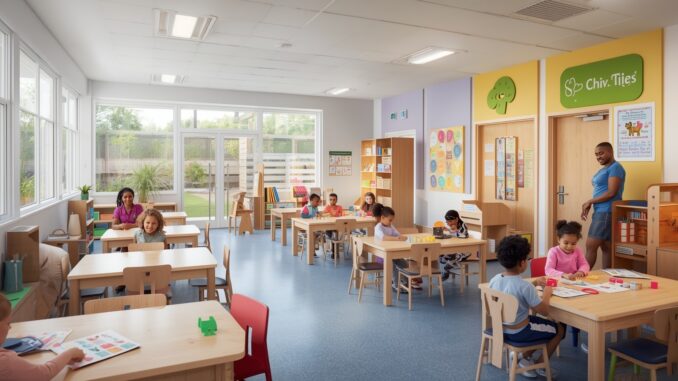
In today’s childcare industry privatisation in Australia, what was once a public service built on care and community has become a market driven by profit. Some centres spend less than a dollar a day feeding children, while others leave toddlers unattended for hours.
The childcare industry privatisation model in Australia has turned a public service built on care and community into a market driven by profit.
Despite billions in public money, oversight has eroded. Regulators turn a blind eye while investors pocket subsidies meant for families. Under a government with dollar sovereignty, such neglect is a political choice, not a financial necessity.
When public money funds private profit, accountability disappears, and the very purpose of care is lost.
The Problem: Why Australians Feel Stuck
1. How Profit Replaced Purpose
The shift to for-profit childcare in Australia began in the 1990s, driven by the principles of efficiency and choice. Community-run centres were replaced by large corporate chains, which promised flexibility. But neoliberal policy forgot a vital truth: children are not a market commodity.
Companies like G8 Education expanded rapidly, often prioritising occupancy rates and shareholder returns over staff-to-child ratios or nutrition. Families now find themselves paying more for less, trapped in a system that values margin over meaning.
For a deeper look at how privatisation harms the public interest, see The Failure of Privatisation in Australia.
2. The Collapse of Oversight
With privatisation came a dangerous illusion of self-regulation. The ABC’s Four Corners investigation revealed centres running below legal standards for years without penalties. NSW Greens MLC Abigail Boyd’s inquiry uncovered systemic neglect, children isolated, meals inadequate, and breaches ignored.
The federal and state regulatory maze means responsibility is blurred. Inspections can take four to ten years. Meanwhile, CEOs draw bonuses funded by public subsidies.
This is the essence of childcare regulation failure: when the watchman works for the same system he’s meant to guard. This is the ultimate consequence of childcare industry privatisation, where oversight gives way to self-interest.
The Impact: What Australians Are Experiencing
3. Families Left in the Dark
Under childcare industry privatisation, families face a confusing mix of promises and poor performance. Parents assume government ratings guarantee safety. In truth, these ratings often hide serious breaches. Some “meeting standards” centres have received repeated warnings without losing licences.
Families face escalating fees: a result of for-profit consolidation. According to the ACCC childcare inquiry, prices rise faster than inflation, even with the introduction of generous subsidies.
Australians are paying twice: once as parents, again as taxpayers. For context on rising household pressures, see Inflation in Australia: How It’s Reshaping Everyday Life.
4. Workers and Children Bear the Cost
Privatisation undermines the workforce. Educators face stagnant wages, unstable hours, and burnout. Many qualified staff leave within two years, forcing centres to rely on casual or untrained labour.
Children experience the fallout directly, including inconsistent caregivers, inadequate emotional support, and limited opportunities for learning and development.
The tragedy is clear: childcare industry privatisation in Australia sacrifices quality at every level to sustain profits.
The Solution: What Must Be Done
5. Restore Public Accountability Through Monetary Sovereignty
As a nation with its own currency, Australia can afford to build a childcare system worthy of its children. Under monetary sovereignty, funding early education is not constrained by revenue, only by political will.
Instead of channelling billions through private chains, the government could directly invest in public or not-for-profit centres, ensuring every dollar serves a public purpose.
This model reflects an earlier vision of 1950s–70s Australia, when public investment trained skilled workers and built social infrastructure that endured for generations.
For details, see Australia’s Dollar Sovereignty: Our Strongest Asset.
6. Policy Solutions That Put Children First
To rebuild trust and safety, Australia must act decisively:
- Re-establish Public Provision: Expand government-run and community-based childcare services.
- Link Funding to Quality: Subsidies should depend on meeting high educational and safety standards.
- Unannounced Inspections: Create a transparent national audit process.
- Fair Pay for Educators: Lift wages and provide clear career pathways.
- Public Data Disclosure: Require real-time reporting on staffing, meals, and incidents.
- Cap Corporate Profits: Rein in excessive executive pay within publicly subsidised entities.
These steps ensure public money accountability and put the welfare of children above the wealth of shareholders.
Frequently Asked Questions
Q1. Why is Australia’s childcare system mostly privatised?
Neoliberal reforms promoted “market efficiency,” allowing corporations to dominate. Governments reduced direct service delivery, relying on subsidies that now mainly feed private profit.
Q2. Does more public spending mean better care?
Only if the spending funds public or not-for-profit providers with strong oversight. Without accountability, extra money inflates profits, not quality.
Q3. How can monetary sovereignty improve childcare?
Australia, as issuer of its own currency, can fund universal, high-quality childcare without “finding” money through taxes. The constraint is resources and workforce — not affordability.
Final Thoughts: Oversight Is the Price of Trust
Across Australia, the effects of childcare industry privatisation are clear: higher costs, lower quality, and growing mistrust. Once a public service is privatised, oversight becomes optional. The result: children at risk, families exploited, and educators underpaid.
The wider experiment in childcare industry privatisation has failed, proving that when profit dominates care, children lose. It illustrates what happens when governments outsource moral responsibility to the market.
But there is hope. Reclaiming childcare as a public good would not only protect children but also restore faith in a government that uses its sovereign power to serve its people.
Australia can afford better. The question is: will we demand it?
What’s Your Experience?
Have you seen the effects of childcare industry privatisation in your community? Were promises of quality and affordability fulfilled, or broken? Share your story below.
Call to Action
We’d Love to Hear from You
If you found this article insightful, explore more about political reform and Australia’s monetary sovereignty on the Social Justice Australia website.
Please share your thoughts through our Reader Feedback form, check out what others are saying on our Testimonials page, or scroll down and leave a comment below. Your voice helps shape future content.
Spread the Word
Change starts with conversations. Share this article with friends, family, or your social networks so more Australians can see what’s possible. Every share helps build momentum for a fairer society.
Keep Independent Journalism Alive
We’re 100% reader-supported, no ads, no corporate strings, just honest, truth-driven journalism. If our work has informed or inspired you, we invite you to consider contributing. Even $5, or whatever you can spare, helps us keep publishing and reaching more Australians.
Donate Now – one-time or monthly.
Already donated? Share the love by leaving us a quick review on Google to help others find us.
References
ABC: Childcare Centres Under Investigation.
Productivity Commission: Early Childhood Education and Care Report 2025.
King & Wood Mallesons: ACCC Childcare Inquiry Final Report.
This article was originally published on Social Justice Australia
Keep Independent Journalism Alive – Support The AIMN
Dear Reader,
Since 2013, The Australian Independent Media Network has been a fearless voice for truth, giving public interest journalists a platform to hold power to account. From expert analysis on national and global events to uncovering issues that matter to you, we’re here because of your support.
Running an independent site isn’t cheap, and rising costs mean we need you now more than ever. Your donation – big or small – keeps our servers humming, our writers digging, and our stories free for all.
Join our community of truth-seekers. Donate via PayPal or credit card via the button below, or bank transfer [BSB: 062500; A/c no: 10495969] and help us keep shining a light.
With gratitude, The AIMN Team

It’s not just childcare – show me one facet of Australian society that has been improved by privatisation.
Privatisation of public services will always fail because they are set up to make profit instead of providing proper services.
Thanks, leefe. You make a powerful point. Childcare is just one example of a much bigger pattern, where privatisation promises “efficiency” but delivers higher costs, lower standards and almost no public accountability.
Whether it is aged care, electricity, housing, transport, or training, the same story repeats: public money flows in, private profit flows out, and the essential service declines. When governments outsource responsibility, they also outsource oversight, and the public loses every time.
Australia has dollar sovereignty. We could rebuild these services directly, with public ownership and public purpose at the centre. The barrier is not funding, it is political will.
Thanks, Pete. Exactly right. The moment a vital public service is turned into a business, the priority shifts from meeting community needs to protecting profit. Corners get cut, staff are under-resourced, and the quality of care falls away.
What makes it worse is that governments continue to pour public money into these private operators, with almost no accountability. If we brought these services back into public hands, every dollar could go toward people instead of shareholders.
Given that the historical outcomes of privatising enterprises… government assets and entities… invariably demonstrates a ‘worse off situation’ when compared to the earlier position (non-privatised), why is it that the privatisations continue? If a business CEO insisted on doing stuff that harmed the business, they’d be terminated from that role, but governments keep on doing the same stuff which has already been shown to lead to worse, not better outcomes, and isn’t that the very definition of insanity?
Why do we tolerate this behaviour? Is it because governments are generally unaccountable whilst they hold the reins of power, and can only be called to account post facto, after the damage is done and can’t be undone?
Change the whole system – pay parents the same whether they both work and use childcare, or one stays at home. Bring child care and aged care back under the public service. Bring unemployment services back. Bring back a housing commission. Far too many people are making money from those who have the least opportunity to make a good choice. Public services need to be public.