Monash University Media Release
Space education opportunities launch into a new orbit for First Nations STEM students across Australia, as Monash University’s National Indigenous Space Academy (NISA) partners with the UK’s peak space research body.
The UK’s Science and Technology Facilities Council (STFC) and Monash University signed a partnership agreement on 2 October to expand the National Indigenous Space Academy(NISA) program. This marks the first time the initiative extends beyond NASA’s Jet Propulsion Laboratory in California to include learning opportunities at the UK’s national space laboratory, STFC’s RAL Space.
The ceremonial signing took place at the 76th International Astronautical Congress (IAC) in Sydney, attended by representatives from institutions including Monash University, STFC, the Australian Space Agency and the UK Space Agency.
The partnership enables Indigenous Australian STEM students to participate in 10-week education programs at STFC’s RAL Space facility in Oxfordshire, working on space science projects including pioneering quantum technology research and collaborating with RAL Space’s camera electronics team, who have supplied camera systems for major missions including NASA’s PUNCH and STEREO spacecraft.
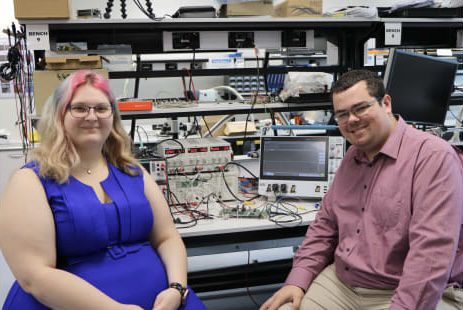
Two First Nations students from the 2025 NISA cohort, Chloe Radoll and Mitchell Cooper, began their placements at RAL Space in September. Chloe, an Anaiwan woman from Tamworth, is studying engineering at the University of Technology Sydney, while Mitchell, a Boandik man from Sydney, is enrolled in the University of Sydney’s Faculty of Engineering and IT.
The partnership builds on the existing collaboration between Monash’s NISA and NASA’s Jet Propulsion Laboratory, where six additional students from the 2025 cohort are undertaking placements.
NISA Lead and Associate Dean (Indigenous) at Monash’s Faculty of Information Technology, Noongar Whadjuk/Ballardong man Professor Christopher Lawrence, welcomed the new collaboration between NISA, Monash University and RAL Space.
“It is only fitting that NISA expands into the UK given our long shared history,” Professor Lawrence said.
“This agreement will deliver long-term benefits for First Nations students, our communities, and all Australians. What the NISA students learn at RAL Space they will bring back home to enrich our research and inspire the next generation.
“This is just the beginning of what promises to be an exciting journey!”
The collaboration aligns with the UK-Australia Space Bridge Framework Arrangement, signed in 2021, which aims to increase connection, exchange and investment across both space sectors.
The STFC-Monash partnership represents a key moment in establishing what organisers hope will become a flagship collaboration under the Space Bridge framework, demonstrating both countries’ commitment to expanding opportunities in space science education and fostering international cooperation in STEM fields.
Associate Director of the National Laboratories at STFC, Dr Hugh Mortimer, extended a warm welcome to the two First Nations students currently at RAL Space via the NISA program.
“We’re delighted to welcome Chloe and Mitchell to RAL Space as part of this growing partnership with Monash and the Australian Space Agency,” Dr Mortimer said.
“NISA is a fantastic example of how international collaboration can be used to support underrepresented groups in STEM and open meaningful opportunities in the global space sector.
“It’s been a privilege to host these two talented students and see them already making contributions to our work – and we look forward to expanding the program in future years.”
International Director at the UK Space Agency, Professor Anu Ojha, praised Monash’s NISA program while expressing delight at the arrival of the new NISA cohort at RAL Space.
“We are delighted that students will gain hands-on experience at RAL Space,” Professor Ojha said.
“This is exactly the kind of opportunity we want the UK-Australia Space Bridge to enable – actively partnering to further develop the skillsets of a next generation workforce and showing how collaboration across borders can unlock new possibilities.
“Together, we can create a truly global space community where talent from all backgrounds thrives.”
Since launching in 2023, NISA has provided space education opportunities for Indigenous Australian STEM students, with support from the Australian Space Agency, CSIRO and the Andy Thomas Foundation.
The program recently received almost half a million dollars in continued funding from the Australian Space Agency to operate until at least 2027. NISA has also just been named as a finalist for the Engagement Australia 2025 Excellence Awards under the “Excellence in Indigenous Engagement” category.
Keep Independent Journalism Alive – Support The AIMN
Dear Reader,
Since 2013, The Australian Independent Media Network has been a fearless voice for truth, giving public interest journalists a platform to hold power to account. From expert analysis on national and global events to uncovering issues that matter to you, we’re here because of your support.
Running an independent site isn’t cheap, and rising costs mean we need you now more than ever. Your donation – big or small – keeps our servers humming, our writers digging, and our stories free for all.
Join our community of truth-seekers. Donate via PayPal or credit card via the button below, or bank transfer [BSB: 062500; A/c no: 10495969] and help us keep shining a light.
With gratitude,
The AIMN Team

All the best for the future Chloe and Mitchell.
Yes, all the best – congratulations!
It’s great that these opportunities are happening at last.
30 years ago I had a boy from one of the Northern Australian islands (not saying which to maintain his privacy) my Year 8 Maths class who had a Maths background to about Year 6.
Anyway he had an exceptional ability in Maths and was in my class for the rest of his school days. By the time he was at the end of Year 10 he was already halfway through the work program for Year 11. I had the privilege of having him in my class in Years 11 and 12 for both Maths and Physics.
He was accepted in to an Engineering course at Uni, but unfortunately there was no effective support then for Indigenous students, and he dropped out before the end of his first year.
He has done well for himself, and we still have infrequent contact, but I do sometimes wonder what may have happened to him had that support been available.
Uncletimrob
Thank you for sharing your experience with your past student. It shows when we don’t give everyone the opportunity to achieve as Chloe and Mitchell have done here, then we forgo the contributions to our community that they might have brought and may bring in the future.
It is utterly ludicrous to restrict your talent pool at scale. Yet, our system, the system the Labor/Coalition duopoly have given us for decades, lets hundreds of thousands, if not millions, fall through the cracks.
They say its a matter of cost. They lie.